

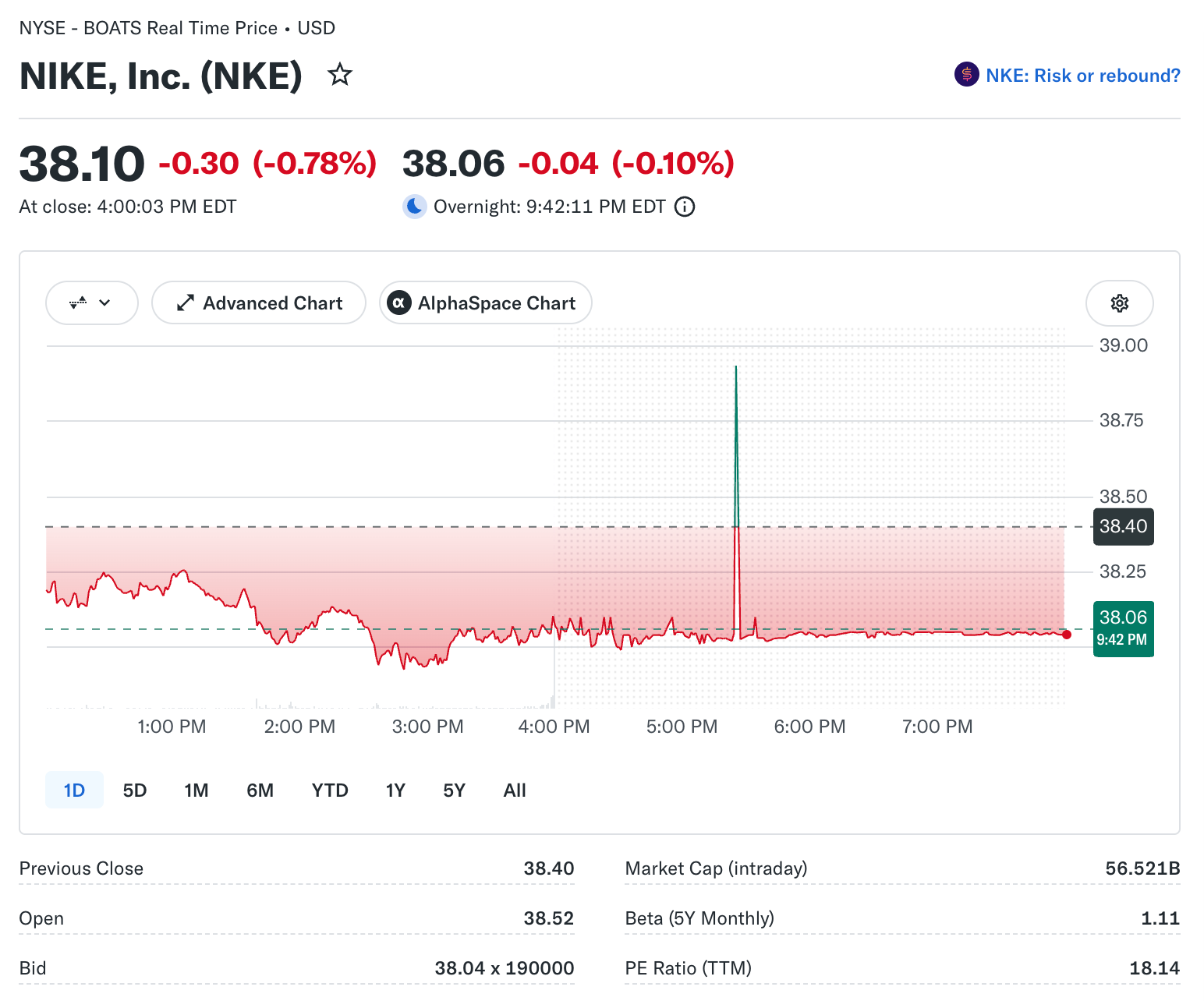
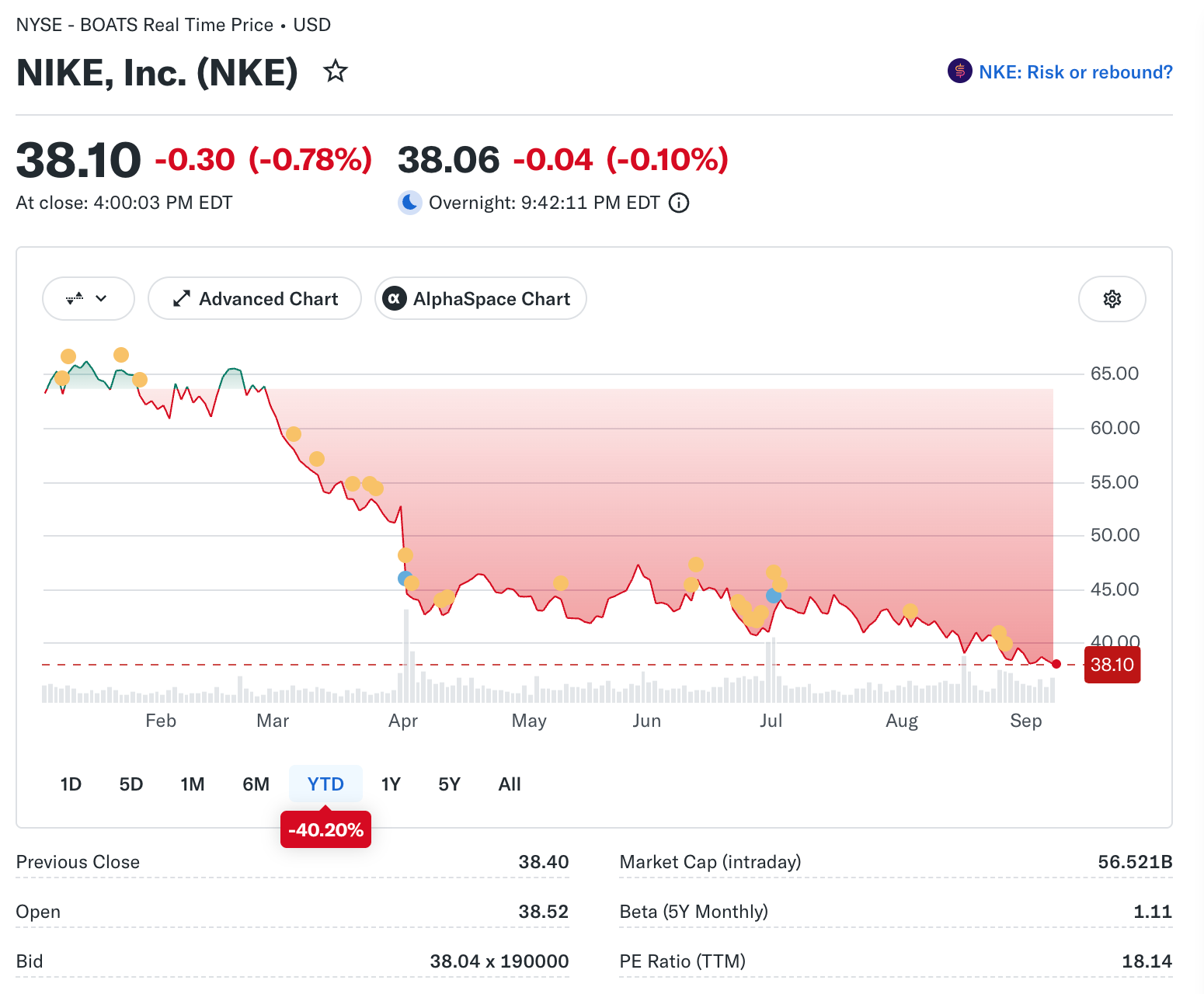
Nike shares recently hit $38.07, a level not seen in more than two decades, as the athletic retailer joined a growing list of consumer names trading at multi-year lows. The decline reflects more than one bad quarter.
Nike has reported several consecutive periods of declining US sales as the brand navigates the same competitive and consumer-spending pressures that sent Lululemon shares down 17 percent in the most recent session after its earnings report.
A financial analyst at Gammance takes a closer look at what the Nike and Lululemon situations, viewed together, reveal about the structural challenges reshaping the US athleisure and premium athletic apparel market.
A Sector Under Coordinated Pressure
When two of the largest names in athletic and activewear are hitting multi-year lows simultaneously, the explanation is unlikely to rest with company-specific execution alone. Nike’s management has acknowledged multiple quarters of declining US sales.
Lululemon’s comparable sales fell 9 percent in its most recent quarter, with Americas revenue down 8 percent. Both companies face the same problem: premium-positioned brands that flourished in a low-rate, high-discretionary-spending environment are now facing consumers making different choices.
Elevated interest rates have made mortgage payments larger, vehicle financing more expensive, and credit card debt more burdensome. Households facing higher fixed costs cut aspirational purchases first.
A $150 pair of athletic leggings becomes the discretionary item that gets deferred when a $400 monthly mortgage increase has already been absorbed. The math of household budgeting in a high-rate environment flows directly into declines in traffic at premium sporting goods and apparel retailers.
Challenger Brands Taking Market Share
Both Nike and Lululemon are also facing a new generation of competitors that didn’t exist when the incumbents built their market positions. Alo Yoga and Vuori have grown consistently at the premium end of the athleisure market by targeting the exact customer Lululemon has been losing.
On Running and Hoka, owned by Deckers, have been gaining meaningful share in the performance footwear segment where Nike has historically dominated. These challenger brands benefit from a structural advantage that large incumbents can’t replicate quickly.
They carry no legacy retail footprint, no brand baggage from prior years of inconsistent product quality, and no obligation to generate quarterly earnings that satisfy established shareholder expectations. Nike and Lululemon manage innovation cycles while also managing Wall Street communication, creating constraints that smaller competitors simply do not face.
What Deckers’ Situation Adds to the Picture
Deckers Outdoor, which owns both Hoka and Ugg, reported a 3 percent decline in the US market in its most recent quarter despite Hoka’s global momentum. That adds nuance to the competitive narrative.
Even the brands gaining share from Nike and Lululemon are not immune to the US consumer spending environment. Tariff costs on goods manufactured in Asia have added margin pressure across the footwear and apparel sector broadly, creating a situation where even the winners in the market share battle are managing cost headwinds that compress profitability.
Energy led US sector performance in 2026 with a gain of 43 percent, while consumer discretionary is the worst-performing sector, down 2.3 percent, confirming the macro rotation driving these company-level outcomes.
Capital is moving from premium consumer spending beneficiaries toward commodity producers and energy companies whose revenues improve when oil prices are elevated. The sector-level performance gap is not accidental.
The Leadership Transition at Lululemon
Heidi O’Neill’s arrival as CEO adds a layer of strategic uncertainty that the market is pricing into the stock. Leadership transitions at consumer brands in turnaround situations create a window of uncertainty during which investors struggle to model the forward earnings path with confidence.
O’Neill brings experience from Nike, which gives her relevant competitive context. But the specific playbook she will deploy at Lululemon, and the timeline for any changes to show up in comparable sales, remains unknown.
Investors in Lululemon shares need to assess whether the current stock price already reflects the worst-case scenario on guidance or whether further cuts remain likely.
Management’s third guidance reduction in a single year, combined with the social media commentary cited as a demand headwind, suggests that brand repair is the immediate priority. Brand repair typically takes multiple quarters of consistent product execution before it registers in store traffic numbers.
Reading the Sector Into the Weeks Ahead
The US athleisure and premium athletic sector is in the middle of a competitive and macro reset that has been building since mid-2025. Nike’s 52-week lows, Lululemon’s three consecutive guidance cuts, and Deckers’ US market softness collectively describe an environment where premium positioning no longer commands the pricing power it did two years ago.
Investors tracking this sector should monitor comparable sales trends, new product reception, and leadership commentary on social media sentiment as the three most useful leading indicators of whether the reset is running its course or has further to go.