

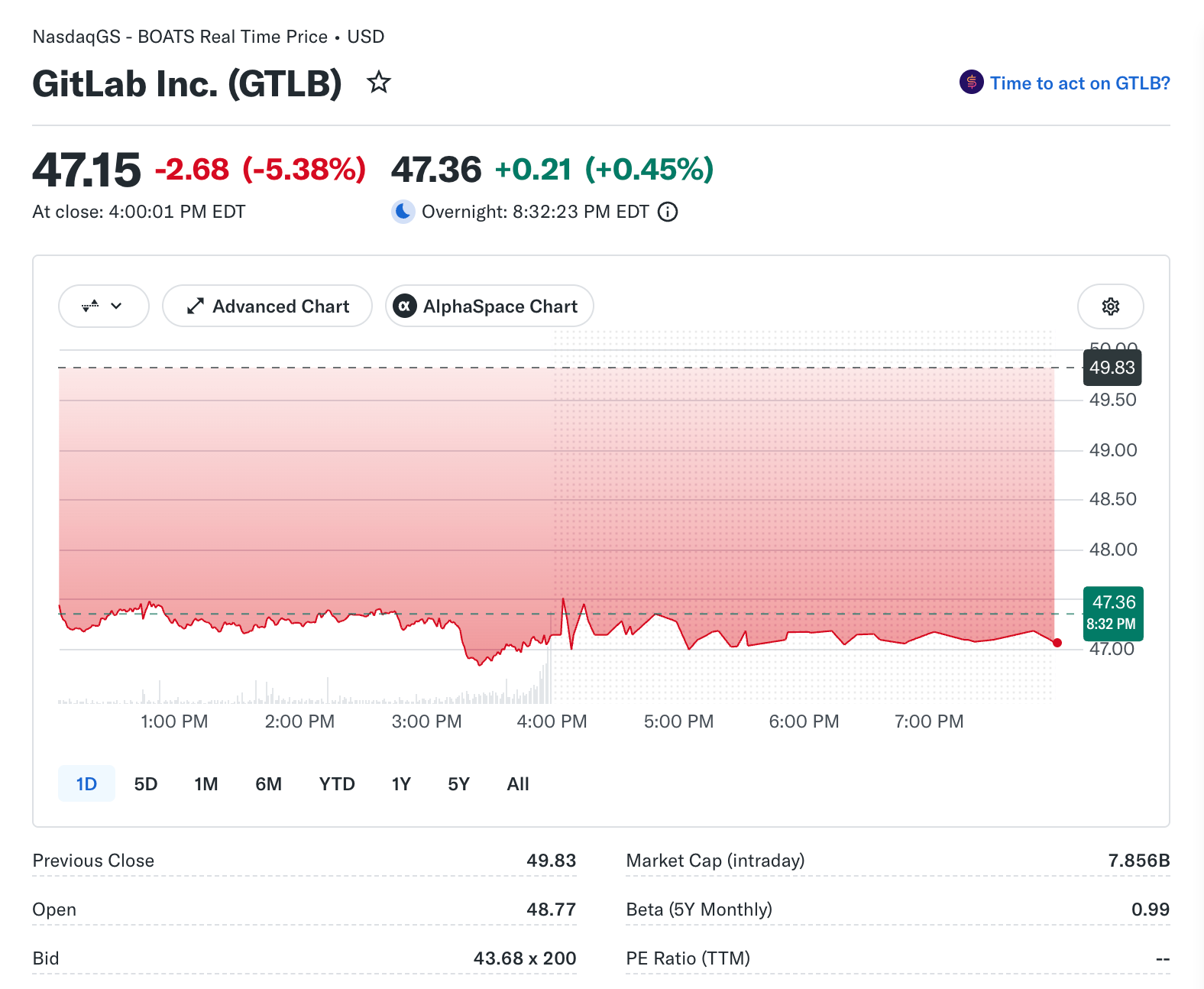
The software sector has been recovering selectively in 2026, and this week added a sharp new data point to that narrative. GitLab shares surged 20 percent in premarket trading after the company delivered second-quarter results well above market expectations on both profit and revenue.
That size of a single-session move on earnings is not routine for an enterprise software company. It carries information about positioning, sentiment, and the underlying demand environment that investors should read carefully.
The brand’s lead financial analyst stresses that Gammance views the GitLab result not as an isolated positive surprise but as the latest confirmation that enterprise technology buyers are directing budget toward software platforms with demonstrable AI productivity benefits.
The companies benefiting from that budget flow are separating from those still waiting for AI to become a tangible revenue driver.
What GitLab Built and Why It Resonated This Quarter
GitLab’s core product is a platform that consolidates the software development lifecycle into a single application. Teams use it to write code, manage security testing, coordinate deployments, and track operations across projects without switching between separate tools.
That unified approach reduces the friction that traditionally comes from integrating multiple vendor products, and it gives IT procurement teams a clean ROI argument when justifying the budget allocation. The AI integration within GitLab’s platform has been the more recent growth driver.
AI-assisted code suggestions, automated security scanning, and AI-powered workflow recommendations are embedded directly in the tools developers use throughout the day. Enterprise buyers evaluating AI software investment are responding most readily to products where the productivity benefit is measurable and immediate.
That embedded positioning matters because the value is being delivered in the context of actual work rather than as a standalone AI feature requiring separate adoption. When a stock moves that far on earnings, it typically means the actual result was significantly better than consensus and a meaningful short position was forced to cover rapidly. Both factors amplified the GitLab move this week.
Salesforce and Okta Adding Breadth to the Recovery
GitLab was not alone in its positive session. Salesforce and Okta were also among the strongest enterprise software performers during the same earnings period.
Both companies had spent much of the first half of 2026 rebuilding from significant valuation declines as rising interest rates and uncertainty about AI monetization compressed multiples across the category. Their recoveries, like GitLab’s, have been driven by earnings results that demonstrated actual AI revenue contribution rather than projected future monetization.
Salesforce has been integrating AI features into its CRM platform, with early commercial traction showing up in renewal rates and expansion revenue from existing clients. Okta’s identity security platform has been benefiting from increased demand for secure AI access management as enterprises deploy AI tools more broadly.
The pattern across these three names is the same. AI integration is generating measurable customer value, and that value is showing up in quarterly financials as higher retention, expanded seats, or new product revenue.
DocuSign’s Result as Additional Confirmation
DocuSign added more than 4 percent in the same earnings window, reporting a beat on both revenue and profit alongside an improvement to its full-year operating margin outlook. The company has been expanding its platform from electronic signatures into a broader agreement management suite that includes AI-assisted contract review and workflow automation.
That expansion is giving the business a second growth engine that did not exist two years ago. The broader market context during this period included elevated oil prices, rising Treasury yields, and growing uncertainty around Federal Reserve rate policy.
Those macro headwinds were compressing sentiment across equity markets generally. Enterprise software names posting strong results and issuing improved guidance in that environment signals genuine underlying demand strength rather than a sentiment-driven bounce.
The Rate Risk That Investors Cannot Ignore
The recovery in enterprise software is real, but it is occurring in an interest rate environment that creates ongoing valuation risk. Treasury yields have climbed above 4.7 percent, applying mechanical pressure to growth stocks whose current prices embed years of future earnings at a discount rate that rises when yields rise.
Software companies trade at elevated multiples even after their first-half 2026 declines, and those multiples remain sensitive to any further increase in the rate that investors use to discount future cash flows. The distinction that matters for positioning is between software companies demonstrating AI revenue conversion in current results and those still projecting it.
GitLab, Salesforce, Okta, and DocuSign sit in the first group. Their recoveries are grounded in earnings evidence rather than in anticipation of earnings that have not yet arrived.
That grounding provides more resilience against rate-driven multiple compression than a recovery built purely on sentiment and forward expectations. Investors rebuilding software exposure should prioritize that distinction above all others when deciding which names belong in the portfolio and which remain at risk of another leg down if yields continue to rise.