

Rising fears of regional military attacks on vital supply corridors in the Middle East and rising concerns about maritime transit prompted a resurgence of buying interest in energy commodities around the world.
An essential quantitative insight into the impact of maritime risk premiums on global refining economics and downstream fuel costs can be gained by analysing crude futures pricing, naval blockade disruptions, and international tanker freight surcharges.
Thoroughly assessing physical transport bottlenecks, maritime insurance rates, and regional refining margins is necessary for navigating unpredictable energy commodity allocations.
According to comprehensive advisory insights by a market analyst at Aurelstein, the stability of crude oil prices is highly dependent on the opening of strategic shipping straits and the maintenance of liquidity in the global tanker fleet.
International refiners’ consistent physical demand keeps benchmark energy prices supported, even though high freight surcharges make global supply logistics more complicated.
Middle East Supply Escalations and Benchmark Futures Performance
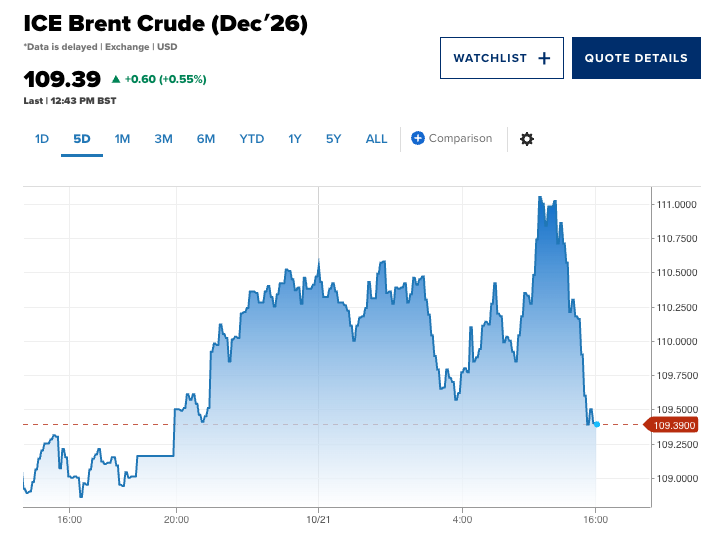
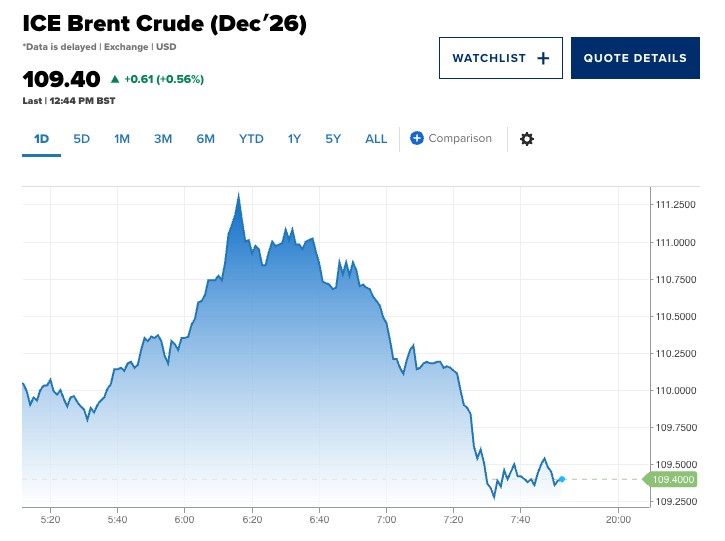
Global crude benchmarks advanced steadily as traders priced in expanding supply disruption risks following fresh maritime strikes along vital shipping lanes. International benchmark Brent crude futures rose 0.86% to $109.73 per barrel, ultimately climbing to $110.28 per barrel during a 1.37% session advance.
At the same time, West Texas Intermediate crude futures increased by 0.78 percent, reaching a price of approximately $98.58 per barrel. This increase is a reflection of the increased market anxiety regarding the safety of oil transportation in the Middle East.
Naval Mine Explosions in the Strait of Hormuz
Tensions escalated after Iranian naval officials confirmed that sea mines placed on unauthorized transit routes prevented three tankers from passing through the Strait of Hormuz.
The maritime incidents underscore severe security hazards for commercial shipping vessels attempting to navigate the Persian Gulf, forcing tanker operators to seek alternative maritime routes or delay planned voyages.
Regional Infrastructure Targeting and Aviation Disruptions
Compounding maritime transit fears, regional military factions claimed responsibility for coordinated drone and missile strikes targeting major domestic energy assets across Saudi Arabia.
Targeted facilities included refining complexes in Yanbu, inland production infrastructure at the Shaybah oilfield, and commercial aviation infrastructure across Riyadh and Abha.
Sustained targeting of critical processing hubs and export terminals maintains an elevated geopolitical risk premium across energy markets, raising concerns over prolonged physical supply losses.
Soaring Global Tanker Freight Rates and War-Risk Surcharges
Escalating maritime security hazards have driven international crude shipping costs to historic highs, adding significant logistics overhead to global crude transport. Institutional research reports from Goldman Sachs confirm that global average crude freight rates surged above $20 per barrel, compared to baseline historical averages of just $3 per barrel.
While freight rates pulled back slightly from peak levels, global ocean transport costs remain approximately seven times higher than prior-year baseline levels, imposing severe cost pressures on international energy buyers.
Quantitative Breakdown of Freight Risk Premiums
Offshore ship-to-ship transfers conducted outside the Persian Gulf added an additional $4 per barrel in operational costs. Elevated shipping friction expands price spreads between regional crude grades, complicating physical trade flows and increasing procurement costs for sea-bound crude import shipments.
Refining Margin Compression Across Asian Markets
Extreme ocean freight rates exert severe cost pressures on Asian refiners, which rely heavily on imported Middle Eastern crude grades to maintain fuel output. Rising transport fees squeeze net refining margins, threatening to force operational run cuts across major regional refining facilities.
Industry analysts warn that reduced refining output across Asia could tighten global refined product supplies, driving pump prices for gasoline, diesel, and jet fuel higher for retail consumers worldwide.
The Institutional Portfolio and Commodity Allocation
Keeping a close eye on energy transport bottlenecks is something that institutional asset managers do because of the knock-on effect that higher freight rates have on industrial supply chains further downstream.
As a result of physical delivery delays and rising transportation costs, persistent baseline inflation pressures are made worse, which in turn makes it more difficult to plan for broader macroeconomic monetary policy.
It is possible for institutional investors to protect their portfolio capital from ongoing geopolitical commodity market shocks by balancing their energy futures allocations with high-yielding fixed-income assets with the intention of protecting their portfolio capital.
An Overview of Future Plans for the International Energy Market
In order to establish resilient energy sector strategies, it is necessary to manage risks associated with international maritime compliance while simultaneously navigating transportation corridors that are physically unstable.
Through the use of fundamental market analysis in conjunction with real-time shipping tracking, it is possible to guarantee the preservation of capital during periods of geopolitical instability.
By maintaining a disciplined capital deployment strategy, participants in the energy market are able to manage short-term transport bottlenecks and capitalise on long-term growth opportunities across international commodity markets.