

Cybersecurity equities experienced active selling pressure after research analysts issued a abrupt rating revision, warning that temporary revenue catalysts could create an unsustainable operational peak.
Examining analyst rating changes, valuation multiple compressions, and firewall hardware refresh cycles provides critical quantitative clarity on how software security providers maintain long-term earnings quality.
Monitoring hardware upgrade timelines, list-price expansion metrics, and AI integration milestones is essential for evaluating enterprise security holdings. When multi-year hardware refresh tailwinds start to normalise across core corporate client accounts, premium valuation multiples face severe headwinds, according to an equity strategist at Aurelstein.
Despite the continued importance of enterprise software, changes in growth momentum can cause high-multiple technology equities to undergo significant valuation adjustments.
Direct Double Downgrade Execution and Price Target Disconnect
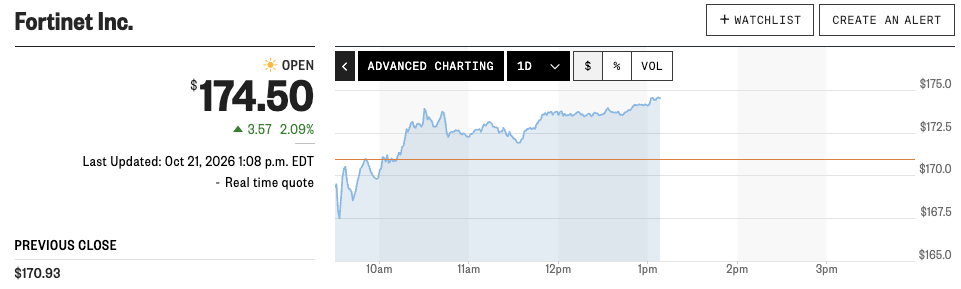
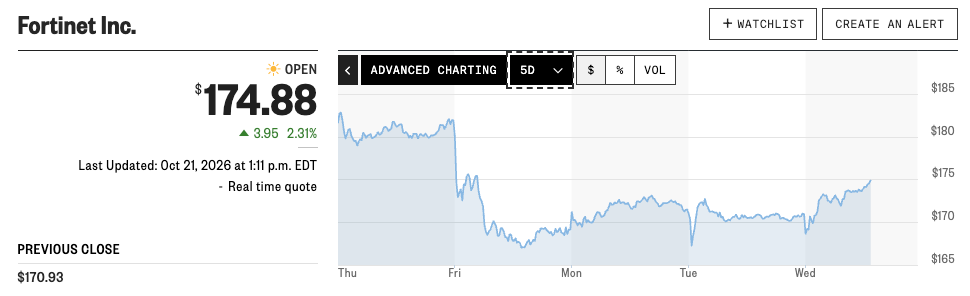
Shares of network security specialist Fortinet dropped 2.7% during early trading activity after Arete Research bypassed a neutral rating to issue a direct double downgrade from Buy to Sell. Despite sitting far below the previous closing price of $170.93, analyst Ellie Kearney revised the 12-month price target to $117 from $104.
Implying roughly 31.5% downside potential from recent trading levels, the rare double-step downgrade reflects an immediate shift in research conviction rather than a routine incremental target adjustment.
Peak Growth Tailwinds and Subsequent Multi-Year Deceleration
Research dispatches emphasized that current financial performance benefits from a rare convergence of favorable growth drivers that will prove difficult to replicate in subsequent operating cycles. Analysts noted that peak valuation multiples rarely survive when revenue expansion begins to slow down across forward reporting periods.
The near-term results are being bolstered by a number of growth drivers that are short-term in nature. Included in this category are demand from the hardware refresh cycle that will occur in 2020–21, list price increases ranging from 5–20%, and early procurement schedules from corporate clients.
Artificial Intelligence Adoption Limitations Relative to Core Firewall Demand
While artificial intelligence initiatives provide incremental support for the broader cybersecurity sector, research notes indicate that AI monetization remains insufficient to offset fading hardware refresh benefits. Expected AI-driven expansion appears too small relative to elevated Wall Street consensus estimates.
Because new software features remain tightly bound to core firewall installations, AI adoption alone cannot carry top-line growth once pricing power gains and hardware refresh cycles dissipate over upcoming financial cycles.
Broader Cybersecurity Valuation Debates and Market Price Action
The rating adjustment amplifies an ongoing debate across institutional trading desks regarding whether cybersecurity vendors can sustain elevated price-to-earnings multiples. Investors are scrutinizing the long-term durability of enterprise software spending alongside return-on-investment timelines for artificial intelligence integrations.
Despite premarket weakness, the stock demonstrated intraday resilience, recovering to trade near $174.07, up 1.84% on the session as market participants evaluated contrasting growth perspectives ahead of upcoming quarterly disclosures.
Implied Downside Risks and Price Target Nuances
Interestingly, the analyst raised the firm’s formal price target to $117 while simultaneously issuing a Sell rating. This dynamic indicates that while baseline corporate valuation models reflect higher underlying cash flows than previously modeled, market prices have far overshot fair value expectations.
The substantial gap between current market prices and fundamental price targets highlights the heightened downside risks facing equities trading at significant valuation premiums relative to their projected growth trajectories.
Quarterly Financial Disclosures and Revenue Durability Monitoring
Market participants are turning their focus toward upcoming third-quarter earnings disclosures to evaluate whether organic firewall demand can remain resilient. Institutional investors plan to assess whether product bookings can maintain momentum as the temporary impacts of pricing actions and hardware cycles begin to fade.
In order to determine whether or not the current valuation multiples can be maintained over the course of future reporting periods, it will be essential to verify billing trends, appliance renewal rates, and enterprise subscription conversions.
Modifications to Software Security Assets Ownership by Institutions
Companies with consistent recurring software-as-a-service revenues, rather than hardware-dependent renewal cycles, are now receiving more attention from fund managers as they reevaluate enterprise software weightings.
The risk of multiple compression can be reduced by institutional portfolios by reducing their exposure to hardware vendors during peak cycles.
An important tool for keeping track of when exposure changes in the cybersecurity industry as a whole occur is keeping tabs on how companies are allocating their IT budgets, how competitors are pricing their products, and how much money has been deferred.
Equity Strategy for the Long Term in Enterprise Security Markets
Differentiating between short-term operational surges and long-term competitive moats is essential for navigating the unpredictable technology valuation landscape. Capital can be redirected by institutional asset managers into growth opportunities with higher conviction when overextended market pricing periods are identified.
Strict adherence to valuation criteria shields portfolio principal from severe multi-step downgrades by analysts and guarantees high returns on invested capital for equity investors.