

Technology defense equities encountered notable selling interest after Wall Street researchers issued a rare multi-notch downgrade, warning that overlapping operational catalysts could create an unsustainable financial crest for network appliance vendors.
Examining Wall Street recommendation changes, enterprise firewall replacement cycles, and software valuation multiples yields vital quantitative insights into how cybersecurity firms sustain long-term earnings expansion.
In order to successfully navigate corporate security investments, it is necessary to carefully monitor appliance upgrade schedules, enterprise contract pricing power, and artificial intelligence monetisation milestones.
Specialized financial insights provided by an investment analyst at Librrova reveal that premium valuation multiples face severe risk when multiple temporary growth tailwinds begin normalizing simultaneously across client accounts.
Despite the fact that enterprise security demand continues to be fundamental, shifting top-line momentum frequently causes aggressive valuation recalibrations among market participants who are institutional.
Abrupt Rating Revision and Structural Target Divergence
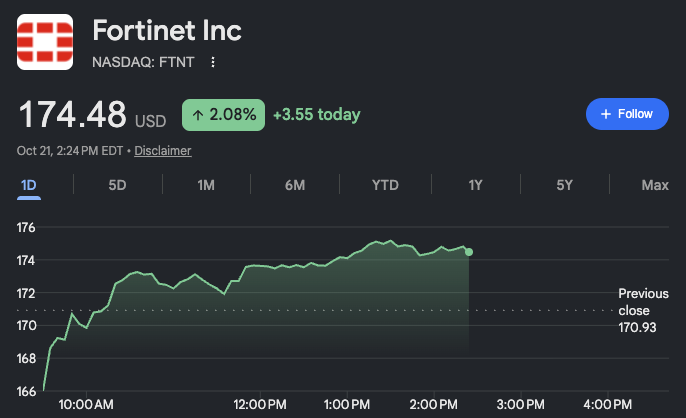
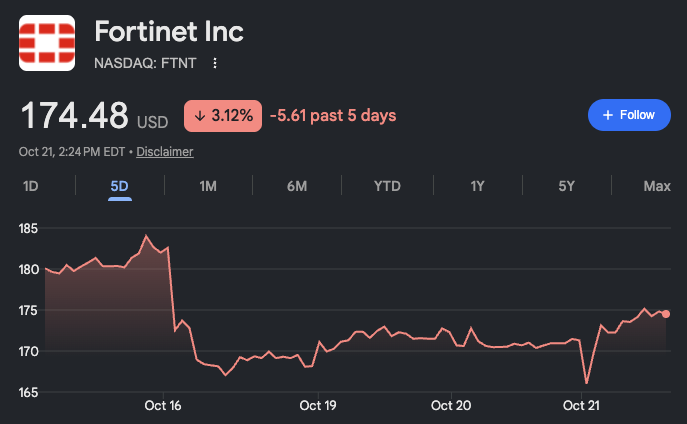
Network security provider Fortinet saw its share price drop 2.7% in early trading after Arete Research skipped a neutral stance to issue a direct two-notch downgrade from Buy straight to Sell. Analyst Ellie Kearney adjusted the firm’s 12-month target price upward to $117 from $104, yet the updated figure stands well below the prior session closing level of $170.93.
Implying a projected downside of approximately 31.5% from recent market valuations, the two-step rating cut marks a dramatic shift in analyst conviction rather than a standard incremental adjustment to financial targets.
Unrepeatable Confluence of Short-Term Operational Tailwinds
Research commentary noted that current operating results benefit from a rare alignment of favorable growth drivers that cannot be sustained over subsequent reporting cycles. Analysts warned that elevated stock multiples rarely survive intact once top-line revenue expansion slows down.
A combination of temporary catalysts is currently driving performance, including deferred hardware replacements from the 2020–21 refresh cycle, list-price hikes spanning 5% to 20%, and corporate customers accelerating buying activity.
Artificial Intelligence Adoption Boundaries Relative to Core Hardware Sales
While artificial intelligence initiatives provide incremental support for the broader software sector, research dispatches indicate that AI monetization remains insufficient to offset the fading benefits of hardware upgrades and price increases. Expected AI revenue contributions appear small compared to rising consensus estimates across Wall Street.
Because new AI features remain closely linked to physical firewall installations, artificial intelligence adoption alone cannot carry top-line growth once pricing power gains and hardware replacement waves subside across corporate accounts.
Sector Valuation Debates and Intraday Trading Resilience
The rating adjustment heightens an ongoing debate among institutional investors regarding whether cybersecurity firms can defend elevated price-to-earnings ratios. Market participants continue examining the durability of enterprise software spending alongside the practical return on investment from artificial intelligence infrastructure outlays.
Despite initial premarket softness, the equity demonstrated session resilience, climbing 2.02% to trade near $174.38 per share as traders weighed contrasting growth perspectives ahead of upcoming quarterly financial reports.
Mathematical Mechanics Behind the Downside Target Valuation
Interestingly, the analyst elevated the firm’s formal target price to $117 while issuing a Sell recommendation, presenting a unique valuation dynamic. This adjustment indicates that while baseline enterprise cash flows are higher than previously estimated, prevailing market trading levels have outpaced fundamental intrinsic value.
The substantial gap between current market prices and revised price targets highlights the heightened downside vulnerability facing software equities trading at significant valuation premiums relative to their multi-year growth outlooks.
Upcoming Financial Disclosures and Revenue Durability Monitoring
Market attention is turning toward upcoming quarterly financial releases to assess whether organic appliance demand can maintain its momentum. Institutional investors plan to evaluate whether product order flows remain durable once the temporary impacts of pricing actions and hardware cycles begin to fade.
Verifying deferred revenue trends, customer renewal rates, and hardware delivery metrics will prove vital for determining whether current market multiples can be defended over future operating periods.
Enterprise Security Holdings Capital Allocation Strategies
The emphasis of fund managers is moving from hardware-dependent renewal cycles to pure-play software-as-a-service models, and they are rebalancing enterprise software weightings accordingly. Institutional portfolios can mitigate the risks of multiple compression by limiting their exposure to cyclical appliance vendors.
The management of risk-adjusted returns in the cybersecurity space can be mapped out by keeping tabs on how companies are allocating their IT budgets, how competitors are pricing their services, and how quickly their billings are increasing.
Investments in Network Protection with a Long-Term Perspective
Learn to differentiate between short-lived operational surges and long-term competitive moats to successfully navigate technology valuations. Institutional asset managers can reinvest funds into growth opportunities with greater conviction when they detect overextended market pricing.
Protecting investor capital from unexpected multi-step downgrades by analysts and ensuring that equity portfolios capture solid risk-adjusted returns are both achieved through strict valuation discipline.