

The Japanese yen strengthened past the 154.00 mark against the US dollar, recovering from the session’s weakest levels as competing monetary policy signals from Tokyo and Washington created a tug-of-war across the pair.
USD/JPY fell to 153.70, down 0.16% from the prior session, with the yen gaining support from rising expectations of further Bank of Japan tightening.
Brokers from Financial Real Time examine the policy divergence shaping the pair and the key technical levels in play as both the Fed and BoJ approach critical meetings later this month.
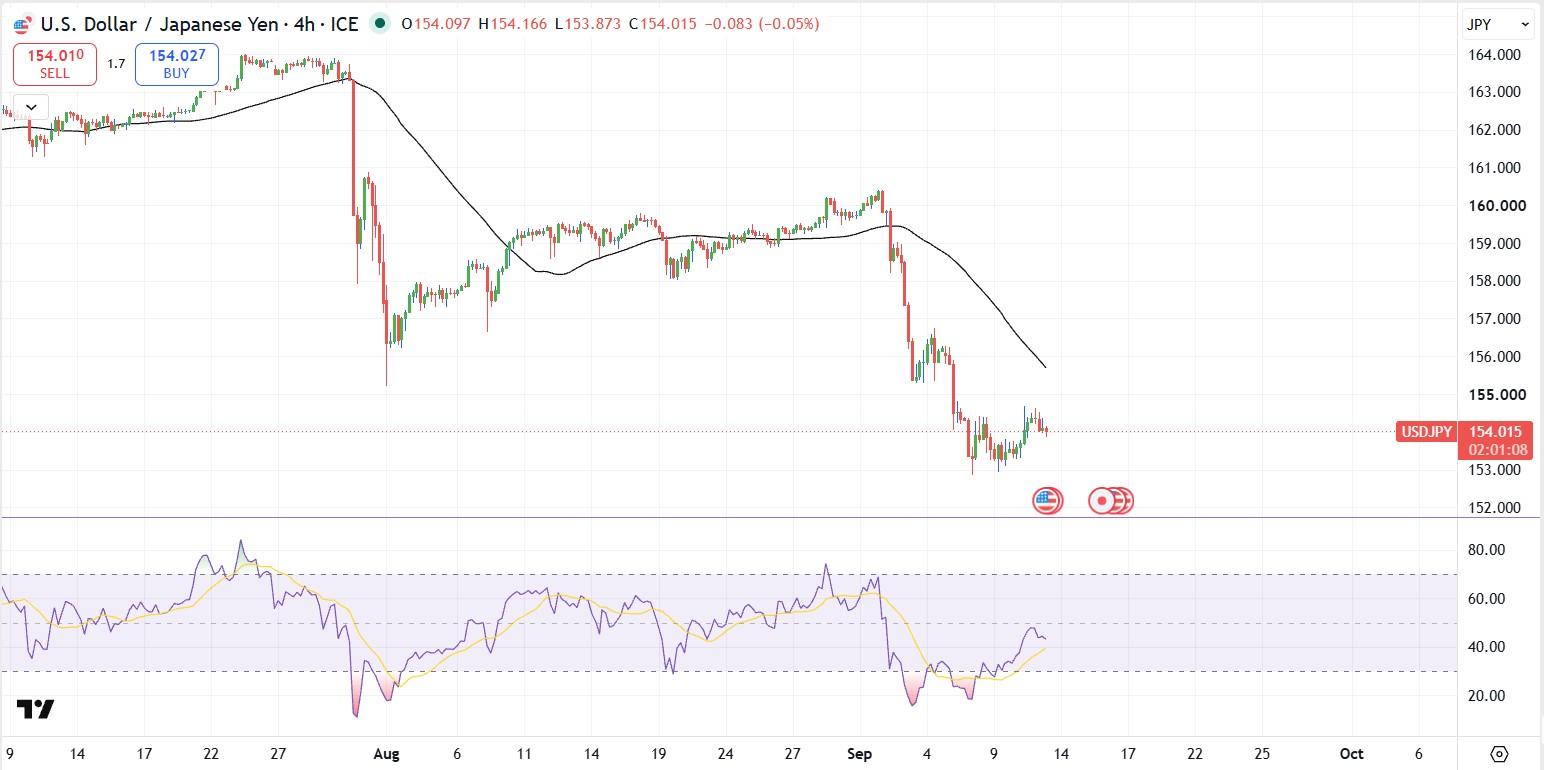
The pair has now fallen more than 600 pips from the early September peak near 160.00, one of the sharpest yen rallies of the year.
The move has been fuelled by a combination of shifting rate expectations and a rare joint currency intervention in late July, when Japanese and US officials coordinated to stem yen weakness.
That intervention served as a clear warning to speculative short-yen positions and has reshaped market psychology around the pair.
Bank of Japan Signals Tightening Ahead
BoJ Governor Kazuo Ueda indicated that the central bank would closely assess heightened inflation risks at the upcoming policy meeting. The remarks amplified expectations of a rate hike, with markets now pricing in a meaningful probability of an increase to the BoJ’s short-term rate target.
The BoJ’s shift away from decades of ultra-loose policy marks a historic turning point for the yen. With the cash rate currently well below its global peers, even modest tightening carries outsized significance for currency markets.
A joint intervention in late July, coordinated between Japanese and US officials, further underscored the political sensitivity surrounding yen weakness.
Markets now expect the BoJ’s cash rate to reach 1.25% by late 2026, a level not seen in nearly two decades.
The compression of the US-Japan rate differential from roughly 325 basis points at the start of the year to an estimated 250 to 275 basis points by the fourth quarter is the primary structural driver of yen appreciation. Carry trade unwinding has accelerated as the cost of funding yen shorts increases.
Dollar Finds Support From Inflation Data
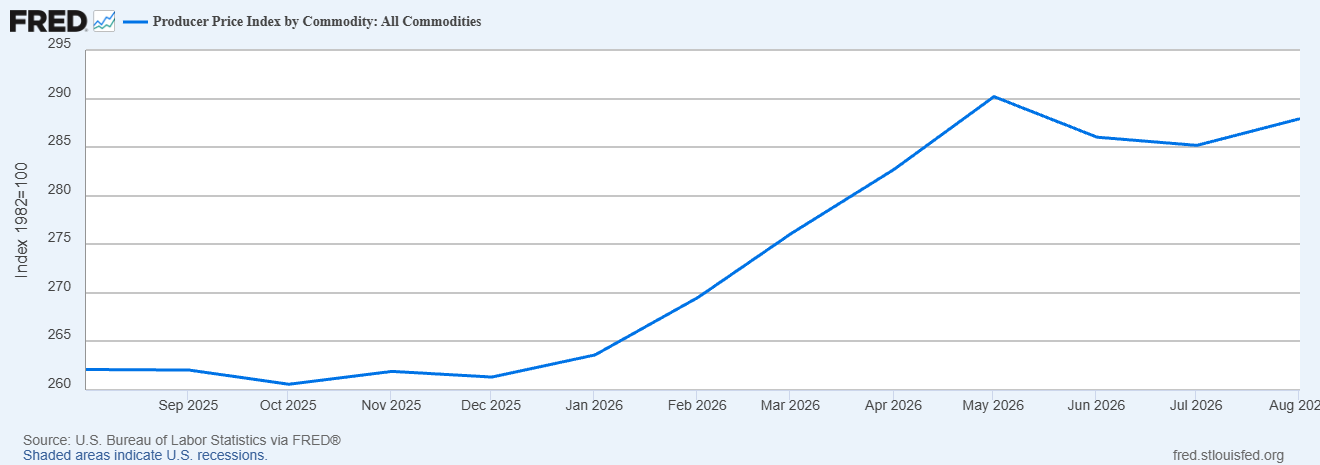
On the US side, the dollar recovered some ground after the August PPI report showed producer inflation at 5.4% annually, reinforcing bets on a Fed rate hike at the upcoming meeting.
The interest rate differential between the US and Japan, while narrowing, remains substantial; the Fed’s target range stands at 3.50% to 3.75%, compared to Japan’s significantly lower benchmark.
Rising oil prices add a complicating layer. As a major energy importer, Japan faces widening trade deficits when crude prices surge, which typically undermines the yen despite hawkish BoJ signals. Brent crude at $108 per barrel is testing this dynamic in real time.
Speculative positioning in the yen has shifted markedly. Net short yen bets among leveraged funds have been reduced to their lowest level since the first quarter, according to the latest commitment of traders data.
The unwinding of crowded short positions has added momentum to the yen’s recovery, though the pace of further gains will depend on whether the BoJ delivers a concrete policy shift rather than forward guidance alone.
Japan’s wholesale inflation data has reinforced the tightening case. Producer prices rose 7.6% year-on-year in August, exceeding market expectations and highlighting the degree to which imported energy costs are filtering through the domestic supply chain.
The data strengthens the argument for a rate increase at the upcoming BoJ meeting, where a move to 1.25% is now widely expected.
Key Levels to Watch Ahead of Central Bank Meetings
Immediate support sits at 152.85, followed by the psychologically significant 152.00 handle, a level that previously triggered intervention-related discussions.
On the upside, the 50-day SMA near 154.72 serves as the first meaningful resistance, with the 160.00 threshold representing a broader structural barrier.
Japanese equity markets have also felt the impact of the stronger yen. The Nikkei index dropped sharply this week as higher oil prices and a strengthening currency weighed on export-oriented stocks, adding another dimension to the cross-asset repricing.
US 10-year Treasury yields have approached the 5% mark, their highest level in months, reinforcing the dollar’s appeal against lower-yielding counterparts.
The divergence between Japanese and US bond markets remains a key variable, with any further rise in US yields likely to slow the pace of yen appreciation.
The pair has strengthened 3.30% over the past month, marking one of the yen’s strongest stretches of 2026.
The upcoming BoJ and Fed decisions, scheduled within days of each other, will likely determine whether USD/JPY sustains its decline below 155.00 or stages a recovery toward the 155.00 to 160.00 range that dominated much of the summer.