

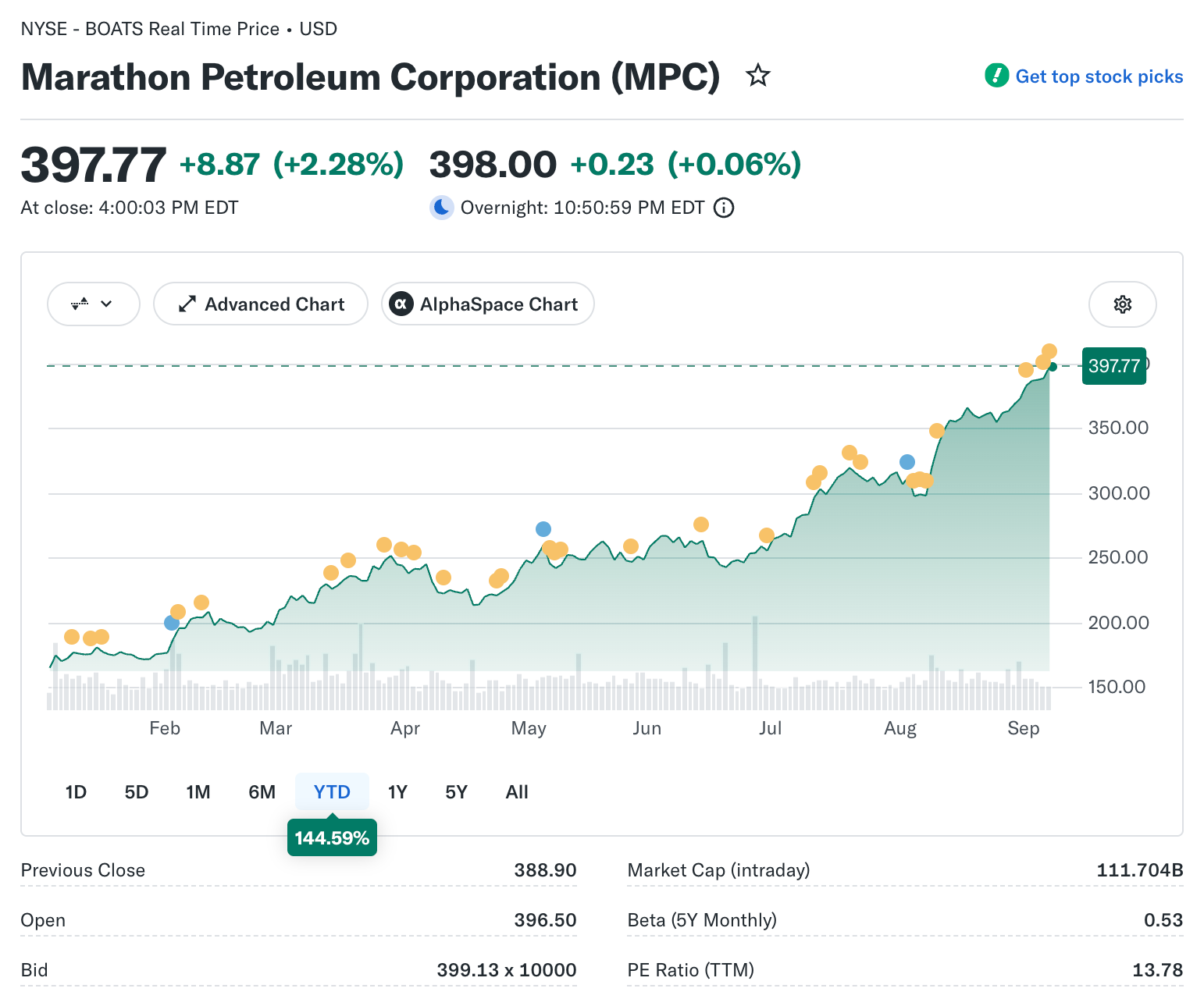
Marathon Petroleum shares recently hit $381.15, a level not seen since June 2011, as the energy sector extended its position as the best-performing segment of the US market in 2026. Energy is the only sector in the S&P 500 that is up more than 40 percent for the year, while consumer discretionary is the only sector in negative territory, down 2.3 percent.
That gap between the top- and bottom-performing sectors reflects a macro environment that has been unusually kind to commodity producers and unusually challenging for businesses dependent on household discretionary spending.
The brand’s lead financial expert emphasizes that Gammance views the Marathon Petroleum milestone as a useful anchor for understanding the full scope of the energy-led rotation reshaping US equity markets.
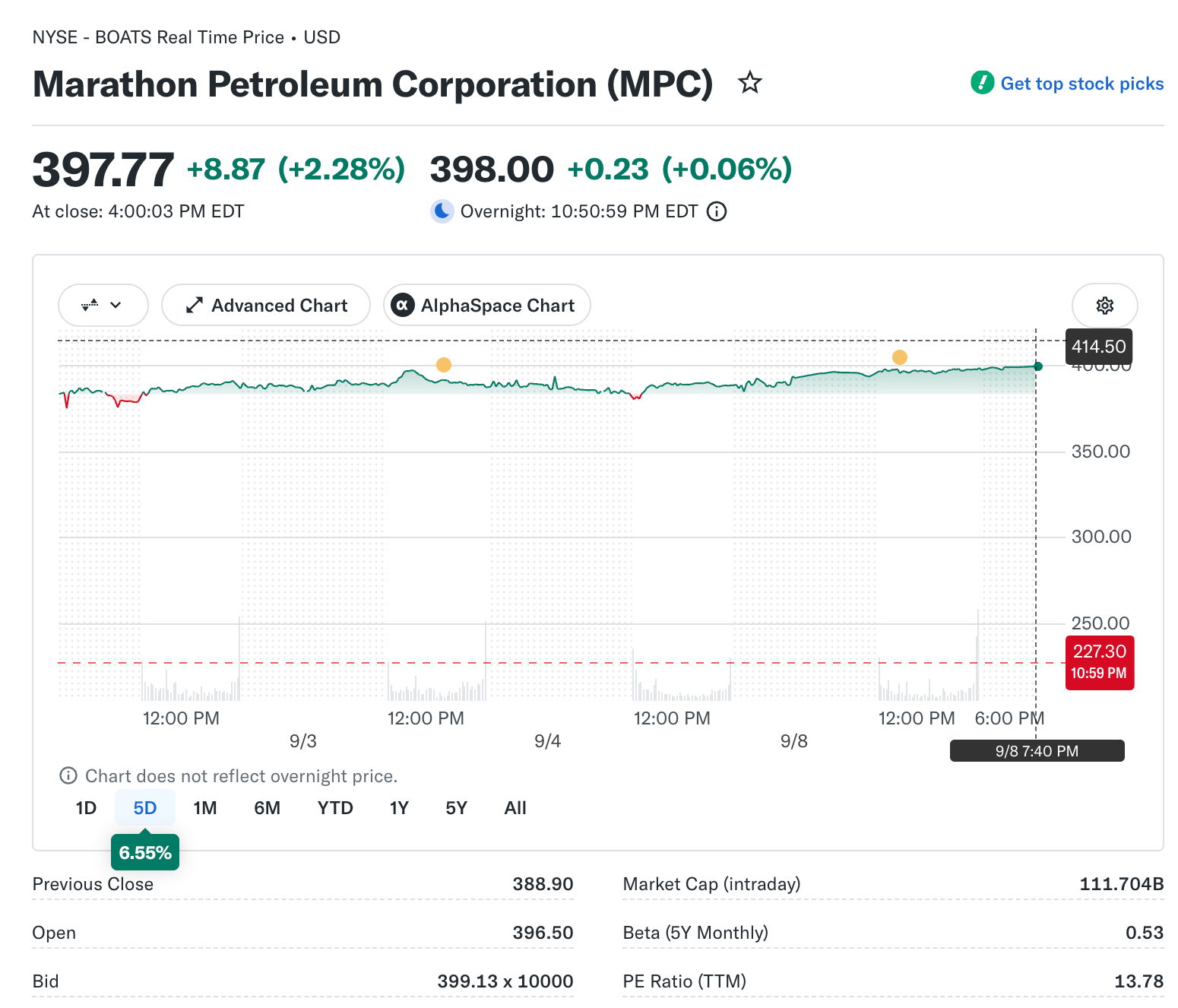
Why Marathon Petroleum Is at 15-Year Highs
Marathon Petroleum is a downstream energy company, which means its core business is refining crude oil into gasoline, diesel, jet fuel, and other petroleum products. Unlike upstream producers, whose fortunes track crude oil prices directly, refiners benefit most from the spread between the cost of crude they buy and the price of refined products they sell.
When crude oil prices are elevated, but refined product prices rise even faster, refinery margins expand and earnings surge. The Iran conflict’s sustained pressure on crude oil prices has been a complex mix of tailwind and headwind for refiners. Higher crude costs raise raw material expenses.
But elevated energy demand from AI data centers, supply chain tightness, and consumer fuel demand that remains relatively inelastic in the short term have kept refined product prices high enough to preserve refinery margins. Marathon Petroleum’s 15-year stock high reflects the market’s judgment that refinery economics are better than they have been in a generation.
Pfizer at 2024 Highs Tells a Different Story
While Marathon Petroleum was hitting multi-year highs, Pfizer shares were also recording a notable milestone by climbing to $29.09, levels not seen since late 2024. That Pfizer move tells a different story than Marathon’s oil-driven advance. Pfizer is recovering from a period of significant selling pressure driven by the post-COVID normalization of vaccine and antiviral revenues.
The stock had fallen sharply as extraordinary pandemic-related sales returned to base levels. Pfizer’s recovery reflects a healthcare sector attracting investor interest as a late-cycle defensive rotation.
Healthcare stocks, including Solventum, also hit 52-week highs in the same period. That defensive-plus-energy combination marking the sector-level leadership of the most recent trading period is consistent with an investor community rotating away from growth and discretionary names toward businesses with more stable revenue streams.
The Consumer Discretionary Sector as the Mirror Image
Consumer discretionary’s negative 2.3 percent return for the year, while energy leads at 43 percent, is the most instructive sector divergence in the US market in 2026. The two sectors are responding to the same macro environment from opposite sides.
Higher energy prices benefit oil companies and refiners while also raising costs for consumer discretionary companies and their customers.
Nike at 20-year lows, Lululemon at 8-year lows after three guidance cuts, Wynn Resorts, Las Vegas Sands, and Carnival all recording 52-week lows in the same period.
The breadth of consumer discretionary weakness across travel, entertainment, premium apparel, and footwear confirms the sector faces a structural headwind from the rate and energy cost environment rather than idiosyncratic company problems.
What the Sector Performance Split Signals for Portfolio Positioning
The 45-percentage-point gap between energy’s performance and consumer discretionary’s performance in 2026 is not a signal that has historically sustained itself indefinitely. Extreme sector divergences of this magnitude tend to mean-revert as the macro conditions driving them either intensify to unsustainable levels or begin to normalize.
Investors positioned at the extremes of either sector face asymmetric risk: energy bulls risk a sharp reversal if Iran tensions ease and oil prices fall; consumer bears risk a sharp recovery if rates peak and household spending flexibility returns.
The most useful positioning framework in this environment is probably not maximum exposure to the winning sector, but a balanced view that accounts for reversal potential when the macro catalyst that created the divergence begins to change.
Marathon Petroleum at 15-year highs is a powerful signal about where the current energy cycle stands. It also reminds us that multi-year highs often carry more risk than multi-year lows, especially when the driver is a geopolitical premium rather than structural earnings improvement.
If a ceasefire or diplomatic breakthrough sharply reduces the Iran oil price premium, as happened earlier in 2026 when a two-week ceasefire sent Brent crude falling nearly 15 percent in a single session, energy stocks, including Marathon, would reprice downward just as quickly as they rerated higher. Managing that tail risk is the central challenge for investors who are currently overweight energy on the back of the conflict premium.