

Most quarterly earnings reports are read as backward-looking documents. NVIDIA’s most recent quarter was different. The actual revenue figures, as strong as they were, quickly took a back seat to what management said about where the business is heading.
A single forward-looking number, the company’s projection for its next full fiscal year’s growth rate, set off a chain reaction across technology stocks that extended well beyond the chipmaker itself. A financial analyst at Gammance notes that NVIDIA now functions less like a company reporting results and more like a leading indicator for the entire AI infrastructure cycle.
When NVIDIA raises its outlook, institutional investors across the technology sector update their demand models simultaneously, which is why the market reaction to this quarter spread so widely and so quickly.
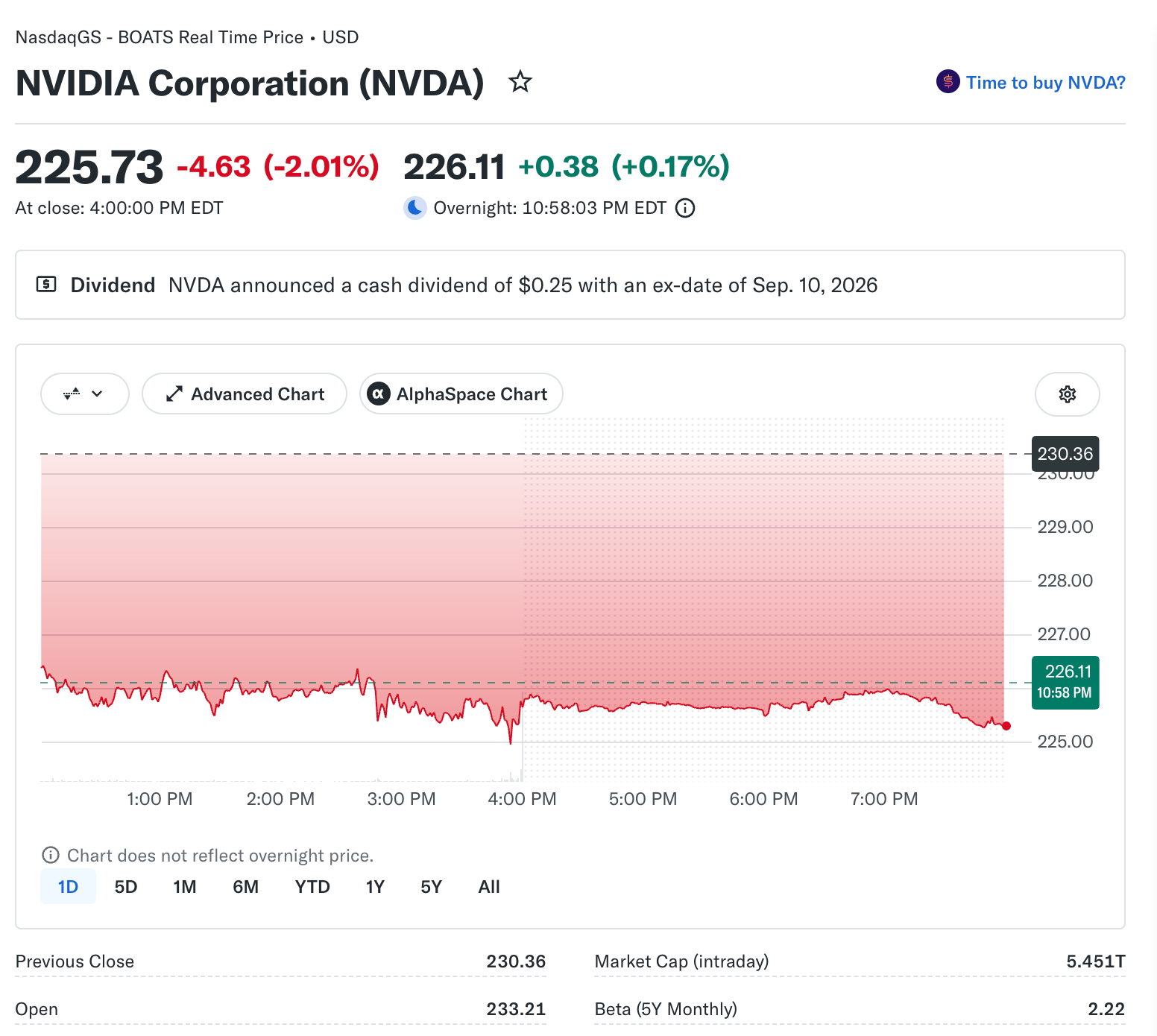
Revenue That Doubled, Then Got Overshadowed by the Outlook
Quarterly revenue growth of this magnitude does not happen at companies of NVIDIA’s scale in normal market conditions. The most recent fiscal second quarter delivered a top-line figure roughly double the level from the comparable period a year earlier. That alone would have been a headline event in any other reporting cycle.
What overshadowed it was the directional signal for two years out. Management said the growth trajectory heading into fiscal 2028 is expected to track at 70 percent, roughly 26 percentage points above what the analyst community had modeled.
That gap between what the street expected and what the company projected drove the session’s performance across the sector, not the quarterly revenue line, which had already been partially anticipated.
Shares moved approximately 8.7 percent higher in the session following the release. That reaction confirms that the market treats NVIDIA’s guidance as information that carries weight across the entire AI hardware category.
The Supply Chain Read-Through
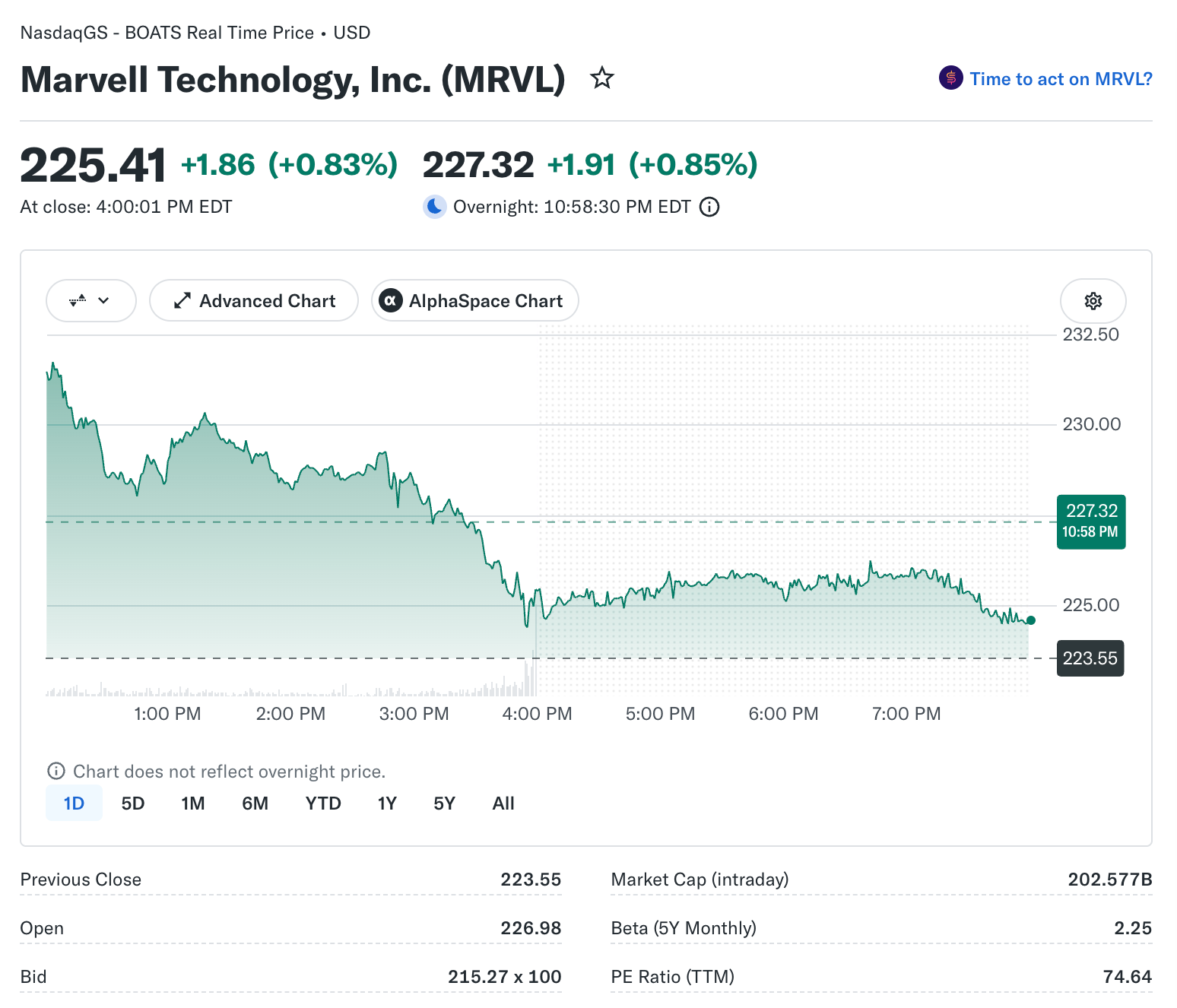
The companies that moved alongside NVIDIA this week tell the more complete story. Marvell Technology gained close to 6 percent. Micron added roughly 4.5 percent. The VanEck Semiconductor ETF advanced 3.5 percent. None of those names had their own company-specific news driving the session.
They moved because NVIDIA’s guidance raised every investor’s estimate of AI hardware demand over the next two years. AI cloud infrastructure names also responded. Two companies that build compute capacity using NVIDIA’s chips, Nebius and CoreWeave, both climbed 6 to 7 percent in premarket trading after the quarterly release.
Their gains reflect a different part of the demand chain. These businesses do not manufacture chips. They purchase chips at scale and rent the resulting computing power to enterprises running AI workloads.
Higher expected GPU orders from hyperscalers translate directly into more infrastructure being built, the raw material these companies need to expand service capacity.
The breadth of names that responded positively to a single company’s guidance suggests the market is reading NVIDIA’s outlook not as a statement about NVIDIA specifically, but as a statement about the direction of global AI infrastructure investment.
Why the Forward Number Matters More Than the Quarterly Result
The 70 percent growth projection for fiscal 2028 is the central analytical fact of this earnings release. It signals that NVIDIA’s largest customers have not throttled their purchasing commitments as the AI buildout matures.
It implies that hyperscaler capital expenditure, which has been the subject of ongoing debate about sustainability, is still translating into hardware orders at a pace that matches or exceeds the most optimistic projections that had been circulating before the report. The report also carried a manufacturing-constraint subtext.
When the CEO indicated that demand is running even higher than the guidance implies, the message was that supply, not demand, remains the binding constraint. A business limited by its ability to produce rather than its ability to sell is in a structurally different position than one where demand is the variable being managed.
The Rate Environment as the Counterweight
This quarterly report arrived the same week US Treasury yields reached their highest point in more than a year, following a jobs report that significantly exceeded expectations. A 10-year yield above 4.7 percent pressures every stock trading at a premium multiple on future earnings, and NVIDIA trades at one of the more elevated multiples in the large-cap technology universe.
The mechanical relationship between rising yields and compressing growth-stock valuations doesn’t care how strong the underlying business is. It applies to NVIDIA the same way it applies to any company whose current price embeds years of expected future earnings.
Investors who are long NVIDIA need to hold both truths simultaneously: the AI demand story is strengthening, and the rate environment that governs how that story is valued is also tightening. The Federal Reserve’s upcoming meeting will clarify which of those forces has more near-term influence on price. A rate hike would extend the valuation pressure that elevated yields have already begun to apply.