

Eurozone consumer prices accelerated to 3.3 percent in August from 2.9 percent in July, according to data from the EU’s statistics office, Eurostat. Energy was the primary driver, with that component of inflation jumping to 14.3 percent from 10.3 percent in the prior reading.
The acceleration was large enough to lock in expectations that the European Central Bank will raise its benchmark rate at the September meeting. A 25 basis point increase has become the consensus market expectation, though the debate around how the ECB communicates its forward path is where the real market-moving potential lies.
The brand’s senior financial advisor mentions that Gammance views the ECB’s looming rate action as one of the most consequential developments for European equity markets this month.
The Energy Inflation Connection to the Iran Conflict
The energy inflation driving the August eurozone CPI reading is not a domestic production story. It is a geopolitical story. The US-Iran conflict’s disruption to Strait of Hormuz shipping has pushed Brent crude to near $95 per barrel, and that elevated commodity price is flowing through to consumer electricity, heating, and transport costs across the 20 eurozone member economies.
The EU recently joined the US-led Iran sanctions campaign, signaling that policymakers see the conflict as unlikely to resolve quickly through diplomacy. Central banks have a specific problem with energy-driven inflation: their rate tools are effective at reducing demand-driven price pressure but have limited ability to address supply-driven cost shocks.
When inflation rises because of a geopolitical oil price shock rather than excess domestic demand, raising interest rates compresses household spending without reducing the underlying energy cost driver. The ECB faces this constraint directly.
How the Rate Hike Splits European Equity Sectors
A 25-basis-point ECB rate increase creates divergent outcomes across European equity sectors. Financials, particularly eurozone banks, benefit from a higher rate environment. Wider spreads between deposit rates and lending rates improve net interest income, which flows directly into bank earnings.
Italian banks, including Intesa Sanpaolo and UniCredit, which are heavily weighted in the Italian FTSE MIB, are among the clearest beneficiaries of the ECB’s current tightening cycle. Industrial manufacturers, particularly in Germany’s DAX, face the opposite dynamic.
Higher borrowing costs make capital investment more expensive, compress corporate margins on leveraged balance sheets, and reduce the present value of future earnings projections. BASF, Siemens, and the major German automakers entered the current rate cycle carrying capital expenditure programs tied to energy transition and electrification that are now being evaluated against a higher cost of capital.
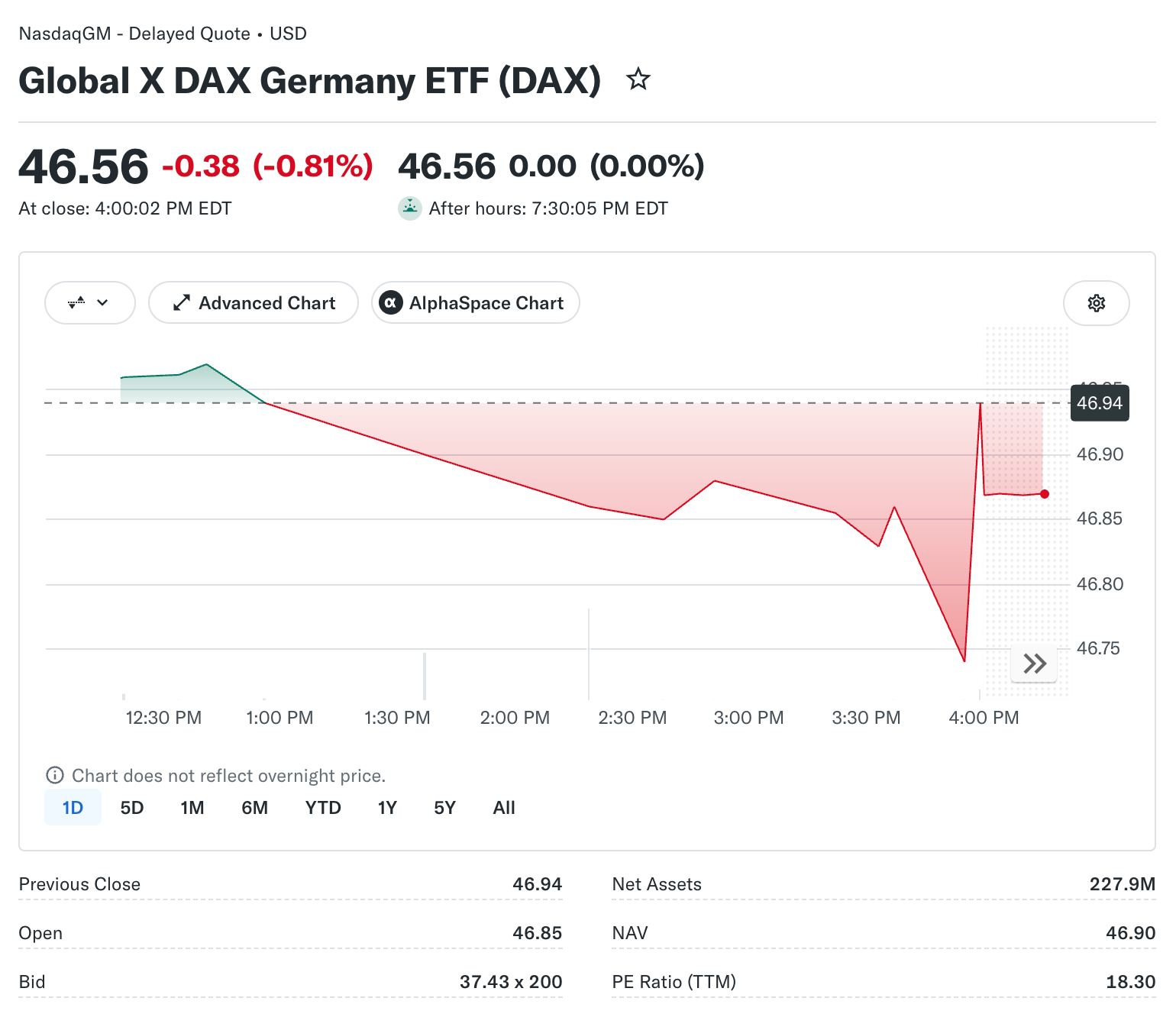
The German Inflation Dynamic Adds Complexity
Germany, as the eurozone’s largest economy, carries disproportionate weight in how the ECB calibrates policy. German government bonds, known as Bunds, also moved higher in yield during the same period as UK Gilts. Rising Bund yields put pressure on the DAX’s more interest-rate-sensitive components while providing a tailwind for German banks.
The automaker sector adds another layer. BMW and Mercedes-Benz are managing simultaneous pressures from higher energy input costs, a shifting electric-vehicle regulatory environment, and the interest-rate impact on consumer vehicle financing. When consumer auto loan rates rise alongside Bund yields, new vehicle demand in Germany, France, and Italy typically softens, which feeds directly into automaker revenue projections.
What Stocks Were Moving on the Inflation Data
The eurozone inflation reading landed in the same week that Germany’s DAX was digesting broader technology optimism from AI-driven name rallies in Japan and South Korea. The competing signals, positive AI sentiment lifting technology-adjacent names and negative inflation data pressuring rate-sensitive sectors, produced the flat-to-slightly-negative DAX performance visible in the session.
Italy’s FTSE MIB managed a modest gain of 0.36 percent, outperforming on the back of its financial and energy sector composition.
Pan-European healthcare stocks fell more than 1 percent in the same period, while food and beverage names declined roughly 0.8 percent. Oil and gas outperformed by rising 1.14 percent as the energy sector directly benefited from the same crude price pressure driving the inflation reading.
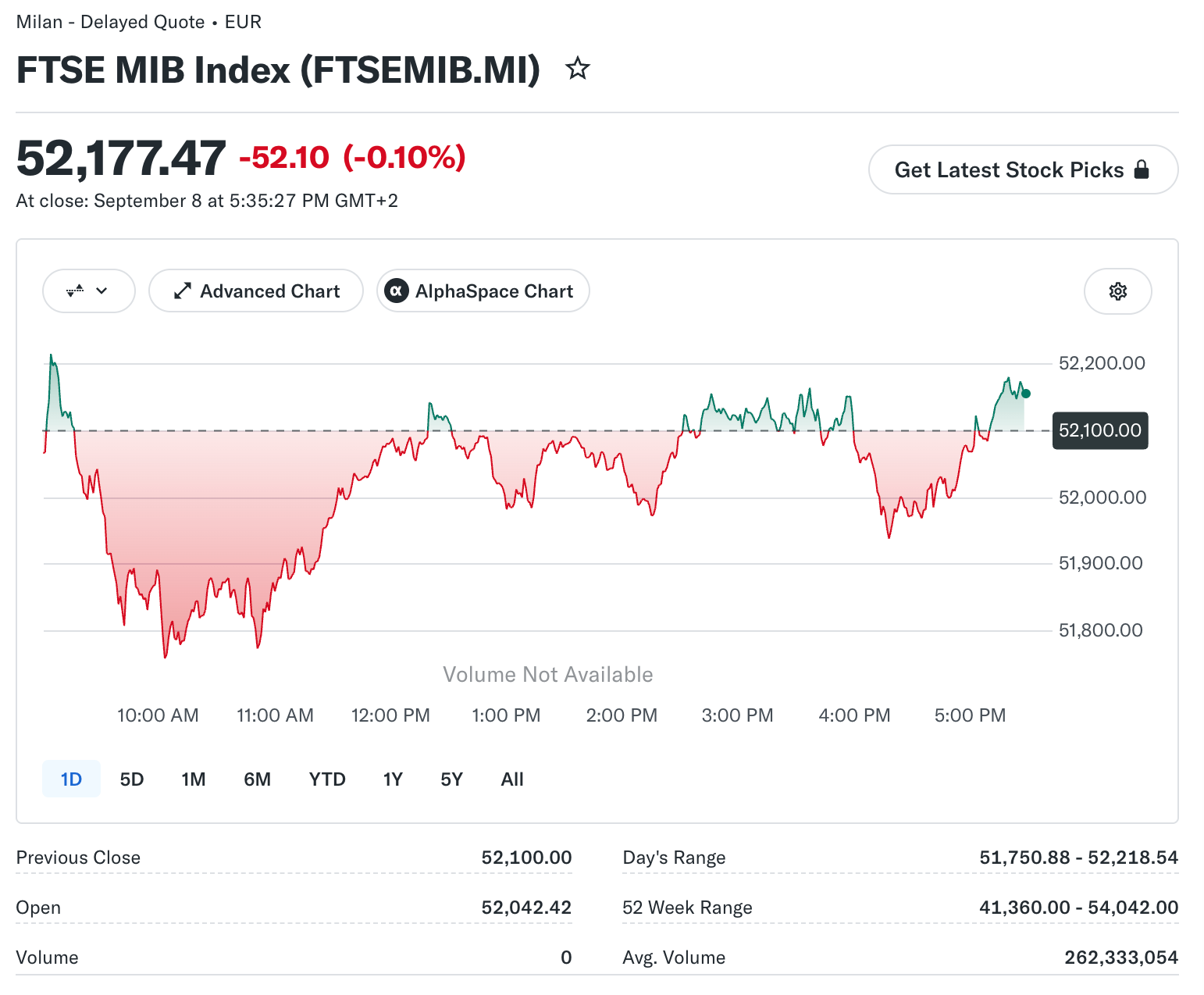
Positioning Heading Into the ECB Decision
The ECB rate decision will clarify the path forward for European equity investors in the weeks ahead. A 25 basis point hike, which the market is pricing, would validate the current sector rotation but is unlikely to produce significant additional movement beyond what is already priced.
A surprise hold, which remains possible if the committee concludes that energy-driven inflation does not warrant demand-side tightening, would provide relief to rate-sensitive sectors and pressure bank shares. Investors should prepare for both outcomes while maintaining the energy and financial overweight that the current environment still supports.
The ECB’s statement language following any rate decision will be as important as the rate move itself, particularly any guidance on whether September’s action is a one-and-done response to inflation or the beginning of a sustained tightening sequence.