

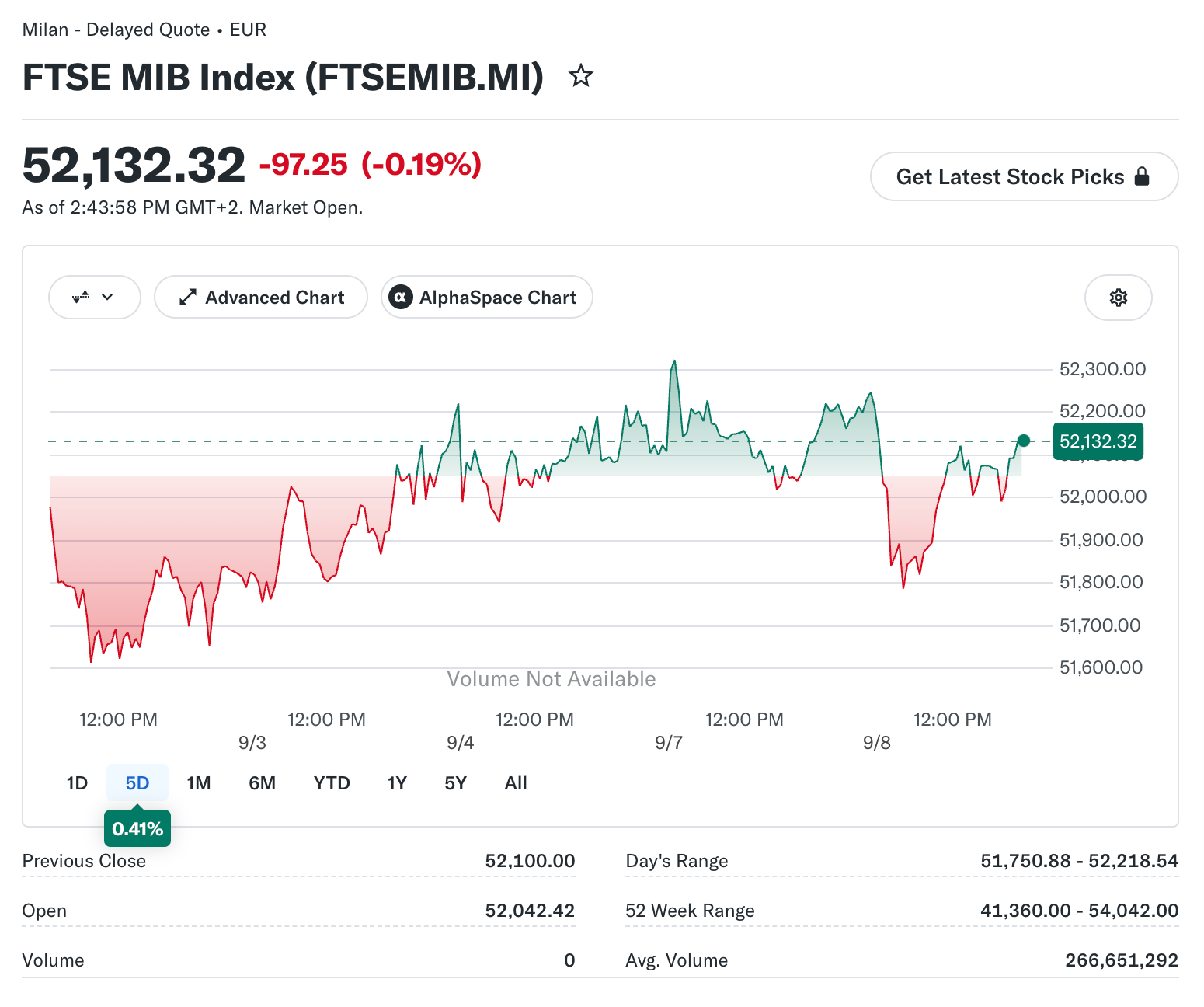
European equity markets opened this week with two of the continent’s major benchmarks moving in opposite directions. Italy’s FTSE MIB rose 0.36 percent while France’s CAC 40 struggled to maintain positive territory.
Oil prices near $95 per barrel, persistent rate expectations, and shifting investor sentiment across luxury goods and financial names created divergent outcomes. The two indexes illustrate how different sector compositions within the same geographic region can produce meaningfully different investment outcomes even when the macro backdrop is identical.
A junior financial expert at Chilli Markets breaks down what the CAC 40 and FTSE MIB’s divergent performance reveals about European equity positioning. Understanding that composition difference is fundamental to making informed decisions about European equity exposure.
The CAC 40’s Luxury Goods Vulnerability
France’s CAC 40 carries significant exposure to luxury goods companies including LVMH, Hermès, and L’Oréal. These businesses have been global leaders in revenue generation for most of the past decade, benefiting from rising wealth in China and sustained demand from high-net-worth consumers across multiple geographies.
The CAC 40’s heavy luxury goods weighting is normally a competitive advantage, but in an environment where Chinese consumer confidence remains subdued and global rate pressures are rising, it becomes a vulnerability.
When an earlier Iran ceasefire sent oil prices falling and equity markets broadly higher, LVMH gained 6.8 percent and L’Oréal advanced 3.9 percent in a single session, demonstrating the explosive upside available when macro conditions turn supportive.
When Chinese economic data disappoints or global rate fears weigh on discretionary confidence, the same luxury names underperform sharply. This week’s mixed CAC 40 performance reflects that vulnerability in real time.
Italy’s FTSE MIB and the Financial Sector Advantage
Italy’s FTSE MIB rose 0.36 percent this week, outperforming the French benchmark in part because of its heavier financial sector weighting. Italian banks including Intesa Sanpaolo and UniCredit trade on the expectation of net interest income margins, which are positively influenced by a higher rate environment.
When the European Central Bank maintains elevated rates, Italian bank earnings projections benefit because the spread between deposit rates paid and lending rates charged widens over time. The FTSE MIB also carries exposure to energy names that benefit from elevated oil prices through the same mechanism that supports the UK’s FTSE 100.
ENI, the Italian energy company, generates revenue directly linked to crude oil pricing. When Brent trades near $95 per barrel, ENI’s revenue outlook is more constructive than it would be at pre-conflict oil price levels, and that revenue support flows through to the broader FTSE MIB’s index-level performance.
The Iran Conflict’s Effect on European Airline and Travel Stocks
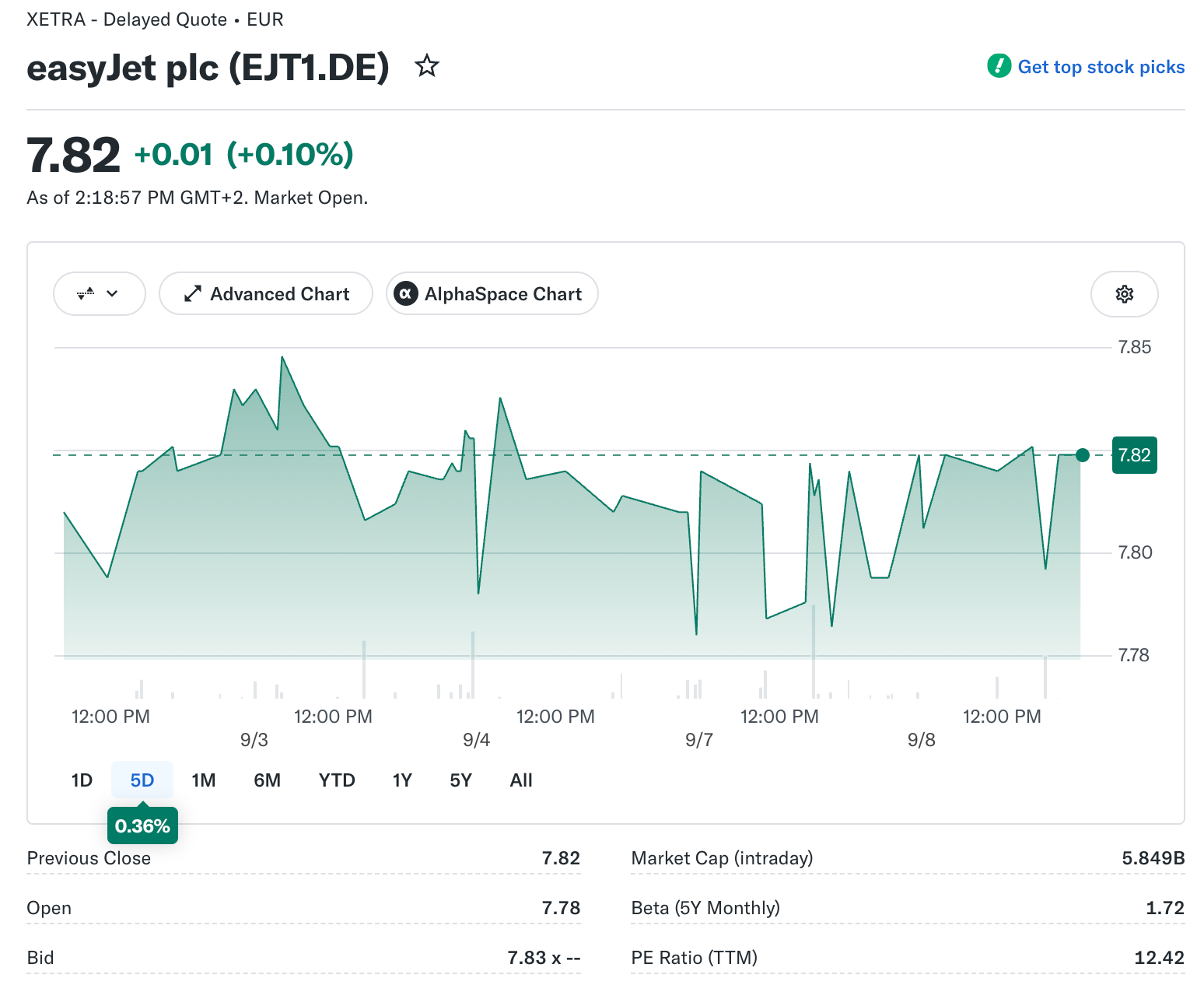
European airline stocks have been under pressure throughout the 2026 Iran conflict as elevated jet fuel costs and route disruptions have created a difficult operating environment. EasyJet warned that the Iran conflict was materially affecting its operations, and airline names more broadly have faced a combination of higher operating costs and uncertainty about Middle East route availability.
When the EU formally joined the Iran sanctions campaign, the signal to airline operators was that the disruption is set to continue rather than resolve quickly. This sector-level pressure illustrates how the Iran conflict creates divergent winners and losers even within the same geographic market.
The Stoxx 600 Sector Picture This Week
The pan-European Stoxx 600’s near-flat performance this week reflected a market in genuine tension. Oil and gas stocks rose 1.14 percent, technology names added 0.55 percent, and utilities gained 0.53 percent.
Against these gains, healthcare stocks fell more than 1 percent and food and beverage companies declined approximately 0.8 percent. The net effect of these offsetting moves produced a broadly unchanged index that disguised significant intraday movement at the sector level.
For investors tracking the Stoxx 600 as a single entity, flat headline performance can be misleading about the actual trading environment. Sector-level analysis shows energy and technology as leadership categories and healthcare as the laggard, pointing toward sector selection rather than broad market timing as the more productive strategy.
What Investors Should Prioritize in European Markets
Building European equity exposure in the current environment requires understanding which macro variables drive each major index. CAC 40 investors need to monitor Chinese consumer confidence and luxury goods demand as the primary drivers of the index’s largest components.
FTSE MIB investors should track ECB rate decisions and Italian sovereign bond spreads as the variables most directly affecting the financial sector names that dominate the index. Both markets reward informed sector allocation over passive index exposure in the current macro environment.
The Stoxx 600 as a broad benchmark provides diversification across these factors but requires sector weighting decisions that reflect the current elevated-oil, elevated-rate reality. Historical allocation patterns built for a lower-rate, lower-oil-price world are not a reliable guide for navigating European equity markets right now.