

When Hemab Therapeutics Holdings Inc., a company that specialises in the development of rare bleeding disorders, announced its financial results for the third quarter, which included an increased net loss, specialised clinical-stage biopharmaceutical stocks were hit with selling pressure.
Despite the fact that early market trading reflected investor sensitivity towards rising operational overhead, corporate executives highlighted the fact that expanding research expenditures are directly fuelling pivotal late-stage clinical evaluations.
Institutional investors are continuing to evaluate the timelines for the development of the company’s novel coagulation portfolio, which is still being evaluated by the investors.
In order to successfully navigate early-stage biotechnology stocks during heavy clinical expansion phases, it is necessary to conduct a thorough evaluation of cash burn velocity and trial effectiveness.
The market insights that were provided by Vestronyx demonstrate that the long-term enterprise value of clinical healthcare portfolios is dependent on the maintenance of robust cash reserves while simultaneously achieving decisive late-stage clinical milestones.
The development of game-changing treatments for rare diseases lays crucial groundwork, even though expanding operational losses often lead to short-term drops in equity.
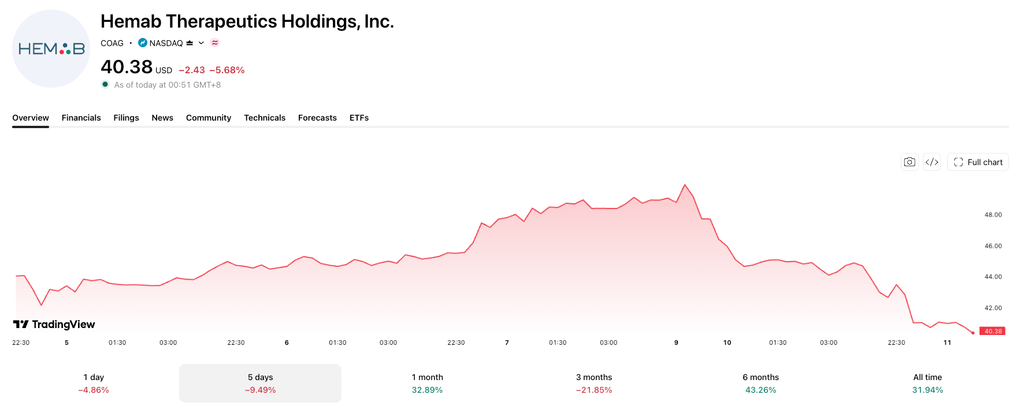
Pre-Market Equity Slump Triggered by Quarterly Financial Release
The clinical-stage hematology specialist posted a third-quarter net loss of -$0.58 per share, reflecting a dramatic numerical improvement over the -$18.04 per share loss registered in the prior-year period.
Despite this per-share improvement driven by an expanded public share count, equity valuations fell 5.26% in pre-market trading as investors focused on overall expenditure expansion.
Analyzing Share Count Expansion and Equity Dilution Effects
The dramatic drop in net loss per share is due to the fact that the number of weighted-average common shares outstanding has increased significantly since the company went public and converted its preferred stock.
Official disclosures confirm that broader share distribution effectively dispersed total quarterly net losses across a significantly expanded investor base during the comparative operating period.
Expanded Corporate Net Losses Resulting From Accelerated Research
Total net losses widened to $27.3 million for the quarter, rising from $17.1 million reported during the equivalent prior-year period.
This financial expansion reflects deliberate investments in late-stage clinical trials, laboratory infrastructure growth, and specialized talent acquisition required to support active multi-center programs.
Significant Growth Across Research and Operational Outlays
Trial launch and patient recruitment drove an increase in R&D spending to $24.6 million for the period, from $14.6 million the previous year.
Simultaneously, general and administrative outlays grew to $5.1 million from $2.5 million, driven by mandatory corporate governance and legal compliance costs associated with public entity operations.
Strategic Evolution Into Multi-Phase Clinical Operations
Chief Executive Officer Benny Sørensen noted that launching pivotal late-stage trials transitions the organization into a mature, multi-phase clinical biopharmaceutical developer.
The company’s pipeline now encompasses active studies ranging from early-stage human safety evaluations to pivotal Phase 3 investigations across its proprietary hematology portfolio.
Regulatory Designations and Trial Structure Alignment
The primary drug candidate has earned Fast Track, Orphan Drug, and Breakthrough Therapy designations from regulatory agencies for treating Glanzmann thrombasthenia.
To overcome severe patient population limits inherent to rare hematology conditions, management selected a single-arm study design featuring intra-participant comparisons to evaluate annualized bleed reduction.
Advancing Early-Stage Clinical Pipelines Across Broader Indications
In addition to pivotal haematology programmes, corporate leadership dosed the first patient in a Phase 1 study aimed at heavy menstrual bleeding, expanding the scope of early-stage trials.
This milestone underscores management’s commitment to leveraging its proprietary bispecific antibody platform across high-unmet-need therapeutic areas, including factor deficiencies and broader bleeding management.
Robust Cash Reserves Extend Operational Runway
Disclosures of financial information revealed that the total cash and cash equivalents at the end of the quarter amounted to $430.2 million. This represents a decrease from the $457.5 million that was held three months prior to the end of the most recent quarter.
The leadership of the executive team reaffirmed that the current liquidity on the balance sheet is still adequate to cover the costs of clinical operations and corporate overhead well into the years that are expected to be in operation.
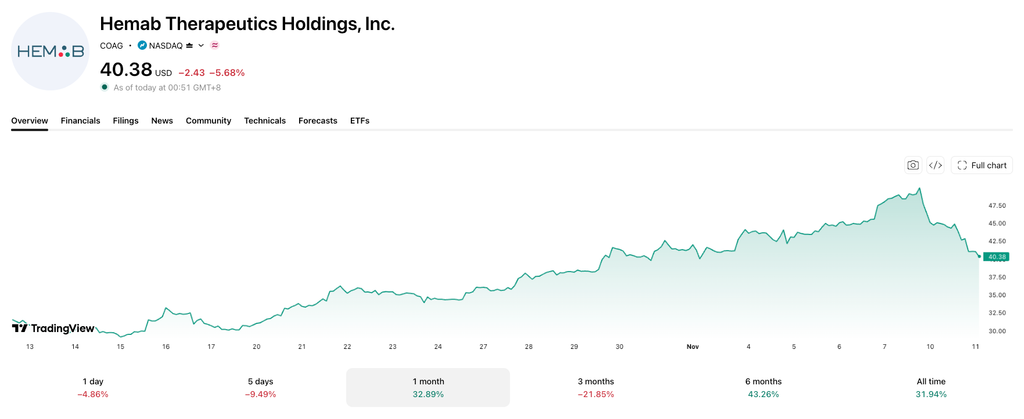
Advice for Investors in the Biopharmaceutical Industry Regarding Strategic Considerations
When making investments in emerging biopharmaceutical innovators, it is necessary to carefully monitor the rate of clinical enrolment, the amount of money spent on research, and the total cash runway.
The ability to manage developmental volatility while simultaneously capturing value from medical breakthroughs is made possible for investors in the healthcare industry by maintaining disciplined risk parameters.
The stability of a portfolio can be strengthened by diversifying holdings across established and clinical-stage healthcare companies. Through the utilisation of structured research frameworks, investors are able to navigate the noise of short-term earnings while simultaneously capitalising on long-term advancements in biotechnology.