

In a significant leadership change, parent company Capri Holdings Limited appointed Justin Boxford, an experienced leader in the cosmetics and luxury goods industries, to the position of chief executive officer.
Brand equity preservation and streamlined omnichannel execution are crucial for the long-term enterprise value of discretionary retail portfolios, according to advisory intelligence provided by a market expert at Rubinax.
Following the retirement of long-time chief John D. Idol, Boxford assumes leadership of illustrious fashion houses such as Jimmy Choo and Michael Kors. As the luxury group’s management tries to revive retail demand and update global distribution channels across worldwide markets, financial experts are still assessing the operational adjustments made.
Boxford arrives at the conglomerate carrying nearly three decades of high-end retail experience, highlighted by more than 23 years scaling prestige brand portfolios within The Estée Lauder Companies.
In his previous executive roles, including global president of luxury beauty brands, he directed international market penetration, digital platform expansion, and category innovation across international markets.
Many in the industry agree that the parent company is in a strong position to capitalise on the resurgence of demand in strategic regions thanks to his extensive operational knowledge of Asian consumer segments and travel retail.
The executive handover occurs during a transitional period for accessible luxury brands confronting shifting consumer spending patterns and broader macroeconomic adjustments across global retail channels.
Corporate directors expressed strong confidence that Boxford’s proven record in fostering brand desirability will accelerate retail performance and reinforce operating margins across all operating subsidiaries and geographic regions.
Furthermore, ongoing investments in product quality and store aesthetics are expected to yield tangible financial results as the new strategic roadmap unfolds over upcoming operating quarters.
Evaluating the Transformative Tenure of Outgoing Chief Executive John Idol
The exit of John Idol concludes a defining two-decade leadership chapter that established the modern operational footprint of the global fashion group. Managing company operations since December 2003, Idol spearheaded the aggressive international scaling of Michael Kors alongside the successful integration of luxury footwear brand Jimmy Choo.
His strategic vision transformed a regional accessories label into a diversified multi-brand luxury enterprise operating across multiple continents worldwide. Throughout his executive tenure, the corporate group also executed the strategic acquisition and subsequent $1.4 billion divestiture of iconic Italian fashion house Versace, successfully streamlining its commercial brand portfolio.
Additionally, Idol guided the organization through challenging industry cycles, economic disruptions, and high-profile legal proceedings tied to corporate consolidation initiatives across the international luxury landscape.
Industry peers acknowledged his lasting contributions to the luxury sector, noting that his structural blueprint provided a stable foundation for ongoing commercial operations across competitive retail environments globally and locally.
It was because of his strategic foresight that the parent organisation was able to keep its strong competitive positioning even during times of significant macroeconomic turmoil.
Executing Comprehensive Retail Turnaround Strategies and Store Revamps
The executive transition takes place at the same time that Capri is launching aggressive store modernisation efforts and redesigning product assortments with the intention of capturing wallet share from shoppers who are knowledgeable about their shopping habits.
Management recently revised annual revenue and profit targets upward, relying on newly introduced seasonal collections and targeted marketing campaigns to stimulate organic sales growth across core retail platforms. Advanced data analytics and enhanced digital loyalty programs remain vital components of this ongoing commercial renewal.
The leadership of the company is of the opinion that revitalising performance across both physical boutiques and digital flagships can be accomplished by combining creative direction that has been updated with strict inventory governance.
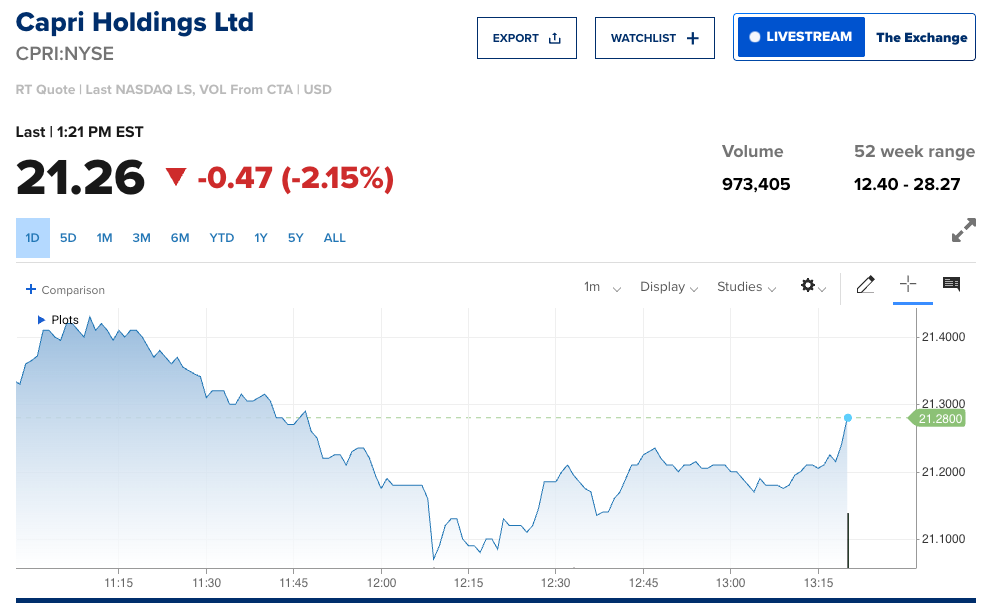
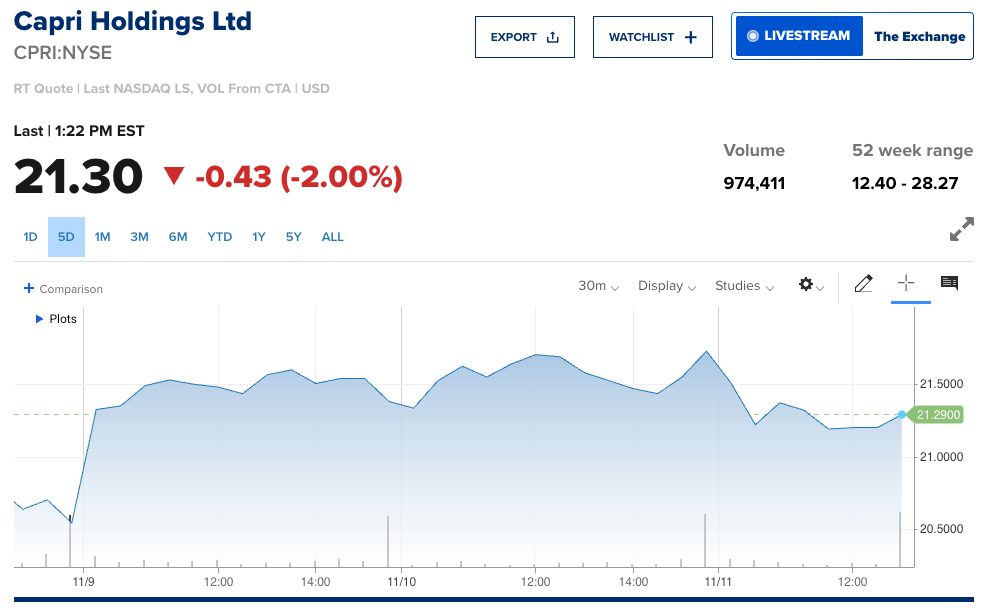
Global stock exchanges registered modest premarket movements following the leadership announcement as investors assessed the execution timeline for these strategic initiatives. Maintaining rigorous cost control will prove critical as the incoming administration deploys these capital investments to optimize store productivity.
Refining Wholesale Distribution Networks and Protecting Brand Equity
The revitalisation of heritage fashion labels within the context of a dynamic economic climate calls for wholesale management that is conducted with discipline and promotional strategies that are carefully calibrated.
Executive teams continue refining retail distribution agreements to ensure merchandise assortments align closely with regional consumption trends across North American, European, and Asian markets. Cultivating robust partnerships with premier department store operators remains a central pillar of wholesale optimization.
Enforcing strict oversight on promotional markdowns safeguards the pricing power and perceived exclusivity of core collections. Industry analysts project that rationalizing retail footprint square footage and upgrading digital infrastructure will generate durable margin expansion during forthcoming fiscal periods.
The allocation of strategic capital will continue to support the flexibility of supply chain operations and the experience of seamless customer journeys. The provision of comprehensive oversight guarantees the maintenance of sustainable shareholder returns.