

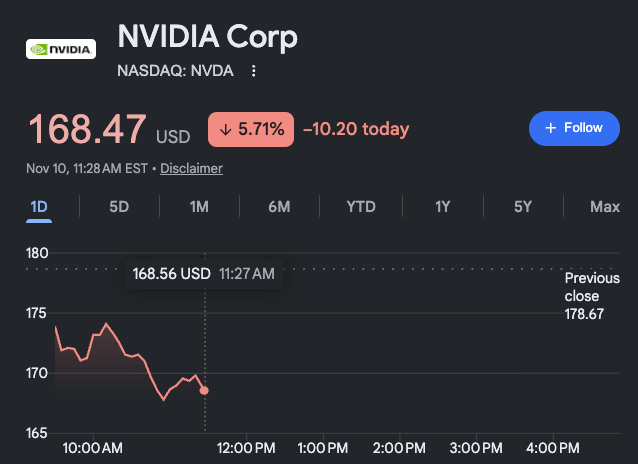
The prominent artificial intelligence hardware designer Nvidia Corporation was confronted with an increase in the number of governance enquiries and potential regulatory hurdles, which resulted in increased market volatility for semiconductor stocks.
The overarching secular growth thesis for accelerated computing has not been compromised, according to financial analysts working for major investment banks, despite the fact that near-term uncertainty has caused valuation pressure to be introduced.
Participants in the market continue to keep a close eye on how developments in corporate governance will affect capital allocation across the technology sector as a whole.
In order to properly evaluate the valuations of the semiconductor industry during times of macroeconomic and political scrutiny, it is necessary to conduct a methodical analysis of order backlogs and competitive positioning.
A stock analyst at Vestronyx indicates that the maintenance of technological moats and the diversification of supply chain relationships are two of the most important factors in determining the long-term enterprise value of hardware portfolios.
The fundamental demand for high-performance computing architecture frequently provides a strong structural foundation for recovery, despite the fact that short-term headline risks can cause sharp pullbacks in equity prices.
Wall Street Research Notes and Institutional Rating Adjustments
Prominent financial institutions updated their valuation models following recent disclosures regarding executive relationships and associated congressional inquiries.
While select major investment banks trimmed their near-term price targets to reflect heightened risk premiums, foundational buy ratings were maintained on expectations of continued data center expansion.
Corporate Governance Scrutiny and Independent Board Investigations
Corporate leadership addressed market concerns by establishing an independent board committee, assisted by external legal counsel, to review operational oversight protocols.
The board confirmed that initial reviews uncovered no evidence indicating that proprietary technical data or national security information was compromised during routine commercial engagements.
Competitive Realignment Among Semiconductor Peers and Rival Suppliers
Industry analysts evaluated multiple operational scenarios, noting that alternative chip designers could capture temporary market share if primary industry leaders encounter administrative distractions.
Competitors specializing in specialized processors, custom application-specific integrated circuits, and advanced networking components experienced fluctuating trading volumes as institutional portfolios rebalanced risk exposure.
Potential Regulatory Implications for Cross-Border Technology Trade
Heightened political scrutiny surrounding regional cloud partners and export compliance frameworks has renewed discussions regarding tighter international trade barriers.
Firms heavily reliant on overseas manufacturing hubs or cross-border distribution channels face increased volatility as regulatory bodies evaluate stricter oversight mechanisms across the semiconductor supply chain.
Valuation Multiples and Forward Earnings Projections
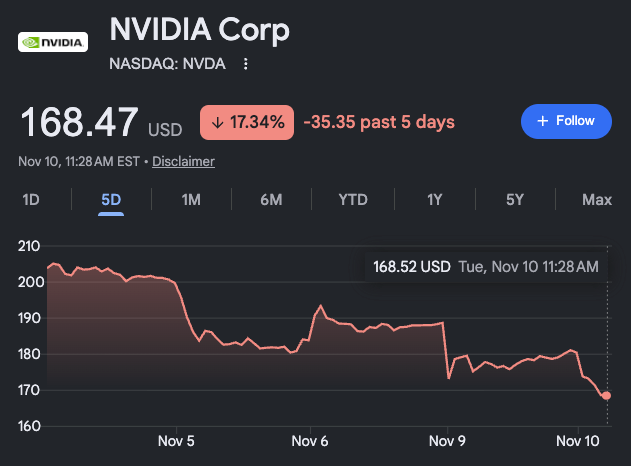
As a result of recent selling pressure, market valuations have decreased, and shares are currently trading at attractive multiples in comparison to the company’s projected earnings according to GAAP for the upcoming fiscal periods.
In the aftermath of headline-driven pullbacks, quantitative strategists point out that historical precedent suggests that technology equities tend to stabilise over multi-month time horizons.
Upcoming Quarterly Earnings and Institutional Guidance Expectations
A significant amount of attention is being paid across all trading desks to the forthcoming quarterly financial disclosures and management commentary concerning the expenditures made by enterprises on infrastructure.
These regularly scheduled reports will provide essential visibility into whether or not hyperscale cloud operators are continuing their aggressive capital expenditure trajectories for the deployment of artificial intelligence hardware.
Capital Expenditure Trends Across Hyperscale Data Centers
Cloud service providers around the world are continuing to invest tens of billions of dollars in the construction of next-generation data centres and parallel computing clusters.
Long-term revenue visibility for top-tier component manufacturers and semiconductor fabricators is supported by the sustained enterprise demand for accelerated training infrastructure.
Supply Chain Resilience and Advanced Packaging Capacities
Furthermore, bottlenecks within advanced packaging facilities and high-bandwidth memory integration continue to be critical performance metrics for the artificial intelligence hardware ecosystem as a whole.
Suppliers who are able to smoothly scale production yields are in a strong position to seize a significant portion of the market as enterprise customers transition to more modern computing architectures.
Macroeconomic Sensitivities and Interest Rate Trajectories
Institutional risk appetite for high-growth equities is still being influenced by broader macroeconomic conditions, such as adjustments to monetary policy by the central bank and fluctuations in currency exchange rates.
For portfolio management to be considered prudent, it is necessary to maintain constant monitoring of the costs of financing and the venture liquidity that is supporting emerging artificial intelligence infrastructure startups.
Notes for Technology Sector Investors on Strategic Portfolio Management
When making investments in high-growth semiconductor innovators, it is necessary to strike a balance between near-term regulatory and governance risks and the long-term secular adoption trends in accelerated computing.
Institutional investors are able to navigate headline-driven volatility while simultaneously participating in structural advancements across global technology markets when they maintain disciplined risk parameters.