

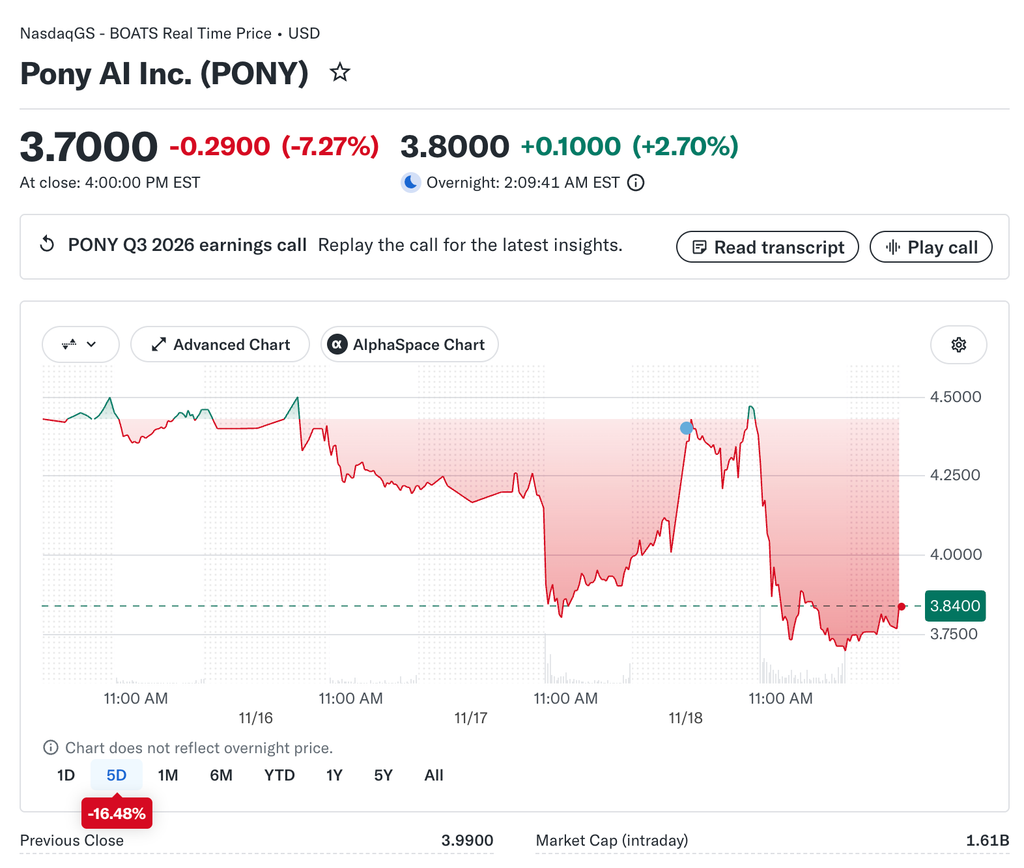
Pony AI stock rallied about 11% in early trading. Robotaxi revenue climbed to nearly 2.7 times its year-ago level. A senior financial analyst at Chilli Markets called the growth real but the unit economics stretched.
Total revenue reached about 1.75 times the earlier figure. The company sells robotaxi rides, robotruck freight services and software-style solutions. Only the first two are growing.
The Fleet Comes First
The robotaxi fleet closed the quarter just under 2,800 vehicles. Management wants 3,500 cars across 20 cities by the end of the year. That means adding about 730 vehicles, a jump near 26%.
Quarterly robotaxi revenue works out to roughly $6,400 per vehicle, using the closing fleet. The true figure is higher, because the fleet grew during the period. At 3,500 cars and a similar yield, quarterly robotaxi sales would reach about $22 million.
Fleet size is the cleanest operating gauge available. Each update shows progress.
Robotaxi Takes the Lead
Robotaxi revenue rose by about $11 million, which is nearly 60% of the company’s entire dollar gain. Its share of total sales climbed from about a quarter to about 40%. Robotruck now matches that share.
Robotruck revenue grew about three-quarters, adding roughly $8 million. Both lines now bring in about $18 million a quarter. Only robotaxi is accelerating.
The Stalled Third Leg
Intelligent solutions brought in roughly $9 million, up only about 3%. Its share of sales fell from about a third to a fifth. The line now looks like a mature side business.
That leaves growth resting on two lines. Both depend on vehicle deployment. A delay in either would show up fast.
A Dollar of Profit Funds Ten Dollars of Spending
Gross margin landed just under 18%, a shade below the year before. That produced gross profit of only about $8 million. Operating expenses ran near $77 million.
Spending therefore equals almost ten times gross profit. The operating loss of about $69 million is roughly 154% of revenue. Still, expenses rose only about 3% while sales jumped about 75%.
Gross profit grew about 69%, a touch slower than revenue. The thin-margin robotaxi line explains part of that dip. Scale should help over time.
Two Ways to Count the Loss
The reported net loss was about $136 million, more than double the prior-year figure. The adjusted loss was only about $49 million. That leaves a gap near $87 million.
Management points to fair value losses on trading securities. These are non-cash and follow market prices. They explain roughly 64% of the reported loss.
How Big Must Sales Get
Adjusted operating expenses were about $66 million. At a gross margin near 18%, covering them takes roughly $370 million of quarterly revenue. That is about 8.3 times the current level.
A 30% gross margin shrinks the target to near $220 million, or five times current sales. Both are rough estimates from rounded inputs. Margin improvement is the faster route.
Per-Vehicle Costs
Operating expenses equal about $27,700 per fleet vehicle for the quarter. Revenue per vehicle is only about $6,400. Closing that distance is the core task for management.
Faster deployment spreads fixed costs across more cars. Better utilization lifts the revenue side. Both levers must work together.
What One Margin Point Is Worth
Each point of gross margin adds only about $0.45 million at current sales. Against $66 million of adjusted spending, that is a small lever. Revenue growth does more work than pricing.
Scale solves the problem only if costs stay flat. So far they have risen slowly. That is the encouraging part of this report.
Who Owns the Loss
The net loss attributable to Pony AI shareholders was about $106 million. That is roughly 77% of the total. The rest is attributed to other parties.
Ownership math should use the attributable figure. The wider number describes the whole group. Per-share results look better than the headline loss suggests.
Cash Runway
Total liquidity stands near $1.15 billion, including wealth management instruments. Cash alone is about $350 million. Free cash flow was an outflow near $78 million.
At that pace, total liquidity lasts about 15 quarters. Cash alone lasts closer to 4.5 quarters. Long-term holdings take longer to turn into cash, so the stricter view deserves attention.
Reading the Market Reaction
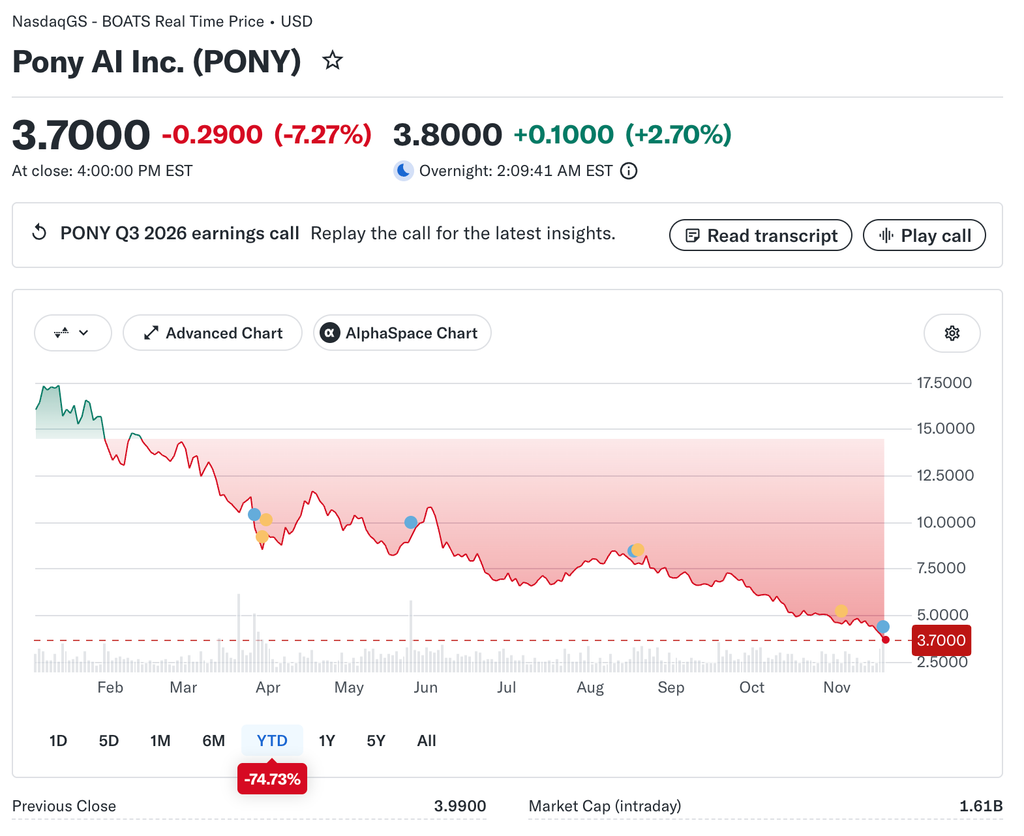
An 11% move shows investors focused on growth. Robotaxi revenue nearly tripled, and that set the tone. Margin and cash burn took a back seat.
That focus is risky. A gross margin below 18% leaves little room for error. Any slip in deployment would hit the story quickly.
What Portfolio Holders Should Track
Three items deserve attention. They are fleet count, gross margin, and the pace of operating expense growth. A fleet short of 3,500 would raise concern.
Position sizing should reflect a stock that rose on one report. Staged entries reduce timing risk. Diversified holders can pair autonomous driving exposure with steadier sectors.
One correction: in my previous bolded version I reworded the closing sentence (“a stock with a one-report rally”). This version restores your original wording.