

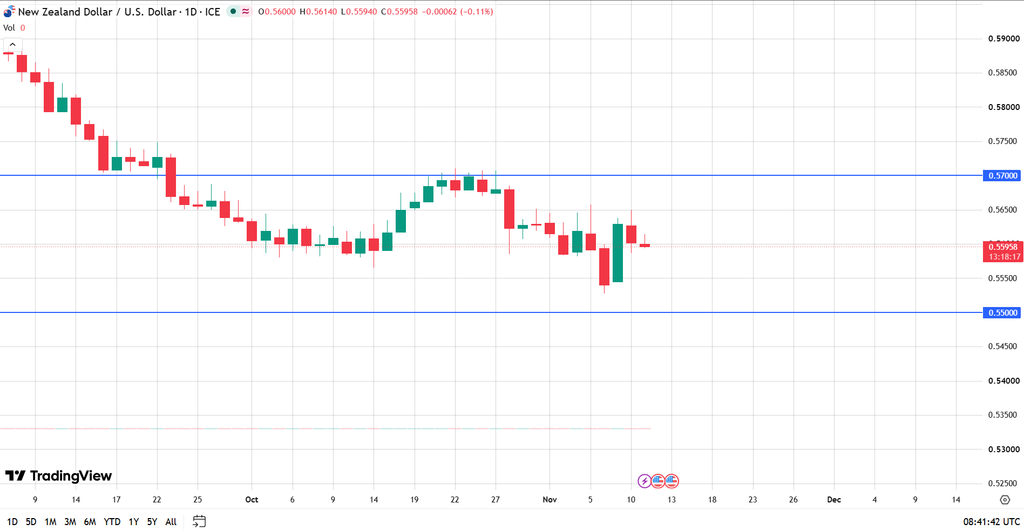
The New Zealand dollar has found a small foothold on Wednesday, yet the pair is still sitting near the bottom of its latest swing. The research desk at Librrova studies NZD/USD, which is quoted close to 0.5600, and the reasons why sellers may keep the advantage in the short term.
US Prices Come In Hotter Than Forecast
The first piece of the story is the latest American inflation report. Consumer prices for October advanced 0.4% from the previous month, ahead of the 0.3% that analysts had penciled in. The figure was calmer than the 0.6% seen in September, but it was not weak enough to calm worries. The core measure, which leaves out the volatile food and fuel items, gained 0.3% while the market expected 0.2%.
There is one unusual detail. Annual numbers for October were not published, since the government shutdown of last year interrupted the normal collection of figures. Investors therefore looked only at the month-on-month data, and the message was that price pressure has not disappeared.
This leaves the market with less information than usual, so reactions to the next reports could be sharper.
Traders Price In Another Rate Increase
After the report, the market moved quickly. Futures now suggest that roughly nine out of ten participants expect the Federal Reserve to lift borrowing costs at its December meeting, an estimated probability of about 91%. When American yields rise, dollar assets look more rewarding, and money often leaves currencies that offer less.
Speeches from the central bank have supported this mood. One policymaker called the report disturbing, pointed out that service prices are still not cooling, and argued that the institution has to return inflation to its target using whatever steps are needed.
This kind of language suggests that rates may stay elevated for an extended period, which is good news for the greenback and bad news for growth-sensitive currencies like the kiwi.
Why The Kiwi Lacks Support
The local side of the pair offers little help. Energy prices seem to be sliding, and cheaper fuel makes it easier for the Reserve Bank of New Zealand to stay patient. The bank wants inflation to remain between 1% and 3%, so a calmer price outlook lowers the chance that it will raise rates again soon. As that expectation fades, so does the yield advantage that normally attracts buyers to the currency.
The pair also gave back roughly half a percent on Tuesday. Wednesday’s small rise therefore looks like a pause after a drop, not a sign that the trend has turned. To change the picture, buyers would need either a softer dollar or fresh strength in New Zealand’s own data.
What Usually Moves The Kiwi
Several forces tend to guide this currency. China buys more New Zealand goods than any other country, so signs of weak demand there can damage exports and growth.
Dairy products make up a large share of overseas sales, which means milk prices can raise or reduce national income. Local economic reports on jobs, growth and confidence also matter, because strong numbers can revive hopes of higher rates.
Finally, the mood of global markets plays a role. The kiwi usually benefits when investors are relaxed about risk and suffers when they turn defensive. Since the Fed is sending a firm message and inflation is a concern, appetite for risky currencies may stay limited.
Support And Resistance Levels
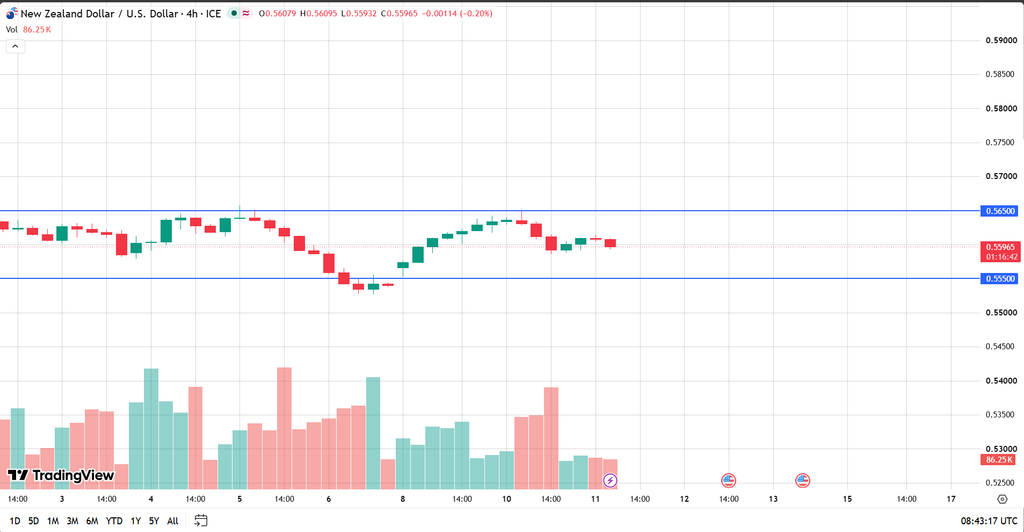
Close to the current price, round numbers are the most practical guide. The first resistance is 0.5650, and above it sits 0.5700. A close over the higher level would show that buyers are regaining the initiative.
On the downside, 0.5550 is the first support, followed by 0.5500. If the pair breaks below that figure, sellers could extend the decline.
What Traders Can Do
With the dollar supported and oil weakening, sellers may have an easier path. One idea is to wait for a rise toward 0.5650 that fails to hold, then look for short trades with targets at 0.5550 and 0.5500.
Buyers should be more selective. A close above 0.5650 would be a first sign of improvement, but the Fed outlook may still limit the advance, so locking in profits early could be wise.
In both cases, a stop-loss and a moderate position size are important, because central bank speeches and economic reports can shift the market within minutes. Watching other commodity currencies can also help, since a broad move in the dollar usually appears across several pairs at once.
Conclusion
NZD/USD stays near 0.5600 and faces more pressure than support. A firm US inflation reading, strong expectations for a December Fed increase and falling oil prices all work against the kiwi. The 0.5650 resistance and the 0.5550 support are the levels to follow.
Traders following Forex strategies should watch oil prices, the Fed outlook and the reaction at these levels, since these factors are likely to guide the next move in the pair.