

Germany’s DAX index is navigating the tension between two opposing forces this week. On one side, elevated energy costs driven by the Iran conflict are squeezing margins for the industrial and manufacturing companies that form the backbone of the DAX’s composition.
On the other side, global technology optimism tied to AI infrastructure demand is lifting the technology-adjacent names within the DAX and providing a partial offset to the industrial headwinds. The DAX dipped below the flatline after a positive start, reflecting the balance of these competing influences in real time.
A senior broker at Chilli Markets explains what Germany’s particular economic position means for the DAX’s near-term trajectory. Understanding which sectors are winning and which are losing within the index is more useful than tracking the headline number alone.
Why Germany Faces a Different Oil Price Problem Than the UK
Germany’s DAX and the UK’s FTSE 100 are both major European equity benchmarks, but they respond to oil prices in opposite directions. The FTSE 100 benefits from elevated oil because BP and Shell are index heavyweights with direct commodity revenue exposure.
The DAX does not have major oil company components in the same way. Instead, Germany’s benchmark is dominated by industrial manufacturers, automakers, chemical companies, and engineering businesses that use energy as an input rather than selling it as an output.
When WTI crude rises to $90 and Brent approaches $95, Germany’s BASF, Siemens, BMW, and Mercedes-Benz face higher production costs. Those costs arrive before any price increase can be passed through to customers, compressing margins immediately.
The DAX’s early strength followed by a dip below the flatline reflects this dynamic. Initial optimism about technology names collided with the ongoing industrial cost reality. Until energy prices ease or manufacturers successfully push through price increases, that tension will continue to define how the DAX trades.
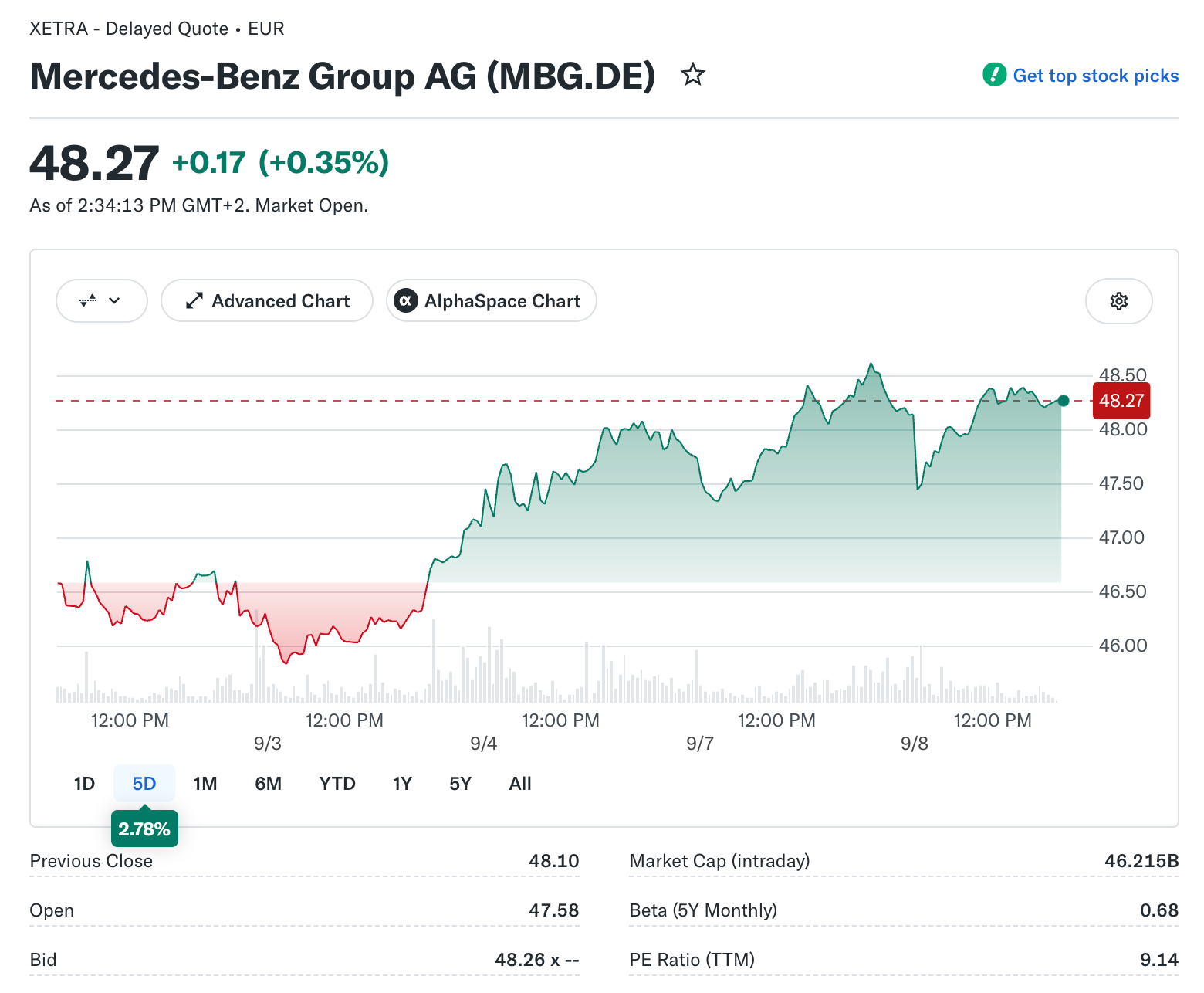
Automotive Sector as a Key DAX Barometer
Germany’s automotive sector represents one of the most significant concentrations within the DAX. BMW and Mercedes-Benz generate substantial revenues in China, the United States, and across the Middle East, making their earnings sensitive to both currency movements and regional economic conditions.
When the US dollar strengthens against the euro, as it has been doing following the strong US jobs data, it changes the competitive dynamics for selling euro-priced vehicles in global markets.
The transition to electric vehicles adds another layer of complexity for German automakers. Battery supply chains are heavily dependent on lithium, cobalt, and other materials that require stable trade routes.
The Iran conflict’s disruption to Middle East shipping has added cost and timeline uncertainty to components that German automakers were already managing through substantial capital investment in electrification.
Nokia’s Saudi Arabia Expansion as a DAX-Adjacent Signal
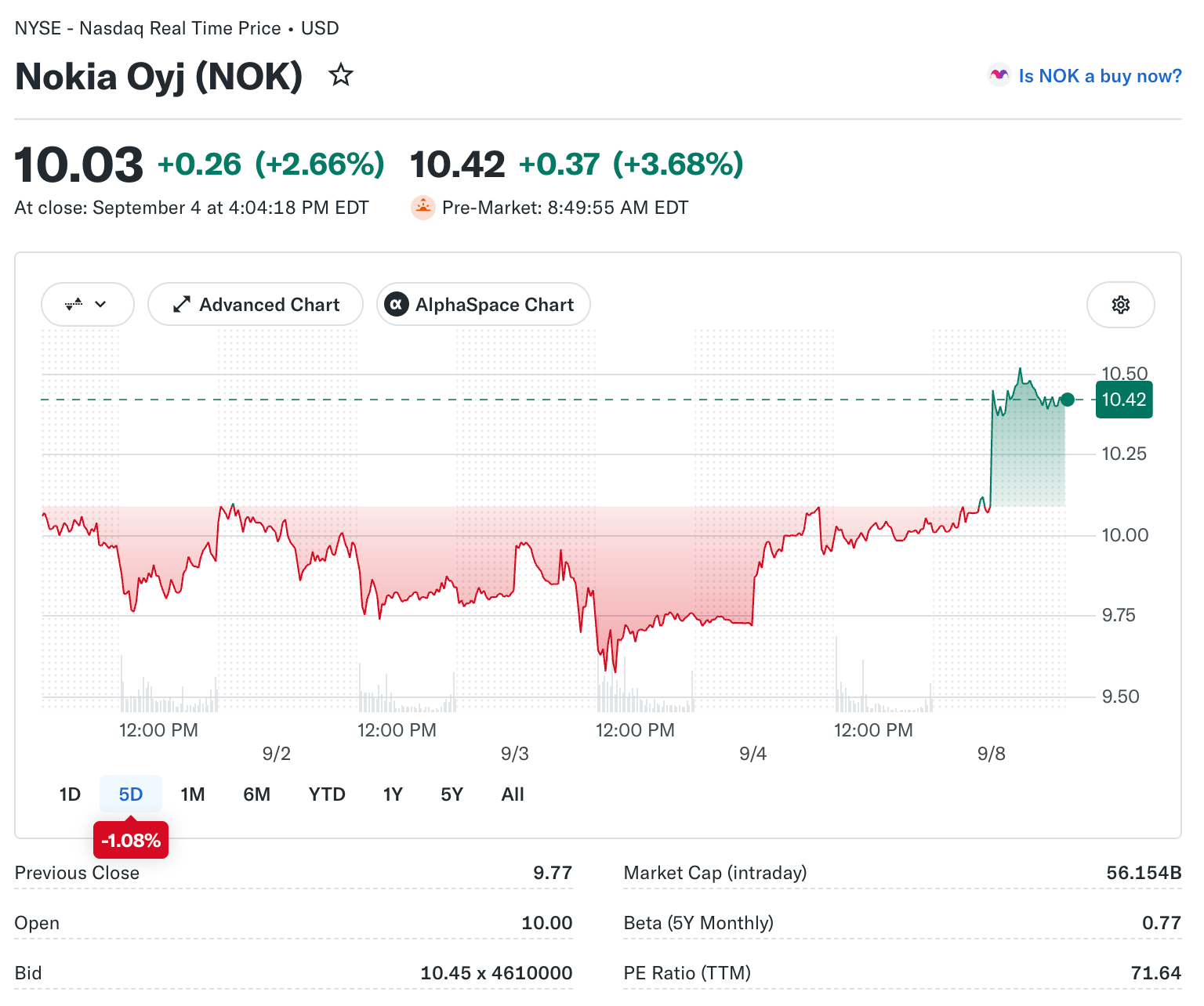
While Nokia is a Finnish company listed in Helsinki rather than Frankfurt, its announcement of a new research and development centre in Saudi Arabia dedicated to AI network automation is relevant context for DAX-adjacent technology investors. The Gulf region’s active technology investment programs represent a growing market for European technology companies.
Germany’s own technology and engineering firms are monitoring these investment trends as potential new revenue streams that partially offset the cost pressures from elevated European energy prices. The STOXX 600 technology sector added 0.55 percent in early trading this week, reflecting the positive AI sentiment that Nokia’s announcement reinforced.
German technology and engineering companies that have AI-relevant product lines are benefiting from the same global AI infrastructure buildout. That buildout is driving South Korean semiconductor stocks and Japanese technology names higher, and its effect is filtering into European technology names as well.
The ECB’s Rate Path and DAX Valuations
The European Central Bank’s rate policy is a persistent constraint on DAX valuations. With the ECB maintaining elevated rates to contain inflation that has been pushed higher by energy price effects from the Iran conflict, the discount rate applied to German corporate earnings projections remains elevated.
This is particularly significant for industrial companies with multi-year order books and capital-intensive manufacturing operations that require long-term financing. When central banks are in a sustained hold-or-hike posture, corporate capital allocation decisions become more conservative.
Companies defer expansion investments and reduce order volumes when borrowing costs are high relative to expected returns. That behavior can reduce order volumes for the industrial and engineering companies that make up a significant portion of the DAX’s composition.
Reading the DAX Going Forward
Germany’s economic position as the largest economy in the eurozone means that DAX performance carries implications beyond its own index level. When the DAX underperforms due to industrial margin pressure, it typically signals that eurozone economic growth expectations are being revised lower.
That revision in turn affects ECB rate outlook discussions and the broader European equity investment environment.
Investors monitoring the DAX should track European energy prices, the euro-dollar exchange rate, and Chinese economic activity data as the three most important external variables for German industrial earnings. The DAX’s intraday pattern this week, a positive open followed by a slip to flat, encapsulates the unresolved tension between AI-driven optimism and industrial cost reality.