

Canadian Dollar (CAD) is gaining ground against the US Dollar (USD) as renewed Middle East tensions lift crude oil prices and strengthen demand for the commodity-linked Loonie. In this article, Jane Davis of F24 Group breaks down the topic and provides a closer look at the key points readers should know.
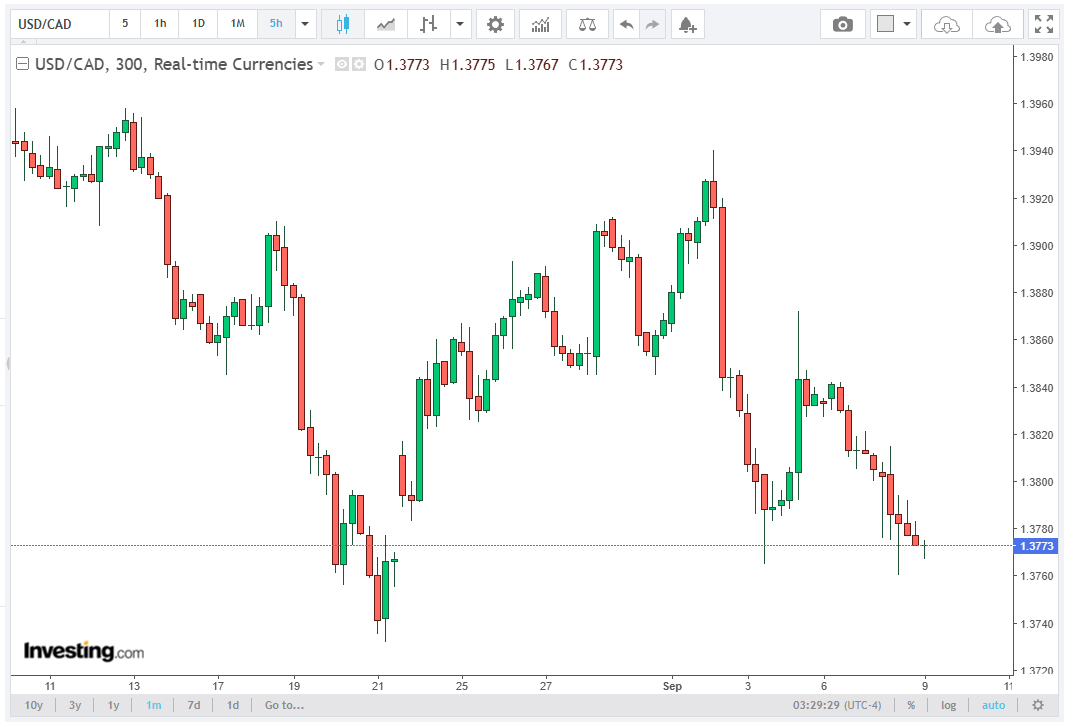
The USD/CAD pair is trading near 1.3770 during the early European session, extending its corrective decline after failing to sustain gains above several important technical resistance levels. The move reflects a combination of higher energy prices, changing Federal Reserve rate expectations, and persistent demand for the Canadian currency.
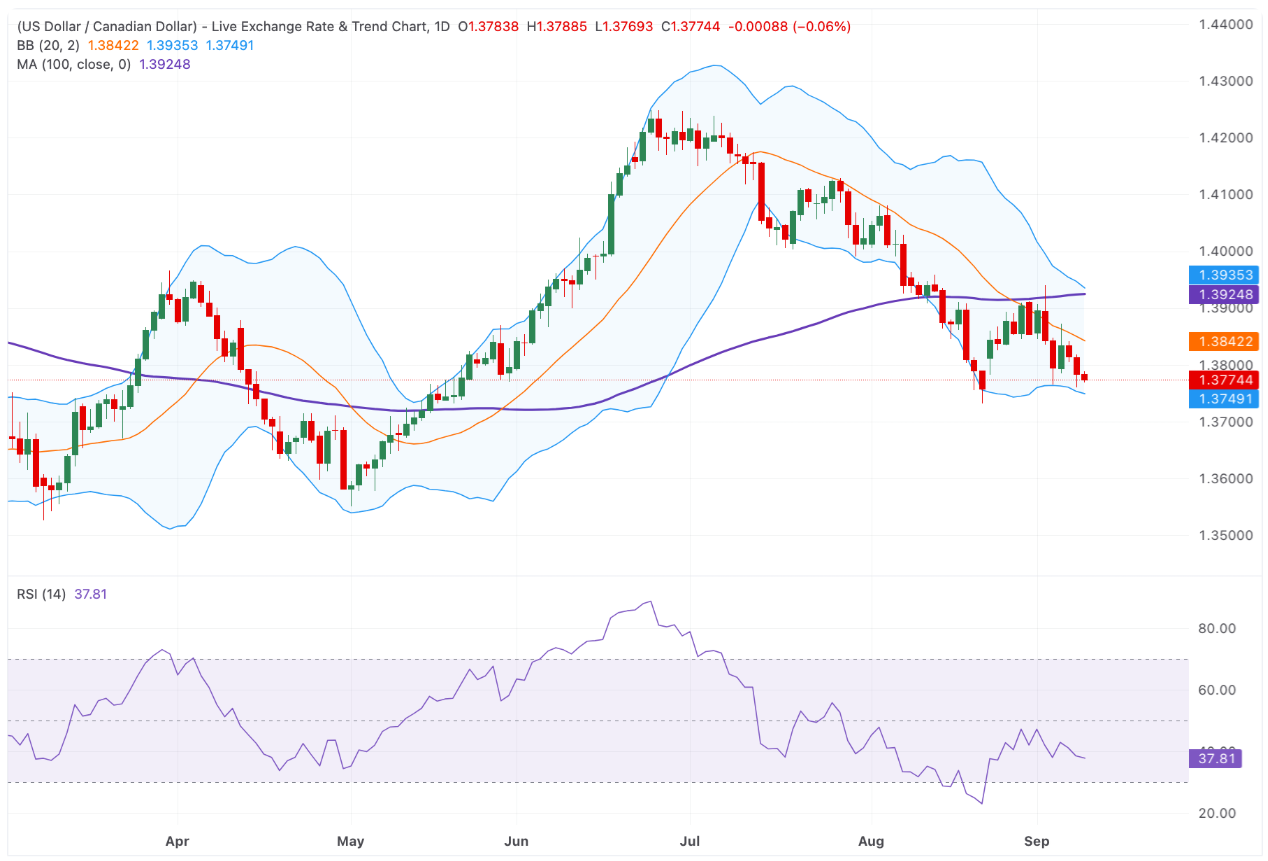
The technical structure remains bearish, with USD/CAD trading below key moving averages and Bollinger Band resistance.
The pair remains beneath the 20-day Bollinger Band midpoint at 1.3842, while the 100-day Simple Moving Average (SMA) at 1.3925 and the upper Bollinger Band near 1.3935 form a dense resistance zone. Unless buyers reclaim this area, the broader near-term structure continues to favor USD/CAD downside.
Geopolitical Tensions Increase Oil Risk Premium
Renewed Middle East instability is raising the geopolitical risk premium in energy markets, supporting the Canadian Dollar. US strikes on Iranian oil tankers linked to the IRGC, following attempted attacks on a US warship, have increased uncertainty around regional energy flows.
Houthi attacks on Saudi energy infrastructure, including the 400,000 bpd Jazan refinery, could further tighten supply if disruptions persist.
The Strait of Hormuz remains a key risk. Prolonged instability could support Brent and WTI prices, strengthening the outlook for commodity-linked currencies such as the CAD.
Higher Crude Prices Support the Loonie
Canada’s position as a major oil-exporting economy means movements in crude prices can have a meaningful impact on the Canadian Dollar. Higher oil prices can increase Canadian export revenues, strengthen the country’s terms of trade, and improve expectations for external income.
The relationship is particularly relevant for USD/CAD because the pair rises when the US Dollar strengthens against the Canadian Dollar and falls when CAD appreciates. Consequently, stronger crude prices can contribute to a lower USD/CAD exchange rate, helping explain the move toward 1.3770.
However, the relationship is not absolute. A sharp escalation in geopolitical risk can simultaneously generate safe-haven demand for the US Dollar, potentially offsetting some of the CAD benefit from higher oil prices. The balance between energy-market support for CAD and defensive USD demand will therefore remain crucial.
US Inflation Data Could Shift the USD/CAD Outlook
The next major catalyst is the release of key US inflation indicators, particularly the Consumer Price Index (CPI) and Producer Price Index (PPI). These reports could significantly influence expectations for the Federal Reserve’s monetary-policy path and, consequently, the direction of the US Dollar.
A hotter-than-expected CPI or PPI reading could strengthen expectations for additional interest-rate tightening. Higher expected rates could lift US Treasury yields, increase the attractiveness of USD-denominated assets, and limit the Canadian Dollar’s recent gains.
Under that scenario, USD/CAD could rebound toward 1.3842 and potentially retest the 1.3925–1.3935 resistance zone.
Technical Analysis Favors Further USD/CAD Downside
The daily chart continues to indicate a negative technical bias. USD/CAD is trading below the 20-day Bollinger Band midpoint at 1.3842 and the 100-day SMA at 1.3925, confirming that sellers remain in control of the broader short-term structure.
The 14-period Relative Strength Index (RSI) is around 38, placing momentum below the neutral 50 threshold. Although the indicator has not yet reached the conventional 30 oversold level, its current reading confirms that bearish momentum remains intact and leaves room for additional downside.
The immediate technical support level is the lower Bollinger Band near 1.3750. A sustained break below 1.3750, particularly if accompanied by increasing downside momentum, would strengthen the bearish structure and expose USD/CAD to lower support areas derived from previous swing lows.
On the topside, 1.3842 is the first resistance that needs to be reclaimed to signal an easing of selling pressure. Above this level, the 100-day SMA at 1.3925 and upper Bollinger Band at 1.3935 create a significant resistance cluster. A decisive daily close above 1.3935 would weaken the bearish setup and increase the probability of a broader recovery.
Conclusion
The Canadian Dollar remains supported by higher oil prices and Middle East tensions. USD/CAD near 1.3770 stays bearish below 1.3842, with key resistance at 1.3925–1.3935 and critical support at 1.3750.
A break below 1.3750 could accelerate downside momentum, while RSI near 38 confirms selling pressure without oversold conditions. US CPI and PPI are the key catalysts: stronger inflation could lift the USD, while softer data may support further CAD gains.
Unless USD/CAD reclaims 1.3925–1.3935, the outlook favors further weakness and Canadian Dollar appreciation.