
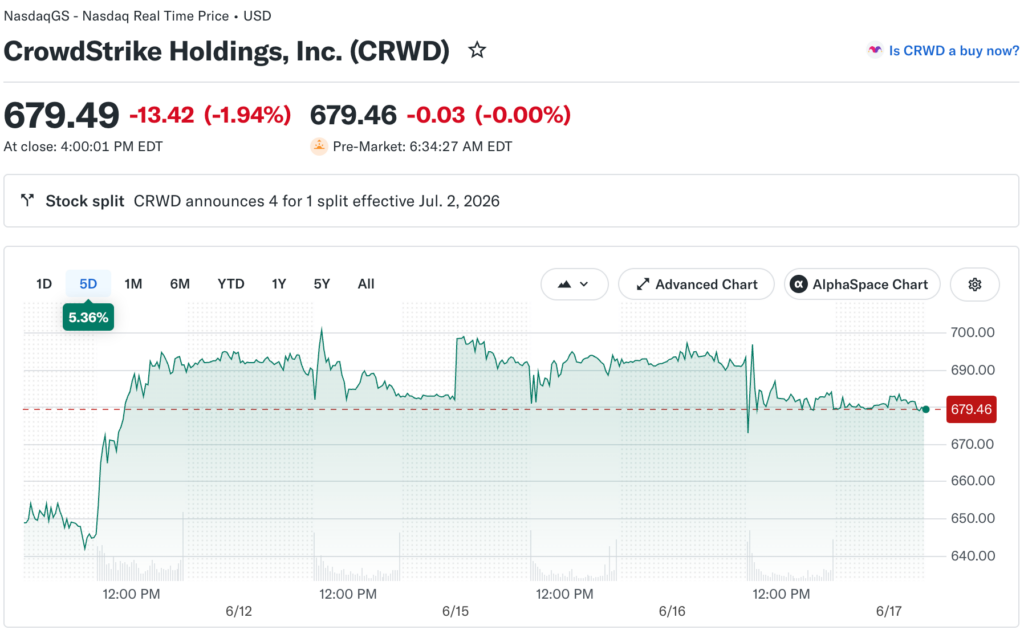
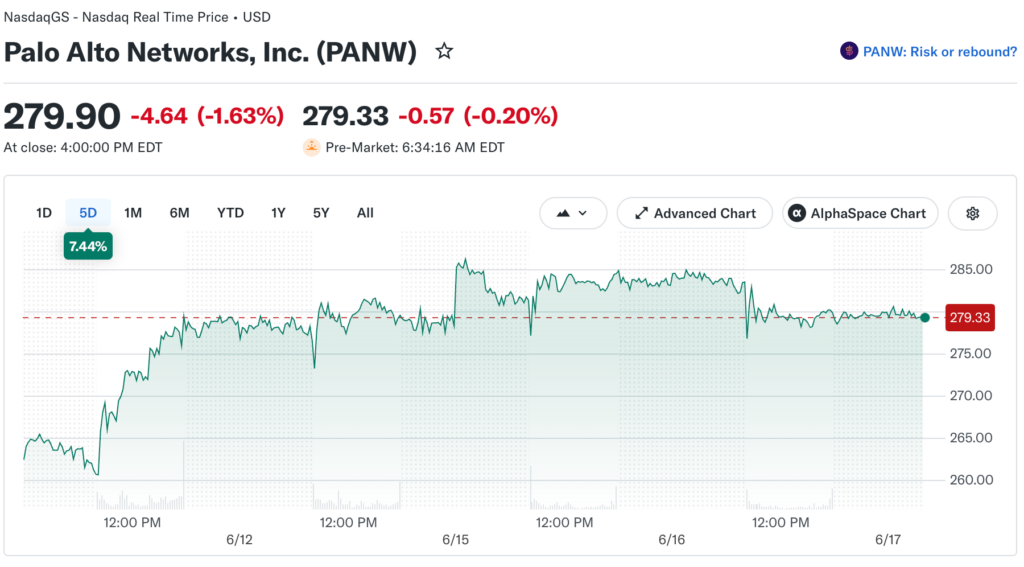
CrowdStrike (CRWD) fell 10% in after-hours trading and Palo Alto Networks (PANW) dropped 5.6% in regular trading on June 4, 2026, despite both companies beating earnings estimates and raising guidance.
The selloff followed the strongest months in both stocks’ histories, with CrowdStrike up 64% and Palo Alto up 57% in May alone. A lead broker at Nummvix discusses what happened beneath the headline numbers and what the post-earnings reaction reveals about where AI-driven stock rallies go from here.
The Setup That Made a Beat Feel Like a Miss
To understand why both stocks fell after beating estimates, the pre-earnings context is essential.
CrowdStrike had rallied 97% since April 10 heading into the print. Palo Alto was up 48% year-to-date and sitting near all-time highs. Both were among the top 30 best-performing stocks in the S&P 500 for 2026, driven almost entirely by AI enthusiasm following Anthropic’s Mythos model announcement.
When stocks are priced for perfection, even genuine outperformance gets punished. CrowdStrike reported non-GAAP EPS of $1.10 on revenue of $1.39 billion, beating estimates of $1.07 EPS on $1.36 billion.
That is a real beat by any traditional measure. But investors who had bought the stock up 97% in eight weeks needed more than a modest outperformance to justify those prices.
Palo Alto reported fiscal Q3 2026 revenue of $3 billion with non-GAAP EPS of $0.85, also above consensus. Its CEO stated that investors should not expect an immediate “windfall” next quarter but described the outlook as one of continued strong growth. Markets heard “not immediately” and sold the stock.
The Mythos Catalyst That Built the Rally
The Anthropic Mythos AI model announcement in April 2026 was the original catalyst for the cybersecurity sector’s extraordinary spring run. Mythos was described as too powerful to release publicly due to its ability to identify and exploit software vulnerabilities.
That framing was paradoxically bullish for cybersecurity companies. If AI can attack systems more effectively, companies need better defenses, and CrowdStrike and Palo Alto sell exactly those defenses.
Both companies were early partners in Anthropic’s Project Glasswing testing program, which gave them credibility as AI-integrated security platforms rather than legacy vendors. The Global X Cybersecurity ETF posted its best single month since its 2019 launch in May, surging 37% on the back of this narrative before the earnings reports arrived.
Mizuho analyst Jordan Klein captured the sentiment shift that followed: “Investors have regained rationality and realized AI won’t stop companies from purchasing cybersecurity solutions. It may generate even greater demand.” That view supports the long-term thesis. The short-term reaction reflected the gap between expectations built on narrative and results grounded in quarterly revenue.
CrowdStrike’s Stock Split and What It Signals
CrowdStrike announced a 4-for-1 stock split with a record date of June 25 and split-adjusted trading beginning July 2, 2026. A stock split does not change the underlying business value, but it reduces the per-share price and tends to increase retail accessibility and trading volume. The announcement keeps CRWD active and in market conversations through the summer months.
At its post-earnings price near $679 per share, CrowdStrike marked its worst single-day drop in approximately 22 months. That context matters.
A stock that has been rising for two years without a drop of this magnitude has investors conditioned to buy dips. Whether this selloff is a dip or the beginning of a broader reset depends entirely on whether the AI demand thesis translates into accelerating net new annual recurring revenue in coming quarters.
Palo Alto’s Platformisation Bet
Palo Alto’s long-term strategy, which it calls “platformisation”, involves consolidating a customer’s entire security stack onto a single Palo Alto platform rather than managing multiple vendors.
The company guided for fiscal Q3 revenue of approximately $2.95 billion, up around 29% year-over-year, with remaining performance obligations near $18 billion in contracted future revenue.
That contracted backlog is the most important number in Palo Alto’s story. Remaining performance obligations represent revenue that is already committed but not yet recognized, giving investors a forward-looking view into revenue durability that the current quarter’s results cannot fully capture.
What Comes Next for Cybersecurity Stocks
Both CrowdStrike and Palo Alto remain among the most structurally well-positioned companies in the AI infrastructure buildout. The selloff reflects elevated expectations, not deteriorating fundamentals. CrowdStrike’s raised full-year outlook and Palo Alto’s $18 billion backlog are real indicators of business health.
The next test arrives when Anthropic expands its Project Glasswing program further, and when both companies begin reporting revenue directly attributable to AI-enhanced security contracts. Until that revenue shows up explicitly in quarterly results, the gap between the AI narrative and the actual numbers will create ongoing volatility for both stocks heading through the remainder of 2026.