
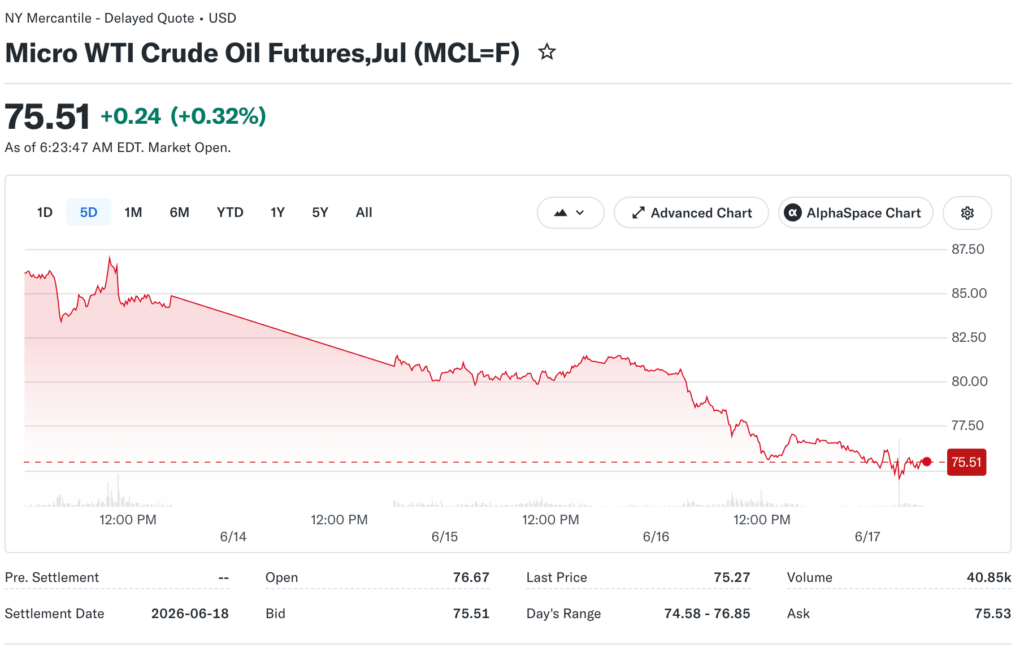
Oil prices plunged toward $78.66 per barrel for WTI and $81.17 for Brent crude on June 16, 2026, after the US and Iran reached a framework agreement to end their conflict and reopen the Strait of Hormuz.
Energy stocks dropped sharply while technology shares surged, and defense names faced a calculation of their own. Nummvix senior brokers share how the ceasefire is reshaping winners and losers across the market, and what that three-way divergence tells investors about where capital is moving next.
What the Strait of Hormuz Agreement Actually Changes
The framework agreement, expected to be formally signed on June 19 in Switzerland on the sidelines of the G7 summit, commits both sides to a 60-day deal to reopen Strait of Hormuz shipping and halt active conflict. Both the US and Iran have confirmed the agreement, though both sides noted a permanent truce remains a longer process to negotiate.
For energy markets, the immediate impact was sharp. WTI crude fell 2.6% and Brent dropped 2.4% in a single session on June 16, extending losses that began on June 15 when news of the framework first broke.
Oil had been trading above $100 per barrel during the peak of the conflict, so the retreat toward $80 represents a significant unwinding of the geopolitical risk premium that had been embedded in crude prices for months.
Energy stocks responded immediately. Diamondback Energy (FANG) was flagged as the largest laggard in the S&P 500 on June 15, tracking directly with the crude oil decline. Energy sector ETFs and oil majors moved lower across the board as the conflict premium unwound from valuations that had been built partly on expectations of sustained supply disruption.
Defense Stocks Face a Different Calculation
The ceasefire creates genuine uncertainty for defense sector stocks that had been benefiting from elevated government procurement signals tied to Middle East operations. Names that rallied on conflict escalation now face the reverse dynamic as the probability of extended military engagement falls.
Defense contractors with significant international government contracts face a more complex picture.
A durable ceasefire reduces near-term procurement urgency. But the structural argument for defense spending, tied to NATO commitments, AI-enabled warfare development, and the broader geopolitical reordering underway globally, does not disappear because one regional conflict de-escalates.
Investors holding defense positions should separate the short-term ceasefire trade from the longer-term defense spending thesis. Those are two different investment cases that often get conflated in the immediate aftermath of geopolitical news.
Technology and Small Caps Lead the Rebound
On the other side of the ceasefire trade, technology stocks surged on June 15 as oil’s decline reduced inflation expectations and eased pressure on the Fed’s rate path.
The iShares Semiconductor ETF (SOXX) hit a new intraday record high. Western Digital gained 13.8%, Micron added over 9%, and AMD climbed more than 7% in a single session tied directly to the geopolitical relief rally.
Small-cap stocks also responded positively. The Russell 2000 gained on June 15 as lower oil reduces input cost pressure across smaller domestic businesses that have less pricing power than large-cap multinationals. That breadth signal, with small caps participating alongside tech, was the healthiest market structure seen in weeks.
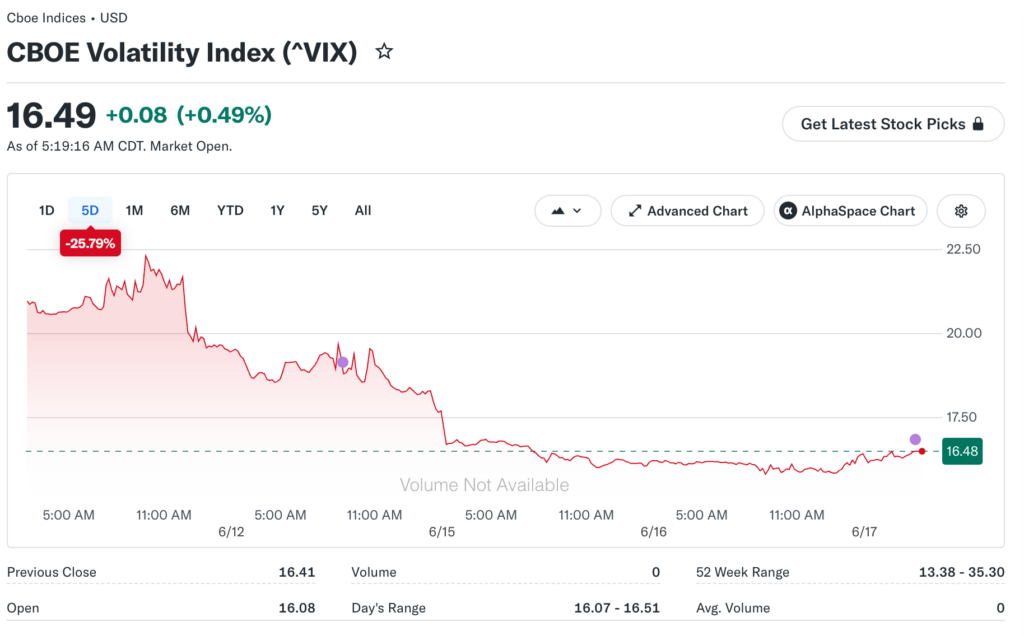
The Cboe Volatility Index (VIX) shed 5% to below 17, down substantially from its peak above 23 the previous week during the combined chip selloff and peak Gulf tension period.
Gold and Silver Hold Despite Risk-On
One unexpected feature of the ceasefire session was that gold futures edged up 0.38% to $4,368.30 an ounce and silver gained 0.51% to $70.54 an ounce even as risk appetite returned broadly. Treasury yields and the dollar declined on the same day, which provided support for precious metals even as equities moved sharply higher.
That combination, stocks higher, gold higher, yields lower, reflects a market that is relieved about geopolitics but not yet convinced inflation is fully resolved. The Fed’s June 17 meeting sits directly on top of this still-unsettled picture.
Reading the Trade Past the Headlines
The ceasefire’s economic impact takes time to flow through. Oil market normalization after the Strait of Hormuz disruption could take weeks or months before shipping activity fully returns to pre-war levels. That means energy prices could remain somewhat elevated even as the geopolitical premium fades, which keeps inflation stickier than the market’s initial reaction suggests.
Investors should watch WTI crude relative to the $75 per barrel level as the signal for whether the full conflict premium has been priced out. Below that level, the inflation narrative changes materially. Above it, rate expectations stay elevated regardless of how the ceasefire headlines read from day to day.