
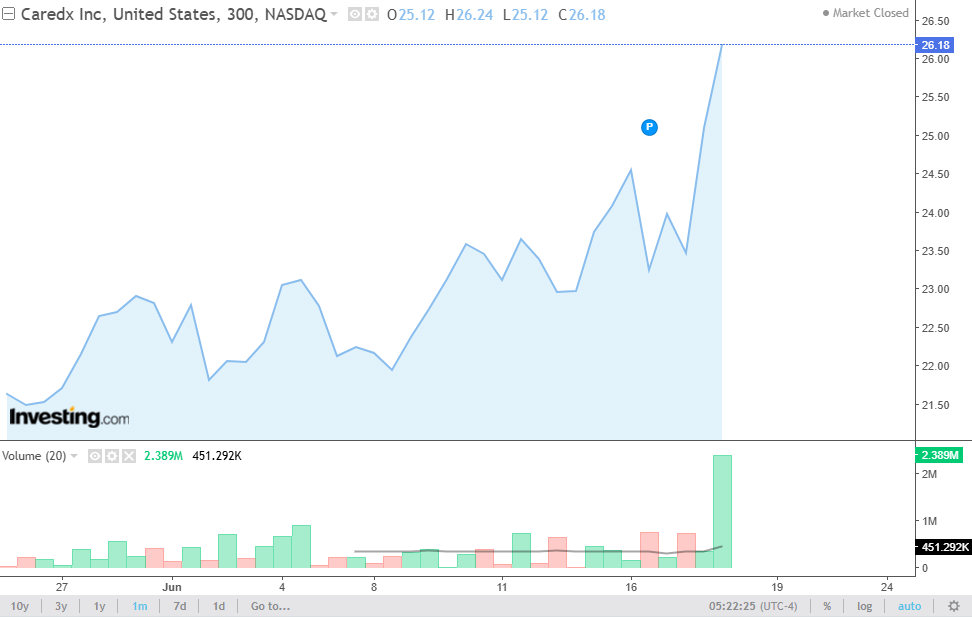
CareDx (CDNA) shares are up 11.50% in recent trading, even as a fresh SEC filing shows the company’s top executive trimming his direct stake. Brokers from Fondesia have gone through the Form 4 disclosure to unpack what it actually signals and doesn’t signal about insider sentiment at the transplant diagnostics company.
The transaction: 17,683 shares, ~$425,000
John Hanna, CEO and president of CareDx, sold 17,683 shares of common stock in an open-market transaction on June 15, according to a recent SEC Form 4 filing. The transaction was estimated to be worth $425,000 based on the filing’s weighted average selling price of $24.03 per share.
Following the sale, Hanna retains 631,959 shares directly a stake worth roughly $15.2 million based on the $24.08 closing price that same day. In other words, this single transaction trimmed only a small fraction of his overall direct position, leaving the bulk of his economic interest in the company intact.
Part of a pattern, not a one-off event
The more relevant question for investors isn’t the size of any single sale, it’s whether it fits a broader pattern, and here the filing data is fairly clear. This is the fourth sell transaction from Hanna since April 1, 2026, which points to a structured, ongoing liquidity program rather than a reaction to any specific company development or piece of internal information.
That distinction matters because of how these sales are being executed. Hanna’s transactions, along with recent disclosures from other CareDx insiders, were made under Rule 10b5-1. These pre-arranged trading plans lock in the timing, size, and price parameters of future sales well in advance, specifically to prevent the appearance or the reality of trading on material non-public information.
A scheduled 10b5-1 sale carries a meaningfully different read than an unscheduled, discretionary sale made on short notice, and regulators designed the rule precisely to create that distinction for outside observers.
CareDx at a glance
CareDx is a transplant-diagnostics specialist built around proprietary cell-free DNA and gene expression testing used to monitor organ transplant recipients after surgery. Its core product lineup includes AlloSure (covering kidney, heart, and lung surveillance), AlloMap Heart, AlloSeq cfDNA, and a suite of HLA typing tools, sold primarily to transplant centers, clinical laboratories, and specialized healthcare providers across the organ and stem cell transplant ecosystem.
On the numbers, CareDx currently carries a market capitalization of approximately $1.4 billion against trailing-twelve-month revenue of $412.8 million. The company’s growth strategy leans heavily on strategic partnerships and continued investment in next-generation sequencing technology, aiming to defend and extend its position in a molecular diagnostics market that keeps attracting new entrants and adjacent competitors.
What this means for investors
Insider stock sales, particularly those made by a sitting CEO, often attract investor attention because corporate insiders generally have greater insight into company operations and performance than outside shareholders.
However, in this case, the transaction carries less significance as a market signal because the shares were sold under a pre-established Rule 10b5-1 trading plan, rather than through a discretionary decision.
As a result, the filing should not be interpreted as a negative indicator of CareDx’s near-term prospects, nor should it be viewed as an endorsement of the company’s outlook. Instead, the transaction appears to be largely routine and of limited importance compared with the company’s underlying business fundamentals.
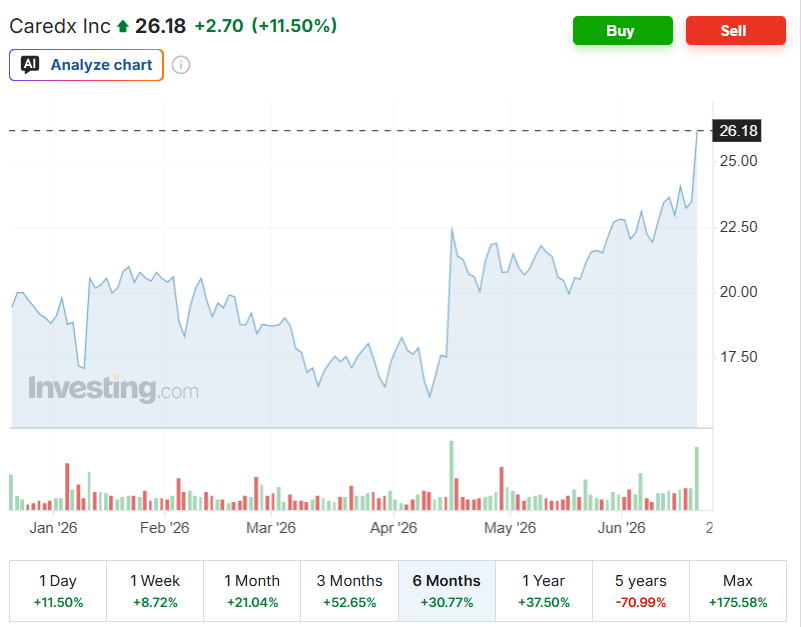
Performance context is worth a second look, too. CareDx shares have gained 37.5% over the trailing year through June 18, which sounds strong viewed in isolation until it’s measured against the Russell 2000’s 43% total return over that same stretch. On a relative basis, the small-cap stock has actually lagged its benchmark index, even accounting for the recent intraday pop following this filing.
Outlook: routine disclosure, not a red flag
Taken together, the filing appears to be a scheduled 10b5-1 plan-based stock sale by a long-tenured executive who still retains a substantial direct stake valued at more than $15 million.
Importantly, the transaction does not materially alter the investment thesis for CareDx, unless there is a significant change in revenue trends, AlloSure adoption rates, or profit margins.
For shareholders, a more meaningful indicator would be the pace and size of future 10b5-1 stock sales, particularly when viewed alongside the company’s reporting schedule. A sharp increase in insider selling activity or discretionary sales outside the existing trading plan would likely carry greater significance than this routine filing.
Rather than focusing on standard 10b5-1 transactions, investors may find it more valuable to monitor upcoming earnings results, AlloSure test volume growth, and management’s margin outlook, as these factors are more directly tied to the company’s operational performance and long-term prospects.