
The consumer electronics ecosystem is confronting an aggressive macroeconomic shift as artificial intelligence infrastructure expansion triggers severe supply chain inflation.
Advanced computational data centers are absorbing unprecedented volumes of memory and storage wafers, forcing primary component vendors to heavily prioritize high-bandwidth enterprise server allocation. Consequently, specialized component costs have skyrocketed, making current retail pricing frameworks unsustainable even for dominant consumer technology enterprises.
A finance analyst at Gammance confirms that this severe hardware squeeze is driving systemic wholesale price adjustments across global hardware markets. Industrial tracking metrics indicate that input costs for critical digital storage units and dynamic random-access components have escalated rapidly over recent trailing cycles.
This unprecedented cost escalation is forcing cash-rich hardware designers to pass component inflation directly onto end consumers rather than absorbing the structural financial hit.
Market focus is shifting rapidly toward upcoming consumer product rollouts, specifically the highly anticipated autumn product launch window. Industry intelligence firms suggest that passing through these component premiums could add an estimated premium of up to $270.00 to premium smartphone configurations.
While localized price adjustments have already materialized across select computing lines, broader adjustments are expected to impact portable tablets and laptops much sooner than initially modeled.
Ecosystem Retention Dynamics And Long Term Fiscal Projections
To maintain a bullish corporate investment thesis, asset allocators must assume that a global footprint of at least 2.5 billion active units can insulate net margins against persistent input inflation. The primary catalyst for near-term stock outperformance hinges on whether advanced voice intelligence overhauls can successfully ignite a structural consumer upgrade cycle.
If successful, deeply integrated, context-aware artificial intelligence software layers will transform everyday devices into essential consumer infrastructure, allowing users to absorb steep hardware price hikes without diminishing total product demand.
Long-term consensus modeling suggests that the premier technology vendor could potentially expand operations to generate up to $583.8 billion in total annual revenue by 2029. Achieving this ambitious financial trajectory requires a sustained compounding top-line growth rate of exactly 8.9% annually over the multi-year horizon.
Furthermore, this operational target mandates an expansion of net corporate profits to at least $161.7 billion over the same structural timeframe, marking a steep step-up from the current annual baseline of exactly $122.6 billion.
Discounted cash flow methodologies utilizing these baseline projections calculate an intrinsic valuation anchor of exactly $312.72 per share, yielding a modest upside potential of roughly 6% above current trading markers. However, conservative market bears emphasize that severe input costs could portfolio-wide push those more pessimistic margin concerns closer to reality.
More pessimistic financial frameworks model a restricted top-line expansion rate of only 6.1% per annum, limiting terminal net income to roughly $147.4 billion by 2029 and implying a substantial downside variance if margins fail to stabilize.

Technical Analysis And Key Price Levels
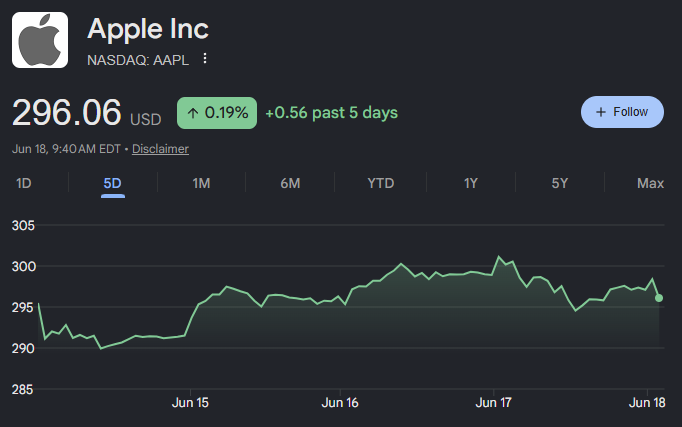
A quantitative look at the recent equity performance reveals that near-term price velocity reflects notable investor anxiety regarding these soaring input costs. The underlying stock has experienced a noticeable near-term contraction, declining by a definitive 7.1% over the past 30 days as news of the component price hikes gained traction across mainstream financial networks.
Despite this localized pullback, the asset has maintained positive mid-term momentum, logging a 3.4% gain over the preceding week and an 8.6% increase since the opening of the current calendar year.
This immediate downside volatility has driven the equity straight into a vital short-term equilibrium floor, with shares currently trading at a baseline market valuation of exactly $246.0 per share.
Long-term institutional asset managers are closely monitoring this entry level, noting that the current market price represents a distinct 27% discount against consensus Wall Street target estimates of $313.0 per share. Furthermore, independent fundamental evaluations indicate that the current $246.0 baseline sits roughly 42.2% below calculated fair market value estimates.
Defending this localized value floor is crucial to preventing a broader breakdown in near-term market sentiment, as long-term investors still rely heavily on the asset’s historical capital compounding record.
Public trading data highlights an impressive 15.8% return over the past twelve months, alongside a powerful 97.1% appreciation over three years and a 40.4% return over a five-year window. If institutional buy programs fail to defend the current cluster, a breach of this baseline could signal a structural re-evaluation of high-margin growth assumptions.
Alternatively, support at these heavily discounted price tiers will provide a solid foundation for a second breakout campaign. Recovery volume must aggressively clear overhead friction to confirm a near-term technical reversal and resume its long-term bullish trajectory. Overcoming short-term macroeconomic issue cost concerns will be required before the equity can smoothly march back up toward its consensus analyst target objective of $313.0 per share.