
The NZD/USD pair continues to trade with a modest recovery bias above the 0.5600 handle, though upside momentum remains structurally limited as price action consolidates within a tight 0.5600–0.5650 range.
The pair has shown repeated rejection attempts above 0.5630, indicating that bullish follow-through remains weak despite short-term stabilization. To better understand the key factors at play, read this full analysis prepared by Fonndure’s brokerage team.
Market participants are positioning cautiously ahead of the upcoming US Nonfarm Payrolls (NFP) release, which is expected to act as the next major volatility trigger. Until then, price behavior suggests range-bound consolidation with a bearish medium-term structure still intact.
Macro and Flow Dynamics Keep USD Bid Supported
Broader macro conditions continue to favor USD strength cycles, driven by relative yield differentials and persistent uncertainty in global risk sentiment. The recent improvement in geopolitical negotiations has marginally supported risk assets; however, flows remain defensive as markets reassess growth divergence between the US and major developed economies.
Despite episodic relief in global tensions, FX positioning data indicates that investors remain tilted toward USD overweight exposure, limiting sustained upside attempts in higher-beta currencies such as NZD. The result is a market structure where rallies are increasingly sold into between 0.5630 and 0.5660, reinforcing overhead supply pressure.
Volatility Compression Ahead of NFP Print
Implied volatility in NZD/USD continues to compress, with short-term pricing reflecting a pre-event equilibrium phase. Historical NFP-linked positioning suggests that the pair typically expands its ATR by 0.0060–0.0090 in the 24–48 hours following the release, depending on deviation from consensus employment figures.
A stronger labor market outcome would likely reinforce US yield support above the 10-year benchmark range of 4.2%–4.4%, increasing downward pressure on NZD/USD. Conversely, weaker data could trigger a corrective expansion toward the 0.5700 liquidity zone.
Technical Structure: Bearish Trend Still Dominant
From a technical standpoint, NZD/USD remains in a medium-term bearish channel, with price consistently trading below the 100-day SMA near 0.5750–0.5770, confirming that broader trend bias remains negative.
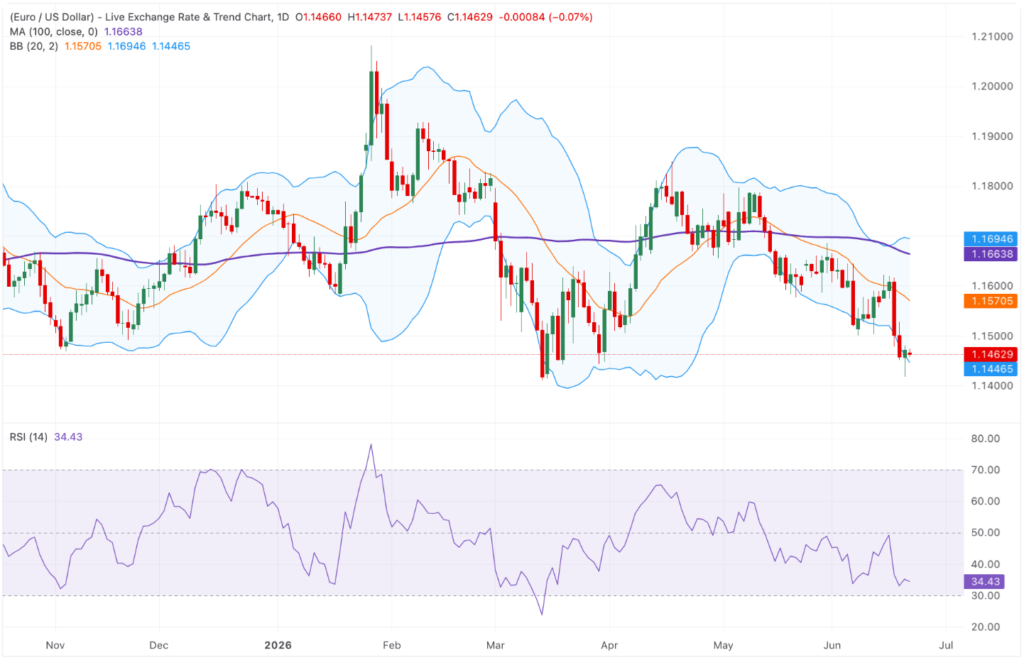
The pair is also capped below a descending trendline originating from the 0.5900 swing high, with lower highs forming at approximately 0.5740, 0.5690, and 0.5640, reinforcing structural weakness.
Price action is currently oscillating near the lower half of its Bollinger Band structure (20-day, 2 standard deviation), with the mid-band resistance located near 0.5670, acting as a dynamic ceiling for intraday rebounds.
Momentum Indicators Signal Weak Reversions
The Relative Strength Index (RSI 14) is currently positioned in the 42–46 range, remaining below the neutral 50 threshold, which confirms that momentum continues to favor sellers despite short-term stabilization.
While RSI is no longer in deeply oversold territory, it has failed to generate a sustained bullish divergence on the daily timeframe. This suggests that the recent rebound above 0.5600 is more consistent with a technical retracement phase rather than a full trend reversal.
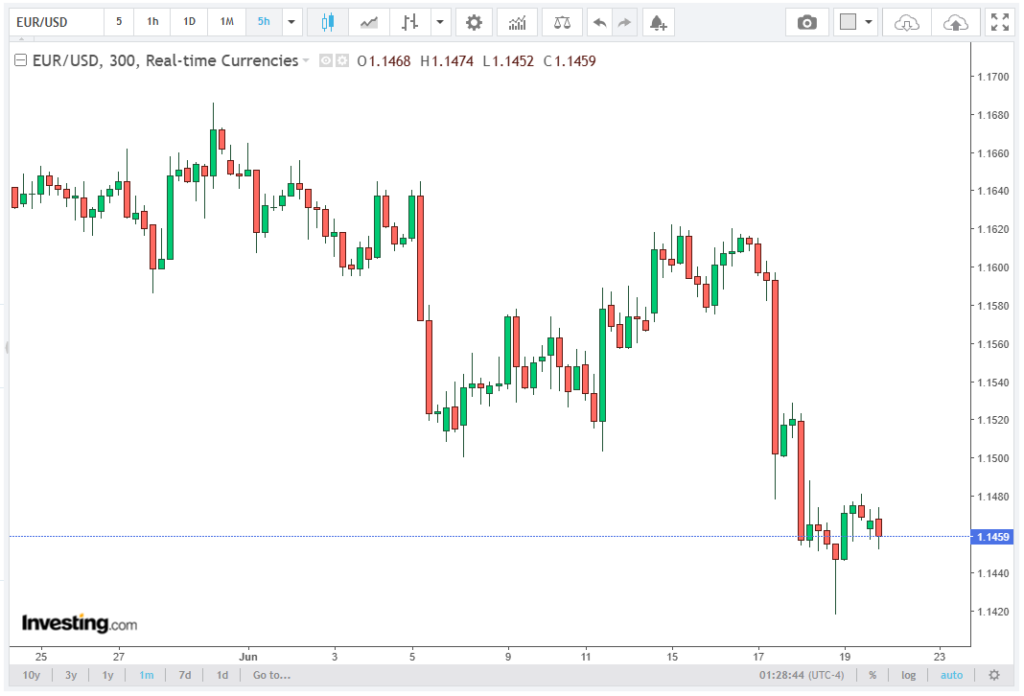
Downside momentum remains intact as long as RSI fails to break and hold above 50–52, which historically aligns with trend continuation shifts in NZD/USD structures.
Key Support Zones Under Pressure
The immediate structural support remains concentrated around 0.5600, which continues to function as a critical psychological and liquidity pivot zone.
A sustained breakdown below 0.5600 would expose the next support cluster near 0.5560, followed by a deeper structural level around 0.5520, which aligns with prior consolidation demand zones.
If selling pressure accelerates below these levels, the broader downside extension could target the 0.5480 region, marking a continuation of the dominant bearish cycle observed over the past multi-week structure.
Resistance Ceiling Limits Upside Expansion
On the upside, immediate resistance is positioned at 0.5635–0.5650, where repeated rejection signals indicate active supply absorption.
The more critical resistance band sits at 0.5670–0.5700, aligned with the Bollinger mid-band and prior breakdown support, now acting as a strong supply reversal zone.
A decisive daily close above 0.5700 would be required to neutralize the current bearish structure and shift momentum toward a broader recovery phase targeting 0.5750 (100-day SMA region). Without such a breakout, upside moves are likely to remain corrective and fade-prone.
Outlook
The NZD/USD pair remains technically biased to the downside, despite holding a short-term recovery above 0.5600. Price action continues to reflect a distribution phase below key moving averages, with limited bullish conviction and persistent resistance overhead.
Until the pair reclaims at least 0.5670–0.5700, the dominant structure remains bearish with corrective rallies likely to be sold into. The upcoming US NFP release is expected to define the next directional impulse, with volatility expansion likely from the current compressed range structure.