
Space Exploration Technologies (SPCX) went public on June 12, pulling off the biggest public offering in history. Investors have now had more than a week to digest what happened next, and the early verdict isn’t pretty.
Brokers from Byronixel dug into the historical IPO data to see what it actually predicts for SpaceX from here.
From $135 to $225 in Four Days. Then the slide began
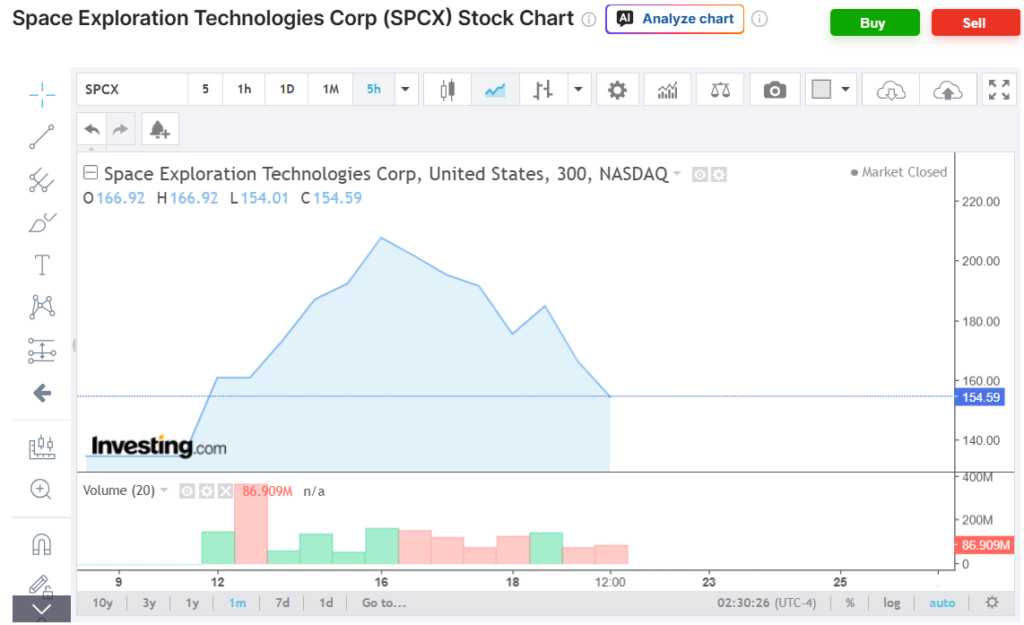
SpaceX’s market debut was explosive from the start. A limited float, strong institutional demand, and the company’s reputation as one of the world’s most closely watched private businesses helped propel the stock higher through its first four trading sessions. Shares peaked at $225.64 on June 16, representing a 67% gain from the $135 listing price.
Such dramatic early gains are not uncommon among high-profile IPOs. Figma surged more than 300% during its first two trading days following its public debut last July, while Cerebras Systems more than doubled on its opening day. In both cases, however, the initial enthusiasm eventually faded, and the stocks pulled back significantly from their early highs.
A similar pattern appears to be emerging with SpaceX. After reaching its peak on June 16, the stock declined over the following two trading sessions and was down 10.7% as of 1:32 p.m. ET on Monday. The move highlights how quickly investor sentiment can shift after an initial surge, with the stock’s trendline pointing decisively lower since its peak.
IPO Pops Are a Trap, Not a Trend
The uncomfortable reality of post-IPO surges is that they often signal the opposite of what investors feel in the moment. According to research by Jay Ritter, the average first-day IPO gain from offering price to closing price is about 19%, almost identical to the 19.2% first-day gain recorded by SpaceX.
The longer-term data paints a much less optimistic picture. Analyzing approximately 9,300 U.S.-listed IPOs between 1980 and 2024, Ritter found that the average IPO underperformed a value-weighted market index by 21% over the three years following its first closing price.
Even among larger, more established companies, the trend remained intact. For businesses generating more than $500 million in annual revenue, the category SpaceX falls into, the average stock posted a 10% first-day gain but subsequently underperformed the broader market by roughly 5% over the following three years.
The takeaway is that while strong IPO debuts can generate excitement and attract momentum-driven buyers, historical evidence suggests that early enthusiasm frequently gives way to more modest long-term returns, even for large, well-known companies..
The Wreckage List: Rivian, Lyft, Meta, and More
SpaceX would not be the first high-profile IPO to experience a sharp rise followed by a difficult adjustment period. Companies such as Rivian and Lyft initially surged after going public before losing momentum as investor enthusiasm cooled. Meanwhile, Meta Platforms and Uber Technologies eventually fell more than 50% from their post-IPO levels, despite taking different paths.
Even Airbnb, which enjoyed a strong IPO debut, has struggled to consistently meet the lofty expectations embedded in its early valuation. Historical market data suggests that the rare outcome is an IPO that surges immediately and continues climbing steadily. Far more common is a period of post-debut volatility and underperformance, a pattern that SpaceX may now be beginning to experience.

Lockups, Earnings, and the Selling That’s Still to Come
SpaceX’s near-term setup doesn’t offer much relief. The stock is now down more than 25% from its June 16 peak, a decline large enough that the top is almost certainly already in, based on Ritter’s framework, since IPO stocks typically bottom three to six months after going public, with many continuing to underperform for up to three years.
Valuation isn’t helping either. SpaceX was already priced aggressively at its IPO level, and now trades at more than 100 times trailing sales, a multiple that leaves essentially no room for disappointment.
On top of the normal post-IPO hype unwind, SpaceX faces a separate and very mechanical source of selling pressure: its staggered lock-up periods, which will begin expiring in stages, giving insiders their first real opportunity to sell. The first wave is expected to align with the company’s second-quarter earnings report, anticipated in August.
Outlook: The Top Is Probably In
The real question now isn’t whether SpaceX peaked; the math on that looks fairly settled, but how far the stock falls before it finds a floor. That will hinge on how aggressively insiders sell once lockups expire, what news flow emerges from the company in the meantime, and how forgiving broader market sentiment remains.
With a market cap still above $2 trillion, the room for further upside looks limited relative to the risk of continued downside. Given how much optimism is still priced into the stock, a drop below its $135 IPO price isn’t out of the question, and in the weeks ahead, continued weakness looks like a more probable outcome than a renewed rally.