
Yum! Brands confirmed on June 16, 2026, that it would sell its Pizza Hut chain for a combined $2.7 billion in two separate deals, effectively cutting loose a struggling brand to sharpen its focus on stronger performers.
The move split the chain’s assets between private equity firm LongRange Capital, which paid $1.5 billion for Pizza Hut outside mainland China, and Yum China Holdings, which paid $1.2 billion for the Chinese operations. Both deals are expected to close in Q3 2026.
A senior financial analyst examines why this divestiture is more than a simple asset sale and what it signals for restaurant sector stocks broadly. Byronixel takes a closer look at how portfolio pruning at this scale reshapes valuations, debt profiles, and investor confidence across the quick-service restaurant space heading into Q3 2026.
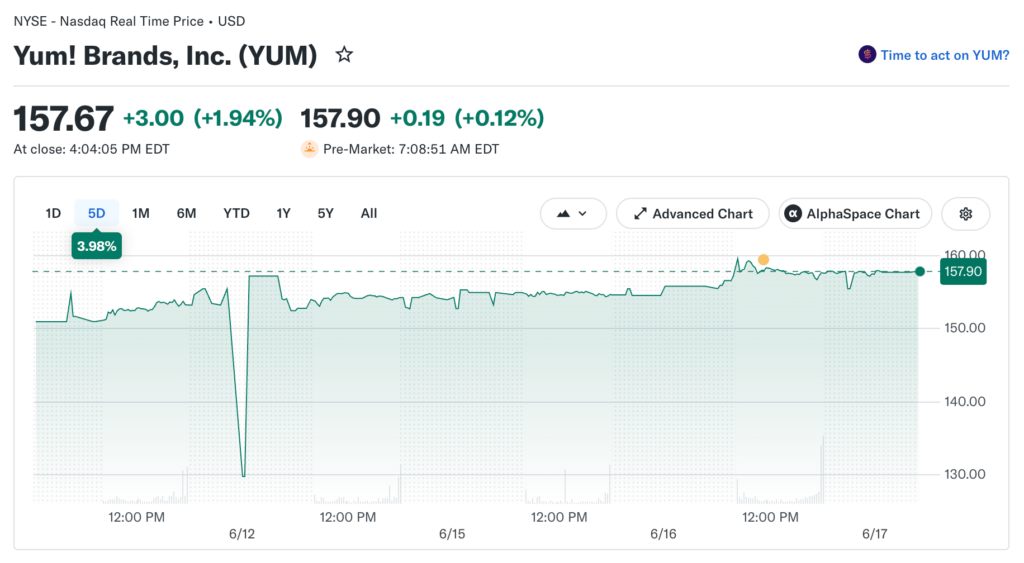
Why Pizza Hut Had to Go
Pizza Hut’s US footprint has been contracting for years, with the chain closing approximately 250 American stores in the lead-up to this sale. That number reflects structural demand challenges rather than a temporary slowdown tied to any single economic cycle.
KFC delivered 14% divisional operating profit growth in the most recent quarter, and Taco Bell continued to take market share through value positioning and strong digital sales momentum. Pizza Hut, by contrast, was consuming management bandwidth and capital without offering comparable returns, making the divestiture less a strategic pivot and more an acknowledgment of where growth actually lives inside Yum’s brand portfolio.
The timing also reflects a highly favorable deal environment. With global M&A volumes exceeding $2.6 trillion in 2026 and private equity firms actively deploying capital into consumer brands, Yum found a willing buyer in LongRange Capital even as Pizza Hut’s domestic performance trajectory remained challenged and uninspiring.
What the Balance Sheet Looks Like After the Sale
The financial case for this transaction is compelling at the numbers level. Yum’s net long-term debt stood near $9.3 billion before the sale, and combined proceeds from both transactions reduce that figure to approximately $5.3 billion, compressing leverage to roughly 1.7x trailing EBITDA from a more stretched starting position.
At lower leverage ratios, Yum gains meaningful capacity for share buybacks, dividend increases, and potential acquisitions of faster-growing brands without returning to the debt levels that constrained the company’s options previously. TD Securities raised its price target on YUM stock to $173 from $162, noting that offloading Pizza Hut would amplify Yum’s growth profile and create what it described as the best in-class development growth profile within quick-service restaurant investing.
Pro forma EBITDA following the sale is projected at approximately $2.8 billion, supporting upside toward that revised price target from current trading levels near $147 per share.
The China Angle Most Coverage Is Missing
Yum China’s decision to pay $1.2 billion for the mainland Pizza Hut operations tells a very different story than the US business trajectory. Yum China has invested heavily in China-specific menu localization, including products like black truffle Yunnan mushroom pizza, new affordable store formats, and a loyalty ecosystem that has significantly grown its customer base over the past three years.
What struggled in the US worked differently in China because the product was rebuilt from the ground up for local preferences and spending habits. For investors tracking Yum China Holdings (YUMC) separately, this acquisition signals that management sees a durable growth runway for Pizza Hut in China that simply does not exist in the US market at current brand health levels.
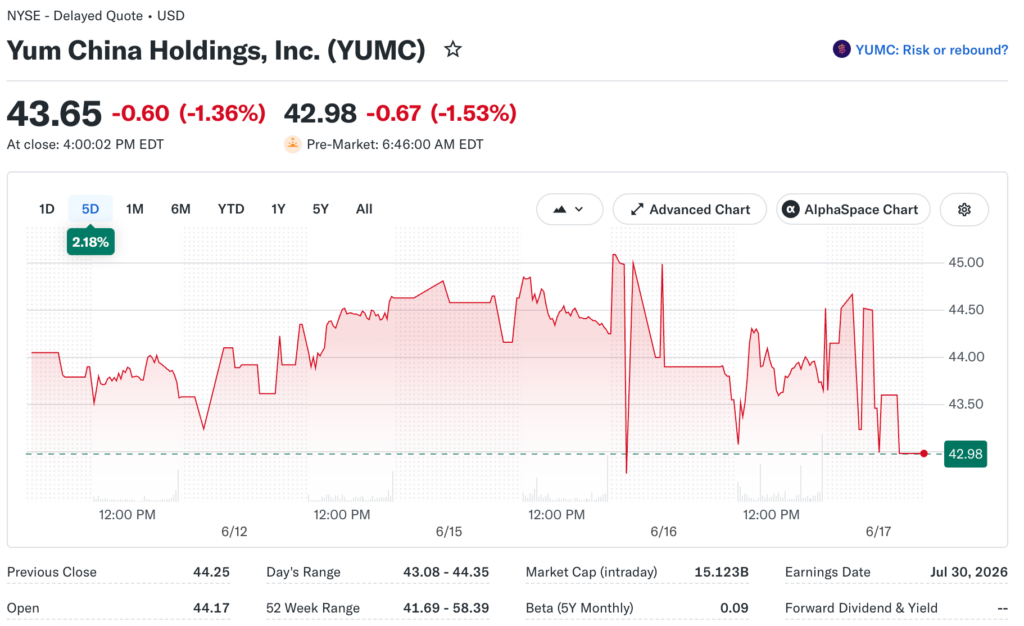
Digital Sales as the Hidden Metric
One number in Yum’s recent operating history rarely gets the attention it deserves in coverage of this sale. Digital sales across Yum’s brands hit $10 billion systemwide, now accounting for 60% of all orders, which is the clearest evidence that the company’s technology integration has matured into a genuine and defensible competitive moat.
Removing Pizza Hut, which had weaker digital penetration than Taco Bell and KFC, raises the average digital sales mix across the remaining portfolio immediately. A higher digital ratio means lower labor costs per transaction, faster service throughput, and richer customer data for targeted marketing campaigns. All three of those factors directly support margin expansion over time without requiring significant incremental capital investment from management.
What Restaurant Stock Investors Should Watch Next
The Yum transaction sets a clear reference point for how the market values quick-service brands trading at materially different growth trajectories. Domino’s, McDonald’s, and Restaurant Brands International all have underperforming assets or geographic segments that activist investors or management teams may revisit in light of what Yum’s sale achieves for its valuation multiple and balance sheet flexibility.
YUM stock approaching the $173 analyst target depends on KFC and Taco Bell continuing their same-store sales momentum through Q3 2026. If either brand shows softness in an environment where consumer spending on dining out remains cautious and selective, the premium the market assigns to a cleaner portfolio narrows quickly. The next quarterly earnings report is the first real test of whether the newly focused Yum story delivers what the balance sheet math currently promises to investors.