
Alphabet fell 5% on June 23, 2026, matching an identical decline in Oracle on the same day and dragging the Communication Services sector down 3.8% in a session that saw the Nasdaq lose 2.21%. Neither company reported earnings or issued profit warnings.
The selling was driven by a market-wide reassessment of AI infrastructure costs triggered by a Bank of America research note warning of up to three potential rate hikes and growing concern that technology companies are committing unprecedented capital to AI without clear near-term revenue visibility.
A financial analyst at Nummvix takes a closer look at why Alphabet absorbed a disproportionate share of the selling and what the stock’s current setup looks like heading into June 24.
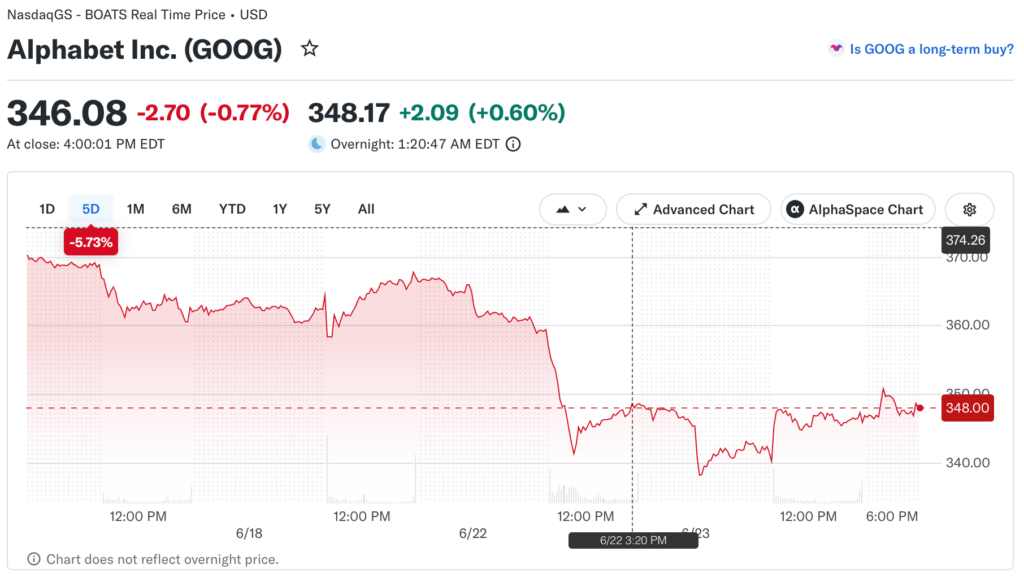
The AI Cost Concern and Why It Lands Differently on Alphabet
Alphabet’s situation in the AI infrastructure buildout is structurally different from pure semiconductor or cloud hardware companies. Google is simultaneously a major AI spender through its data center and chip investment programs and a company that needs to prove those investments are generating incremental revenue that justifies the spending.
Alphabet’s capital expenditures are running at levels that would have been considered extreme by historical standards. The market accepted those spending rates while AI revenue growth appeared to be accelerating.
The Bank of America note introduced a specific concern: that the timeline between capex today and AI revenue tomorrow is longer than consensus models are assuming, which is a more damaging framing for Alphabet than for a chip supplier that gets paid regardless of how end customers monetize the hardware.
The Oracle Parallel and What It Suggests
Oracle falling 5% on the same day as Alphabet, and for the same macro reason rather than any company-specific catalyst, is an important detail. Oracle has been one of the primary beneficiaries of enterprise AI cloud spending, with its cloud infrastructure revenue growing at rates that had made it a consensus long position in technology portfolios heading into 2026.
When both Alphabet and Oracle fall by the same percentage on the same day without negative company-specific news, it signals a broad repricing of the AI spending thesis rather than selective concern about one company’s execution.
The market is not saying either company has done something wrong. It is saying the category premium built into both stocks assumes an AI revenue ramp that needs to appear in reported numbers rather than be promised in management presentations.
The Rate Hike Factor and Its Impact on Alphabet Specifically
Bank of America’s three-hike scenario would materially change the discount rate applied to Alphabet’s long-term AI revenue projections. Alphabet derives its current valuation partly from YouTube and Search advertising, which are near-term cash generators, and partly from the market’s expectation that its AI infrastructure investment will produce significant additional revenue in future years.
The near-term cash generation provides a buffer that pure-play AI infrastructure stocks do not have. But the future revenue expectation is the portion of Alphabet’s valuation most sensitive to discount rate changes.
Three rate hikes would compress the present value of those future AI revenue streams meaningfully, explaining why a macro note sent Alphabet down 5% without any change in its own business forecasts.
What the PMI Data Said That Nobody Was Listening To
The June 23 session also delivered PMI Composite Flash data that came in above expectations. The Composite Index printed at 52.2, the Services Index at 51.3, and the Manufacturing Index at 55.7, all above prior readings and consensus estimates. A Manufacturing PMI of 55.7 is a strong reading indicating the industrial sector is expanding at a healthy pace.
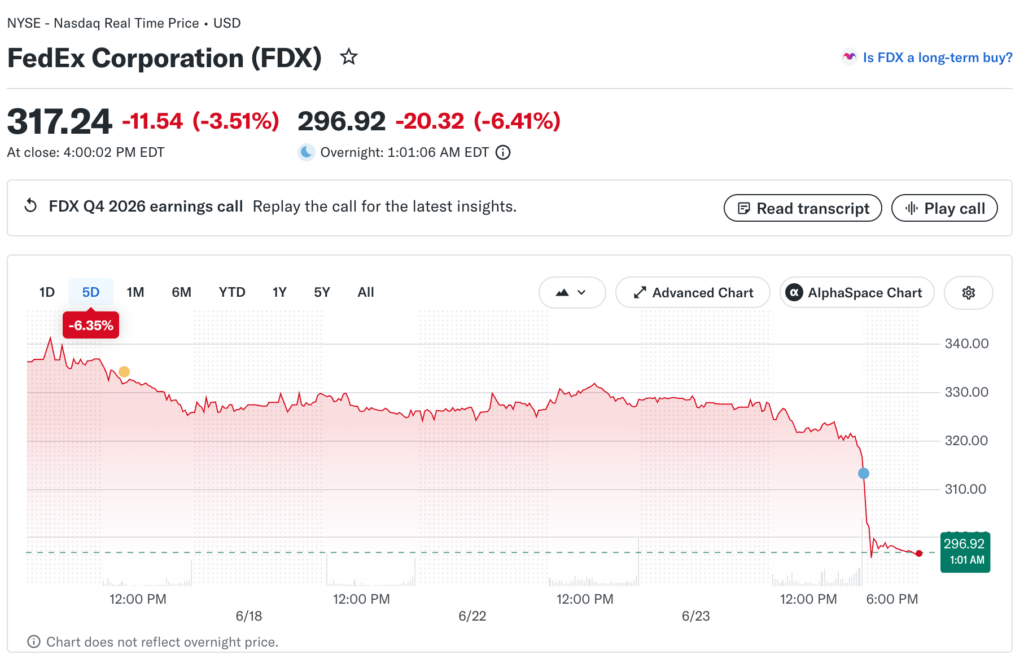
That constructive data was entirely ignored by markets on June 23 as the Bank of America note dominated the session’s narrative. For investors taking a longer view, a Manufacturing PMI above 55 combined with FedEx revenue growth of 12.6% year-over-year suggests the economic backdrop for AI infrastructure spending remains intact even if the equity market’s immediate reaction has turned cautious.
Setting Up for the Micron Read
Alphabet’s 5% decline and the broader AI cost concern will either be validated or challenged by Micron’s June 24 earnings report. If Micron delivers revenue above the $34.66 billion consensus and confirms that hyperscaler demand for high-bandwidth memory remains fully allocated, it directly addresses the concern that AI infrastructure spending is ahead of genuine demand.
Strong Micron results would signal that the hyperscalers buying those chips, including Alphabet’s Google Cloud division, are deploying real workloads that require the hardware they are purchasing.
That chain of inference, from memory demand to workload intensity to eventual revenue, is the most direct available evidence that the AI spending thesis is generating genuine economic activity rather than simply cycling capital among technology companies.