
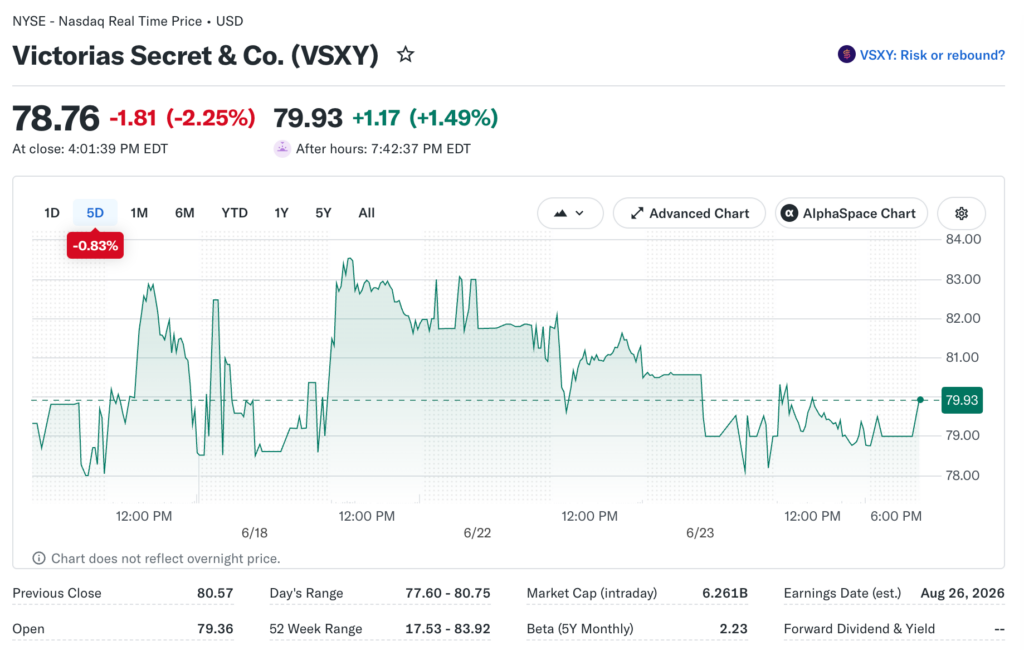
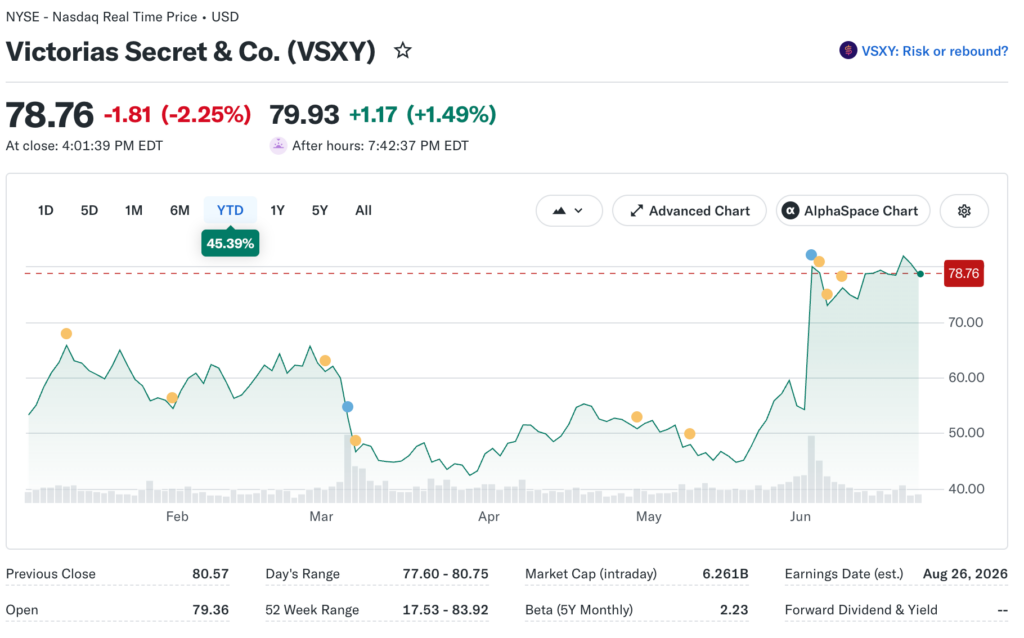
Something unusual happened in consumer retail on June 24, 2026. Victoria’s Secret reported fiscal Q1 results that beat analyst estimates and raised full-year guidance simultaneously, with every major channel posting double-digit comparable sales growth at the same time.
That combination of breadth and upward revision is rare enough in fashion retail that it deserves analysis beyond the headline numbers. The brand’s expert broker shares why this earnings release carries implications well beyond a single quarter, and what Nummvix sees as the structural story sitting beneath the surface of Victoria’s Secret’s surprisingly strong performance.
Why This Particular Beat Stands Apart
Most retail earnings beats tell a partial story. One geography outperforms, one category accelerates, and the rest of the business masks the headline number’s real composition. What management described on the June 24 call was different in kind.
Double-digit comparable sales growth landed across the Victoria’s Secret brand, Pink, beauty, digital channels, physical stores, and international operations all within the same quarter and at the same time.
That simultaneity is the analytical detail worth focusing on. When growth concentrates in one area, investors discount it because the driver may not persist.
When it spreads across channels and geographies simultaneously, it reflects something more durable at the brand level. CEO Hillary Super noted that market share gains among shoppers aged 18 to 24 accompanied the growth, adding a demographic dimension that points forward.
The Tariff Angle Most Analysts Are Missing
Management explicitly credited lower tariff-related costs as a meaningful contributor to the Q1 result. That framing deserves more attention than it is receiving in the broader market conversation focused on semiconductor earnings and inflation data. Companies with genuine supply chain flexibility have been able to adapt their sourcing faster than tariff conditions were shifting beneath them.
Victoria’s Secret’s ability to absorb less tariff impact than analysts modeled while holding full-price selling discipline points to a supply chain that has become more agile than its pre-pandemic version. That agility changes the margin trajectory for the back half of 2026 in ways current analyst models are unlikely to have fully captured.
Fewer Promotions, Better Margins
The most margin-relevant detail in the entire Q1 release was not a percentage but a direction. Sales grew significantly while the number of promotional events shrank. In retail, that relationship almost never runs in the same direction simultaneously.
Promotions pull forward demand at the cost of margin, so running fewer of them while posting accelerating comparable sales growth means the demand Victoria’s Secret is capturing is organic and full-priced rather than borrowed from future quarters.
That promotional discipline feeds directly into the raised full-year guidance the company issued alongside the beat. Guidance revisions built on margin improvement rather than volume growth tend to be stickier, because they do not require an external demand catalyst to hold. If Q2 delivers a similar promotional posture with similar sales momentum, the compounding effect on annual margin becomes material.
Digital and International Adding a Second Growth Engine
Beyond the core domestic brand, Victoria’s Secret pointed to digital and international channels as two areas running at the same double-digit comparable growth rates seen across the rest of the business.
For a brand historically concentrated in North American physical retail, that multi-channel consistency changes the long-term revenue potential calculus in ways the analyst community has not yet fully priced.
International expansion at scale introduces geographic revenue diversification that reduces the volatility historically embedded in Victoria’s Secret earnings. A difficult US consumer quarter no longer has to translate directly into a company-wide miss if international and digital channels are running at their own momentum.
The Broader Consumer Context Around This Report
FedEx posted revenue of $25.0 billion on June 23, with its lowest capital-to-revenue spending ratio in company history, confirming goods are moving at a pace that does not suggest a consumer pullback. Victoria’s Secret’s Q1 result adds a discretionary spending dimension that logistics data alone cannot provide.
June’s NFIB small business survey showed price increase intentions at 34 percent, the highest since July 2022, signaling cost pressure at the ground level remains elevated. Victoria’s Secret growing sales with fewer promotions despite that environment suggests discretionary spending capacity has not been as compressed as the macro picture implies.
What the Second Half Looks Like From Here
Raised guidance from a retailer delivering broad-based comparable growth with expanding margins is not the kind of result explained away by a single favorable quarter or an external catalyst.
Consumer discretionary has underperformed the broader market for most of 2026 under the combined weight of rate concerns and energy-driven inflation. Victoria’s Secret’s Q1 result gives the sector a concrete counterpoint to the narrative that this consumer environment is too difficult for discretionary growth to take hold.
Whether other consumer names confirm or contradict this result in July will determine if it is a brand-specific story or the early signal of a broader sector inflection worth positioning around for the second half of 2026.