
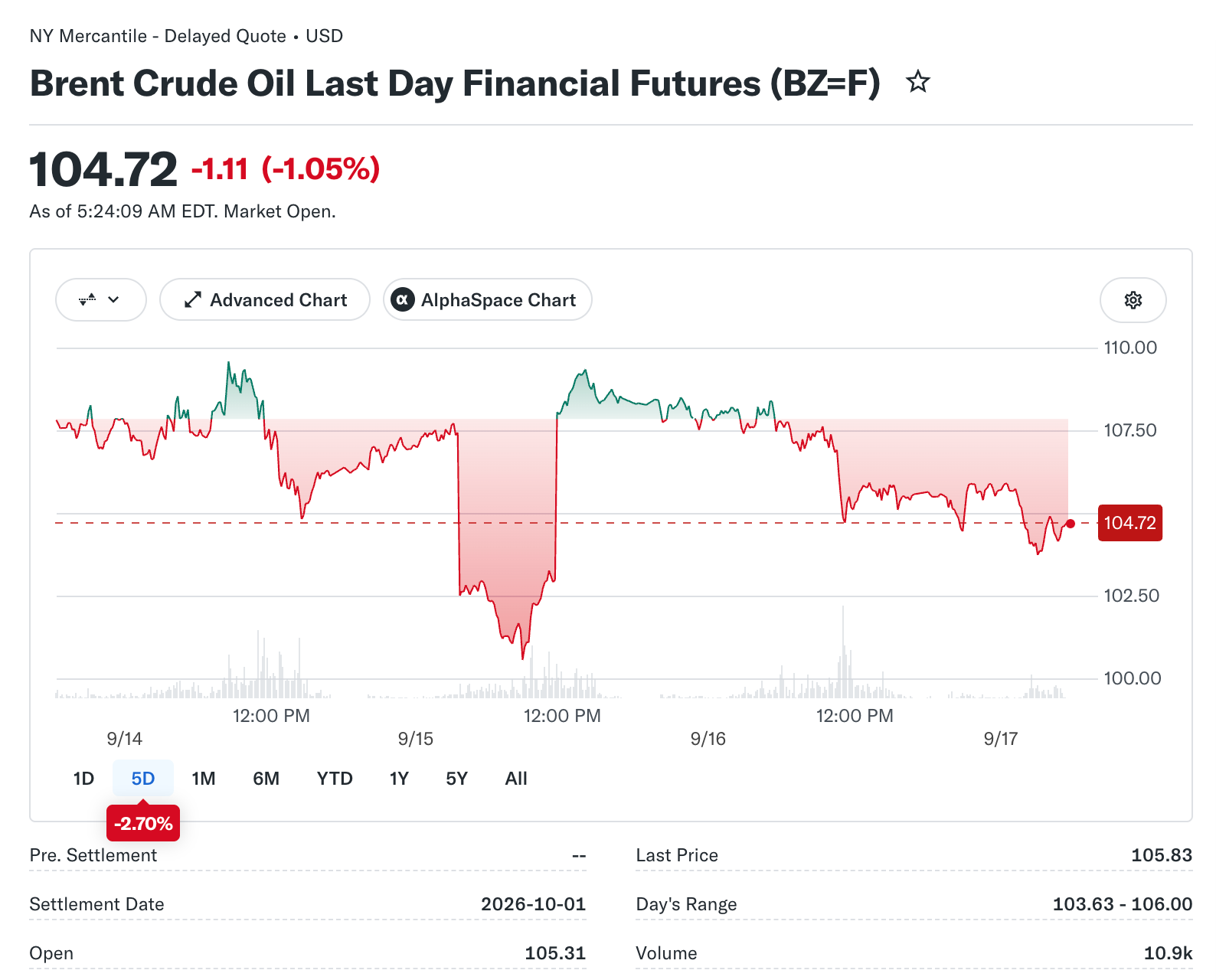
This week’s crude market had almost nothing to do with how much fuel the world actually wants to buy. Brent crude spiked to $109.21 a barrel on Tuesday, a 3.34% jump in a single session. A strike triggered the move by knocking out a pipeline network that shifts close to 7 million barrels per day of Saudi crude toward the Red Sea.
A senior financial analyst at NOQANA says the real concern is not the spike itself but how exposed Saudi Arabia’s export routes have become. The kingdom had relied on this pipeline specifically to avoid pushing every barrel through the Strait of Hormuz. With that backup route offline, Riyadh’s flexibility has shrunk at the worst possible moment for global supply.
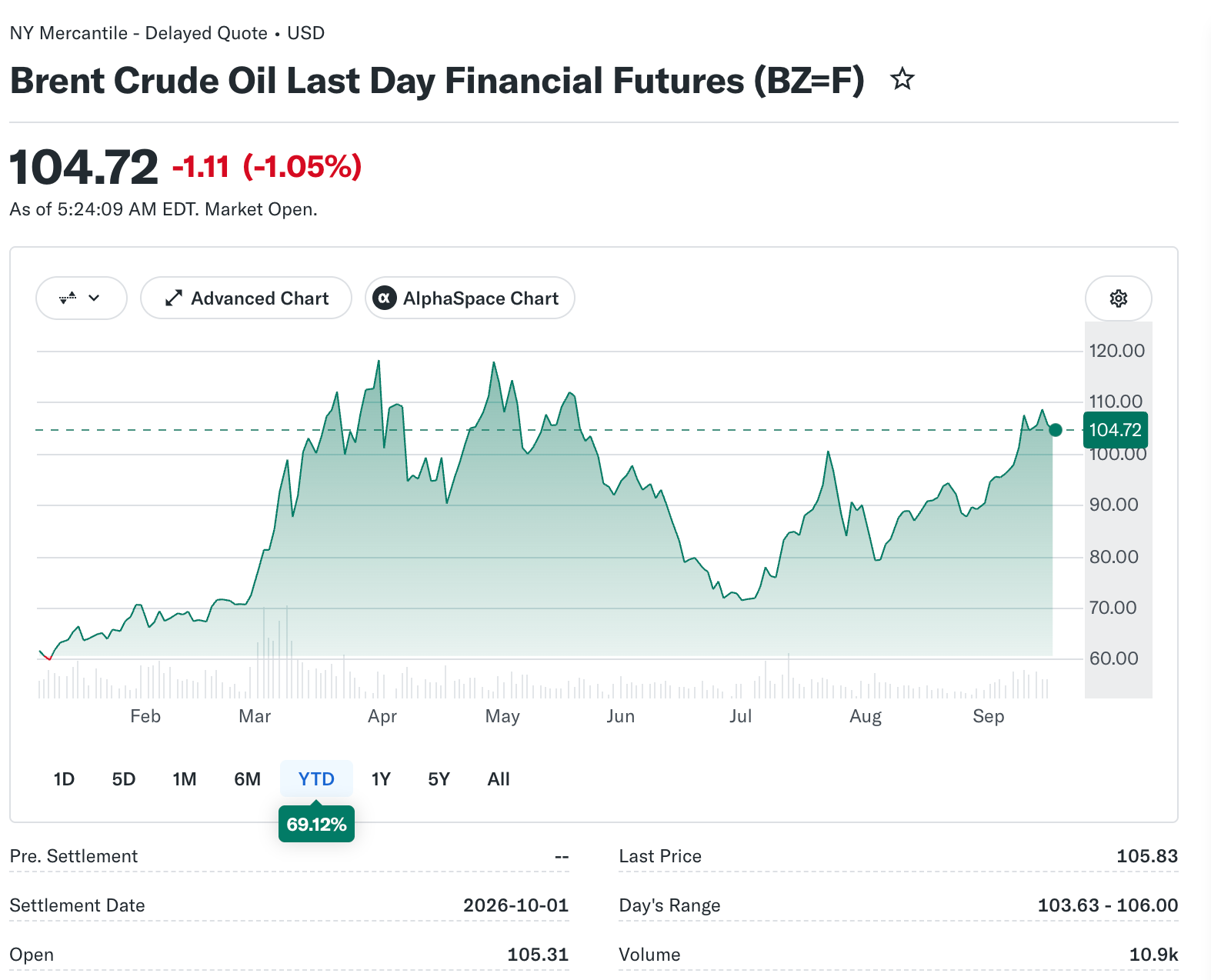
Over the past month alone, Brent has climbed roughly 20%, and it now sits nearly 60% higher than it did a year ago. A yearly gain of that size rarely happens without a real supply shock behind it. This month has delivered several such shocks, arriving almost back-to-back.
A Second Country Adds to the Pressure
Saudi Arabia was not the only source of anxiety this week. Libya suspended output at several oil fields and warned it might declare force majeure after protests shut down a major crude-loading pipeline. That development adds yet another variable to an already fragile supply picture.
Libyan output has held relatively steady near 1.4 million barrels per day despite the unrest, which has kept the immediate price impact contained.
Any further escalation there, though, would stack directly on top of the pressure already coming from Saudi Arabia’s pipeline outage. Markets are tracking both situations closely, which explains why prices have swung by several dollars within single trading sessions this week.
The Reversal Came Almost as Fast as the Spike
Brent slipped back toward $108 after a nearly 4% two-session run, while WTI eased toward $105 around the same time. That pullback followed a US industry report pointing to an unexpected build in crude stockpiles. An inventory surprise like that tends to quickly cool a geopolitically driven rally, even one backed by real supply concerns.
A lead financial expert at the brand points out that this pattern, a sharp spike followed by an equally sharp retreat, has become a defining feature of this market.
Official government data later showed inventories actually fell by 640,000 barrels, a far smaller shift than the earlier industry estimate suggested. That mismatch between preliminary and confirmed figures added another layer of confusion for traders trying to price risk accurately.
What It Would Take to Reach $150 a Barrel
One well-known commodities strategist raised the possibility of Brent hitting $150 a barrel if infrastructure like the East-West pipeline sustains permanent rather than temporary damage. That outcome remains speculative for now, but it frames exactly what is at stake. A quick repair means a short-lived spike, while lasting damage means a structural repricing of global energy.
A financial expert at the brand notes that US officials have publicly voiced confidence that the pipeline will resume operations soon.
Independent analysts studying satellite imagery have taken a far more cautious view, pointing to visible damage at a pumping station that could take considerably longer to fix. That gap between official optimism and outside assessment is exactly the kind of uncertainty keeping this market on edge.
A Diplomatic Thread Pulling in the Other Direction
Not every headline this week pushed prices upward. A truce covering strikes on Russian and Ukrainian energy facilities offered a rare moment of calm, and reports suggest Turkey has been working to broker a wider deal covering Black Sea shipping attacks. Progress there could ease a separate, longer-running source of energy market anxiety.
A senior broker at the brand explains that oil is now effectively pricing two opposing storylines at once. Middle East supply risk keeps pushing prices higher, while any sign of de-escalation around Russia and Ukraine tends to pull them back down. That push and pull explains the unusually wide trading range crude has moved through this week.
The Thin Safety Net Behind This Volatility
China’s own stockpiles have reportedly been shrinking, prompting the country to raise its import orders in August even as prices climbed. That kind of demand resilience from the world’s largest crude buyer suggests underlying appetite has stayed firm despite higher costs.
At the same time, the US Strategic Petroleum Reserve sits near record lows, stripping away a cushion that could otherwise absorb future shocks. A financial analyst at the brand takes a closer look at just how thin that margin has become.
With both China’s reserves and America’s strategic stockpile running low at once, the system has far less capacity to soften another disruption without a sharper price reaction. Investors should treat any fresh headline out of Saudi Arabia or Libya as a genuine catalyst rather than noise, at least until one of these two situations reaches a clear resolution.