
Bitcoin recorded its steepest single-day decline since June this week, and the trigger had nothing to do with trading activity itself.
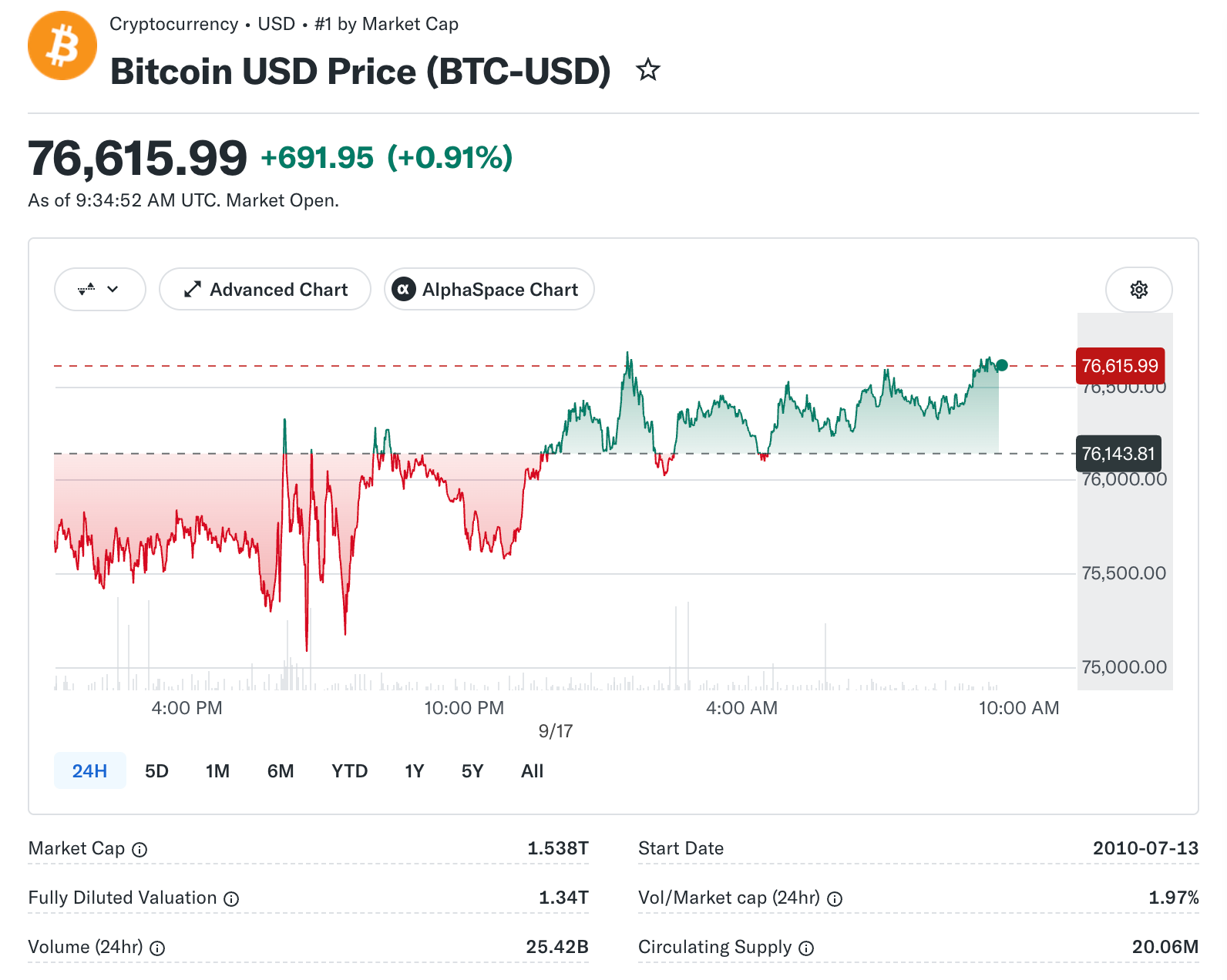
The Digital Asset Market CLARITY Act failed a procedural vote in the US Senate on Tuesday, falling short of the sixty votes needed to advance. Bitcoin fell more than 5% in response, opening Wednesday at $75,586.51, down 3.3% from the prior session.
A senior broker at NOQANA goes over why a failed legislative vote moved crypto markets more sharply than most economic data releases would have.
The bill would have clarified which US regulator, the SEC or the CFTC, holds primary authority over digital assets. Without that clarity, issuers and exchanges remain stuck operating under overlapping and sometimes contradictory jurisdiction.
Ethereum fell even harder in percentage terms, opening at $2,397.64, down 4.6% from the previous day. The broader crypto market moved in near lockstep with Bitcoin, suggesting a sentiment-driven repricing rather than an asset-specific event. Coinbase shares dropped 10.1% to $172.11, reflecting how directly exchange revenue depends on regulatory certainty.
Why This Vote Mattered More Than Past Setbacks
A financial analyst at the brand takes a closer look at why prediction markets reacted so violently to this particular outcome. Odds for the CLARITY Act’s enactment in 2026 collapsed from 29.5% to 6.5% almost immediately after the vote. That is not a modest repricing of probability. It reflects a near-total collapse in expectations for near-term regulatory resolution.
Without action before the October recess and November midterms, the jurisdictional standoff between the SEC and CFTC looks set to persist well into next year. Industry figures did not hide their frustration.
Coinbase’s chief executive called the outcome a disappointment, while a prominent crypto executive said the result simply stings, a sentiment echoed across the industry in the hours following the vote.
The ETF Outflow Signal Worth Watching Closely
A junior financial expert at the brand points out that institutional behavior often tells a more reliable story than headline price moves. US spot Bitcoin ETFs recorded net redemptions of $450.4 million on Tuesday, marking the largest single-day withdrawal since June. That kind of outflow suggests institutional allocators are stepping back rather than buying the dip.
Whether Wednesday’s flow numbers show a second consecutive day of redemptions or a return to accumulation will say a lot about how deep this pullback runs. Continued outflows would suggest institutional conviction has genuinely weakened. A reversal back toward inflows would suggest Tuesday’s reaction was largely a one-day overreaction to political noise.
Reading the Broader Price Context
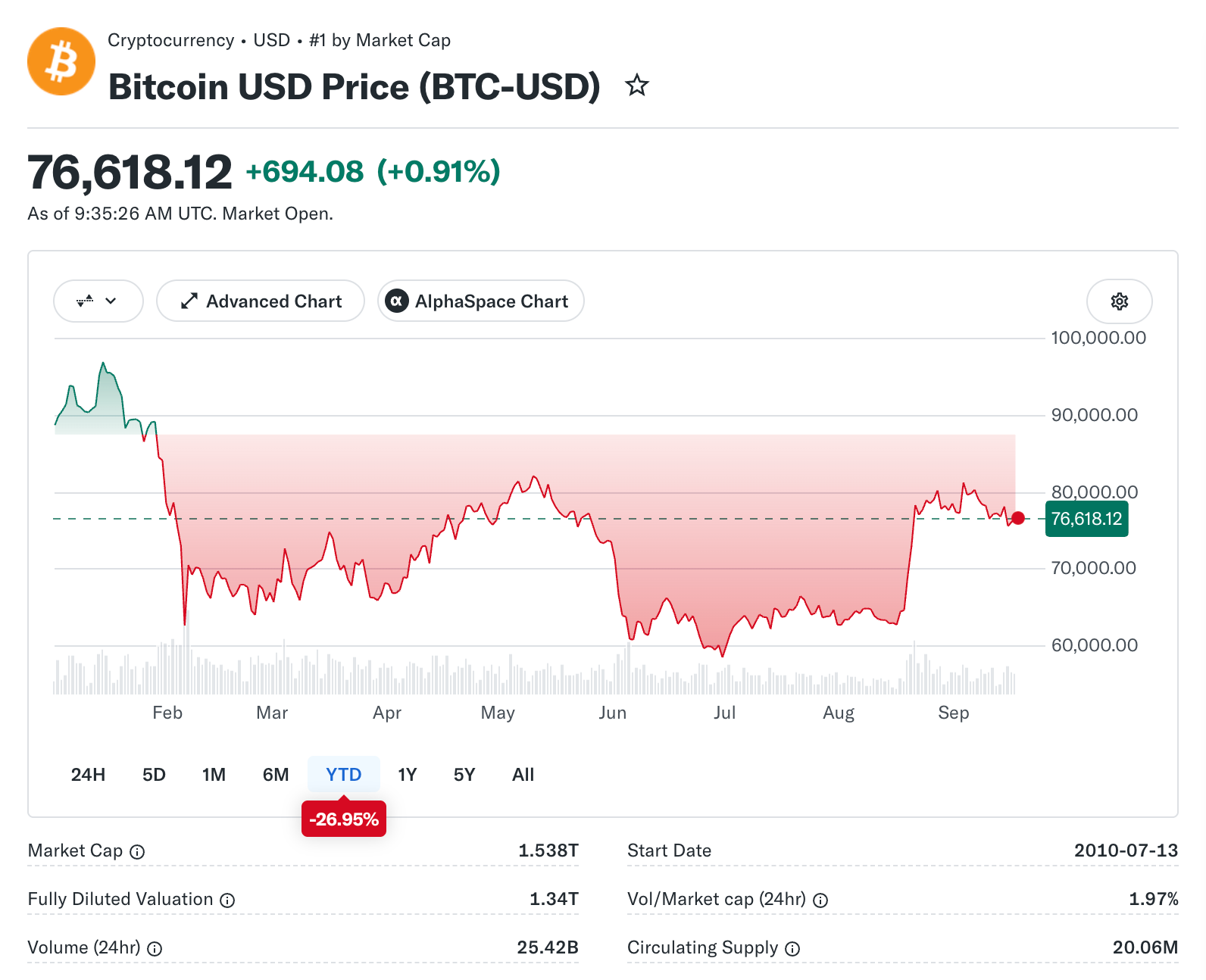
Bitcoin’s current level near $75,900 sits well below its all-time high of $126,198.07, reached back in October of last year.
The asset is down roughly 13% year-to-date and nearly 35% over the past twelve months, a steep decline for an asset that spent much of 2025 setting fresh records. That contrast between last year’s euphoria and this year’s retreat frames just how much sentiment has shifted.
A lead broker at the brand discusses a technical detail worth tracking closely. Bitcoin’s fifty-week moving average sits near $81,000, and price has remained below that level since June. The realized price, a measure of the average cost basis across all coins currently held, sits around $53,600, meaning most long-term holders remain comfortably above their entry point even after this week’s decline.
What the Options and Prediction Markets Are Pricing
A financial expert at the brand explores what forward-looking indicators suggest about where this settles by year-end.
Prediction markets have priced Bitcoin’s December 31 closing level near its fifty-week moving average around $81,000. Separately, one platform gives roughly a 51% chance of Bitcoin touching $90,000 before year-end, alongside a 26% chance of reaching $100,000.
Those odds suggest the market has not fully abandoned hope for a recovery, even after this week’s regulatory setback. They also suggest expectations have moderated considerably compared to where sentiment stood at the start of the year. A market pricing a coin flip on reaching $90,000 is a very different market than one that assumed new highs were inevitable.
The Fed Decision Compounding an Already Rough Week
Senior finance analysts this week repeatedly noted that Bitcoin’s regulatory setback landed just hours before the Federal Reserve’s rate announcement, compounding pressure on risk assets broadly. A rate hike tends to weigh on speculative assets, and crypto often amplifies that reaction more than equities.
The combination of a failed Senate vote and a hawkish Fed decision created a particularly difficult stretch for digital asset holders this week. Junior finance analyst desks inside the industry are framing the coming weeks as a genuine test of conviction for long-term holders.
Liquidations of leveraged long positions topped $570 million in the immediate aftermath of Tuesday’s vote, clearing out some of the market’s more aggressive positioning. Whether that flush marks a local bottom or merely the first leg of a deeper correction will depend heavily on how ETF flows and legislative prospects evolve from here.