
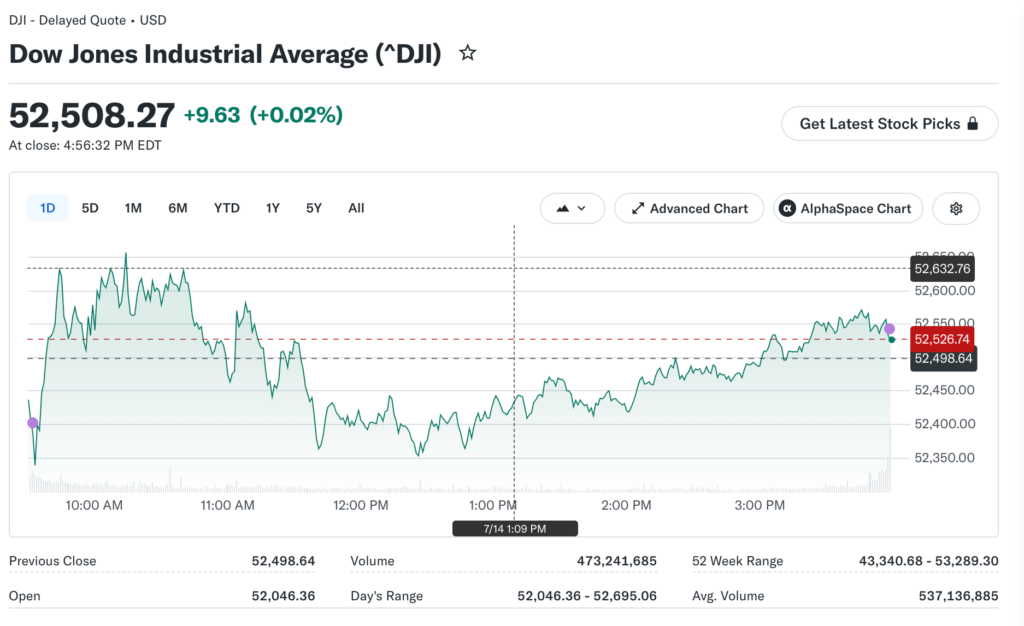
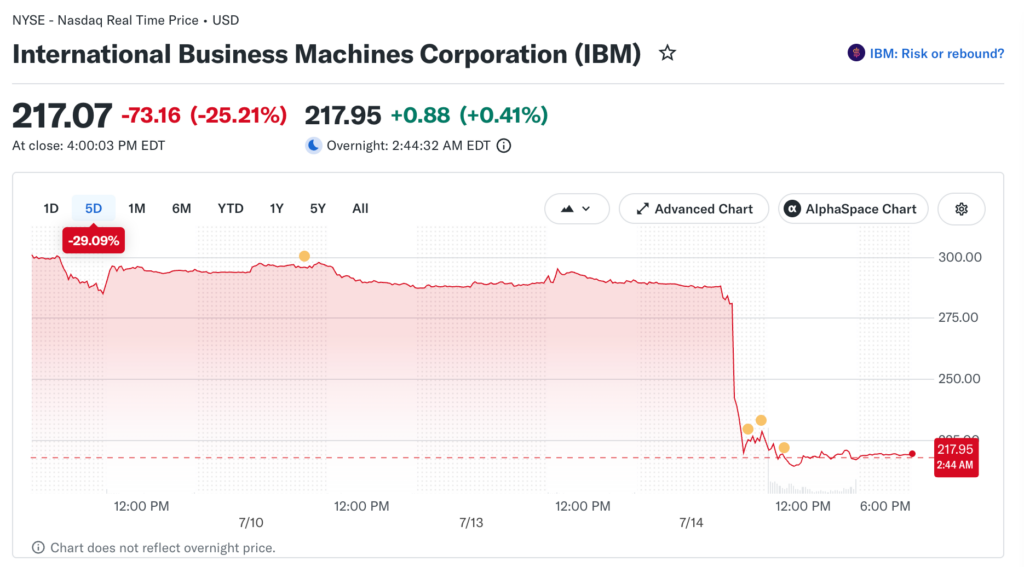
IBM shares fell approximately 25 percent this week after the technology company warned that second quarter profits would come in below expectations, pointing to soft demand across its software and infrastructure businesses. The decline weighed on the Dow Jones Industrial Average, even though the broader index still managed to close only marginally lower that day.
For any investor holding a meaningful direct position in IBM, this was a genuinely painful morning. A senior advisor at Prime Lake Capital says this kind of single-stock shock is precisely why concentration risk deserves the same attention private clients typically give to expected return.
Why Concentration Builds Up Gradually and Invisibly
Few investors set out to build a concentrated position deliberately. It typically happens gradually, through years of payroll stock contributions, long-held conviction in a familiar company, or simply not rebalancing a portfolio as one position grows faster than the rest.
By the time a concentrated position becomes obvious, it is often large enough that a single bad morning like IBM’s this week can meaningfully affect an entire portfolio.
This is not a criticism of the underlying company. IBM remains a large, established business with a long operating history. The issue is structural, not about any specific company’s quality.
Why Familiarity Often Masks the Actual Risk
Investors tend to feel more comfortable holding a large position in a company they know well, whether through years of employment, industry familiarity, or simple brand recognition.
That comfort is understandable, but it has little bearing on the actual financial risk a concentrated position carries. IBM is a household name with a long operating history, and that familiarity did nothing to soften this week’s decline for anyone holding a large direct position.
A wealth advisor at Prime Lake Capital treats familiarity and risk as entirely separate questions when reviewing a client’s holdings, since conflating the two is one of the more common reasons concentrated positions go unaddressed for years.
How Advisors Identify Concentration Before It Becomes a Crisis
A structured annual portfolio review typically flags any single holding that has grown to represent an outsized share of a client’s total assets, well before a single bad earnings report turns that concentration into a painful headline.
This kind of proactive review is meaningfully different from reacting only after a stock has already fallen sharply. It relies on setting a specific threshold in advance, so the decision to trim a position is made calmly and methodically rather than under the pressure of a single bad morning.
How High-Net-Worth Investors Typically Manage This Risk
Private wealth clients with meaningful concentrated positions generally address this risk through a combination of approaches. Gradual, tax-aware diversification over time reduces concentration without triggering an immediate, large tax event from selling everything at once.
Portfolio-backed liquidity structures allow an investor to access cash without selling a concentrated position outright, preserving future upside while still meeting near-term needs. Neither approach eliminates the underlying risk entirely, and both require careful, individualized planning rather than a one-size-fits-all formula.
What This Week’s Broader Market Context Adds
IBM’s decline arrived during a week that also included stronger than expected results from Goldman Sachs and Citigroup, along with cooling inflation data that lifted the S&P 500 to 7,543.59 on Tuesday. That contrast, one large company disappointing sharply while broader market conditions improved, is a useful reminder that diversification protects against exactly this kind of divergence.
An investor holding a broadly diversified portfolio experienced this week very differently than one holding a concentrated IBM position, even though both were exposed to the same overall market conditions.
The Honest Limits of Diversification
Diversification reduces the impact of any single holding’s bad week. It does not eliminate market risk entirely, and no diversified portfolio guarantees a fixed or positive return regardless of how thoughtfully it is constructed.
A well-diversified portfolio can still decline during a genuinely difficult market, just typically less sharply than a concentrated one during an event tied to a single company.
A portfolio strategist at Prime Lake Capital reviews concentration levels specifically to manage this kind of risk, not to eliminate risk altogether, since eliminating investment risk entirely is not a realistic goal for any long-term growth strategy.
What Investors Should Take From This Week
IBM’s decline this week will fade from headlines within days, replaced by whatever story dominates the next earnings season. The underlying lesson about concentration risk tends to matter longer than any single headline.
Investors reviewing their own portfolio after a week like this one have a genuine opportunity to ask a useful question, honestly. Is any single holding large enough that a bad morning like IBM’s could meaningfully derail their own broader financial plan. If the answer is yes, that is worth addressing before the next earnings season delivers a similar surprise.