
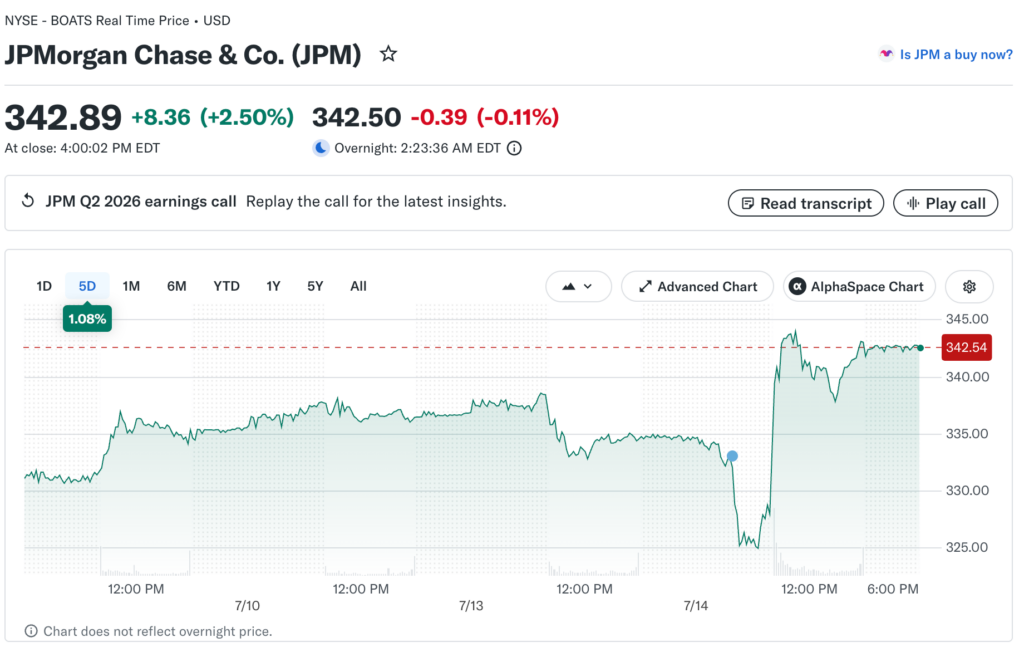
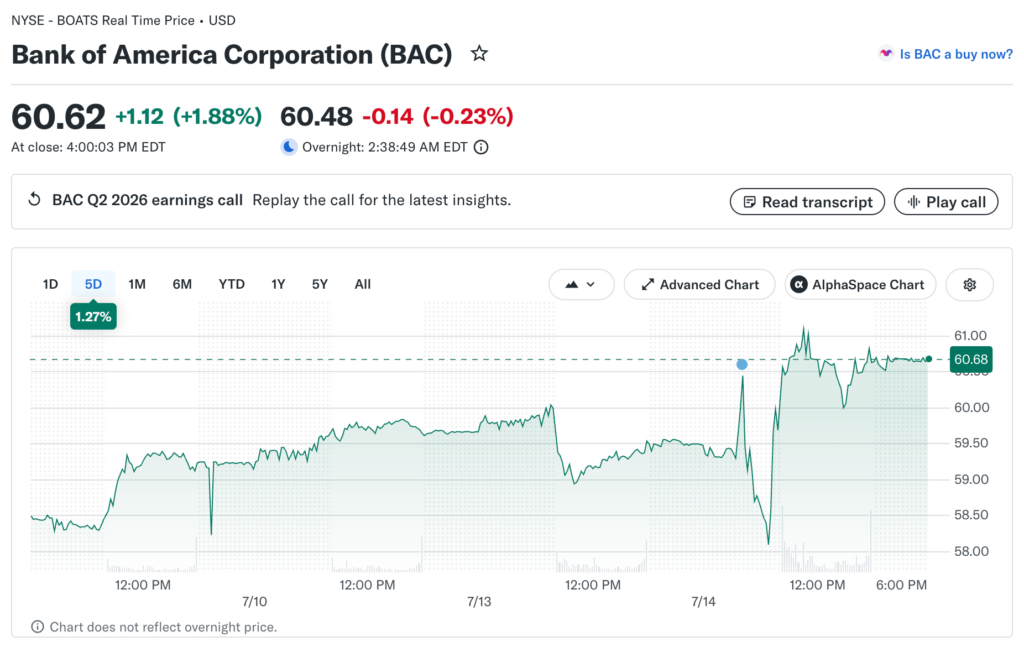
Bank earnings season delivered a striking range of results this week.
Goldman Sachs posted earnings of $20.98 per share against expectations of $14.48, while Citigroup reported revenue of $24.77 billion against a forecast of $23.74 billion. Wells Fargo, JPMorgan Chase, and Bank of America also reported this week, giving investors an unusually full picture of the sector within a single trading window.
Strong results like these tend to reassure depositors and investors alike. A senior advisor at Prime Lake Capital points out that a bank’s quarterly profitability, however strong, says nothing directly about how an individual client’s own assets are structured within that institution.
The Distinction Between Institutional Health and Account Structure
A profitable bank is generally a more stable bank, and that matters. It does not, however, change the basic legal structure of a standard deposit account, where client funds typically sit on the bank’s own balance sheet and the depositor is technically an unsecured creditor of the institution.
This distinction rarely affects day-to-day banking during a strong earnings season like this one. It becomes far more relevant during periods of genuine financial stress, when the difference between a pooled account and a segregated client account determines how quickly, and how fully, a client’s assets are protected.
Why This Week Is a Useful Moment to Ask the Question
Investors rarely think to ask about custody structure during a good earnings season, precisely because strong results create a sense of security that feels sufficient on its own. That is exactly when the question is easiest to ask calmly, without the pressure of an active crisis clouding the conversation.
A wealth advisor at Prime Lake Capital encourages clients to review custody structure specifically during calm, strong periods like this one, rather than waiting for a moment of genuine stress to raise the issue for the first time.
A short conversation during a quiet stretch tends to be far more productive than the same conversation attempted in the middle of an actual banking scare, when emotions and urgency make clear answers harder to get.
What Depositors Can Actually Do With This Information
Confirming custody structure does not require moving accounts immediately or assuming a specific bank is unsafe. It simply means asking a direct question and getting a documented answer, then deciding whether that structure meets an individual’s own comfort level given the size and importance of the assets involved.
A portfolio strategist at Prime Lake Capital treats this as a routine part of an annual review, alongside more familiar topics like fee structure and portfolio performance, rather than a special conversation reserved only for moments of visible market stress.
How This Connects to the Broader Wealth Management Relationship
Custody structure is one piece of a larger pattern.
Firms that proactively explain how client assets are held tend to be equally proactive about explaining fees, risk, and portfolio composition. Firms that leave custody structure vague often show similar vagueness elsewhere in the relationship, making this single question a useful, low-effort way to gauge a firm’s overall transparency before committing significant assets.
What a Segregated Structure Actually Changes
A segregated account structure keeps client holdings legally separate from a firm’s own capital, meaning those specific assets are not part of the firm’s balance sheet available to its own creditors if the institution runs into difficulty. This is standard practice in serious wealth management and considerably less common in standard retail banking relationships.
The protection this offers has nothing to do with how profitable a firm’s most recent quarter was. A firm can post exceptional earnings, as several did this week, and still hold client assets in a structure that leaves depositors exposed in a genuine crisis scenario.
Reading This Earnings Season With the Right Question in Mind
IBM’s sharp decline this week, alongside strong results from several major banks, is a reminder that even a broadly positive earnings season contains real variation beneath the surface. The same principle applies to custody structure across different institutions, where strong overall sector health can mask meaningful differences in how individual firms structure client accounts.
A portfolio strategist at Prime Lake Capital reviews this distinction with clients specifically because strong headline numbers, however reassuring, do not answer the structural question directly.
The Question Worth Asking During the Good Quarters
This week’s bank earnings offer genuine reassurance about the broader financial sector’s health, and that reassurance is not unfounded. It simply answers a different question than the one that matters most for an individual client’s own asset protection.
No amount of institutional profitability guarantees a specific structural protection for any one client’s holdings. That protection either exists in the account structure itself or it does not, and the calmest time to confirm the answer is precisely during a strong earnings season like this one, not during the next crisis.