
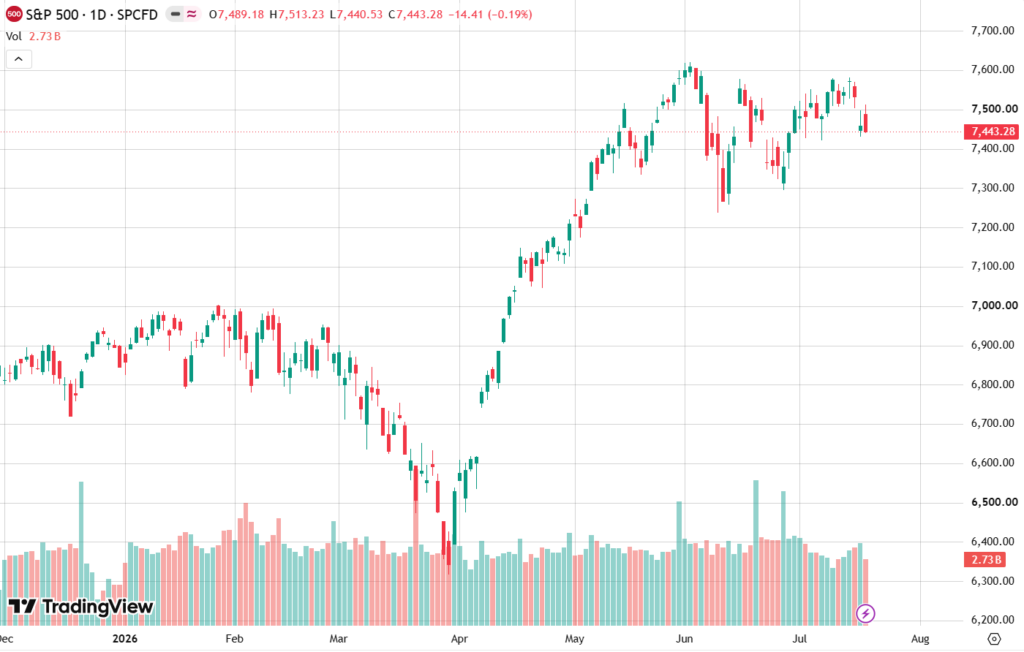
The S&P 500 continues to trade close to record highs, supported by resilient corporate earnings, a healthy labor market, and ongoing enthusiasm surrounding artificial intelligence. However, beneath the strong headline performance, investors are increasingly weighing valuation concerns, geopolitical uncertainty, and the possibility that elevated expectations may become more difficult to justify.
In its latest market outlook, experts from BCR Limited examine the factors shaping the current investment environment, highlighting why disciplined portfolio management and careful risk assessment remain essential as markets navigate an increasingly complex macroeconomic backdrop.
Strong Fundamentals Continue Supporting Equities
The positive case for US equities remains well supported.
Corporate earnings have generally exceeded expectations across multiple sectors, while unemployment has remained relatively low, reinforcing confidence in the resilience of the US economy. Artificial intelligence also continues to drive productivity improvements, supporting revenue growth for many technology companies and encouraging investors to maintain exposure to equities.
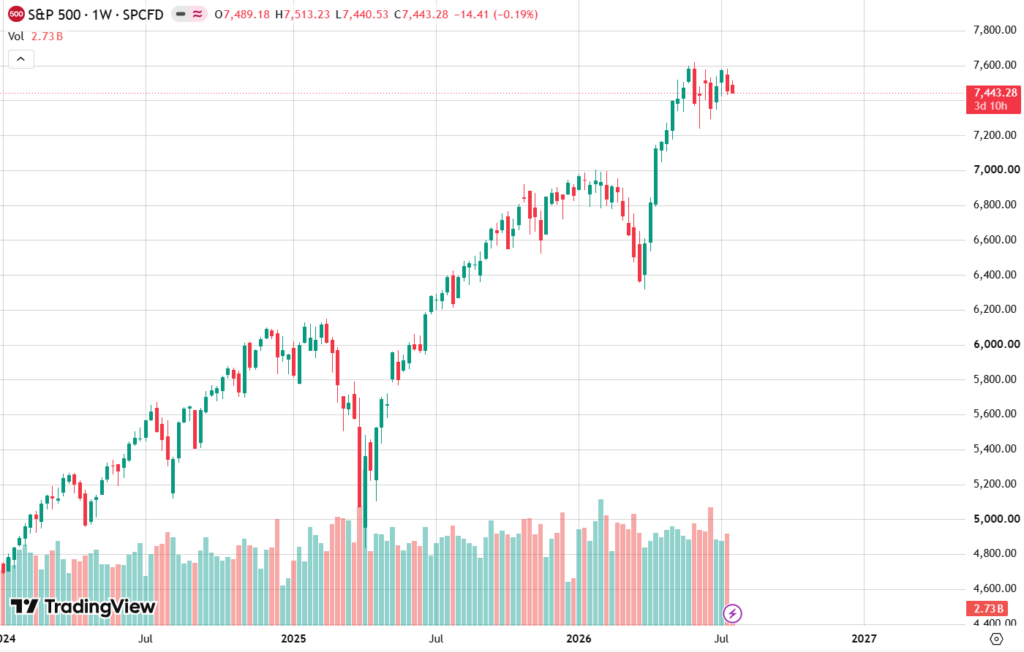
These factors have helped the S&P 500 remain near all-time highs despite persistent geopolitical uncertainty and changing expectations regarding future monetary policy.
Investor confidence has also benefited from resilient consumer spending and continued corporate investment across several sectors.
Valuation Concerns Are Becoming More Visible
Despite these positive fundamentals, some market analysts believe investors should remain cautious.
Bank of America recently reiterated a year-end target of approximately 7,100 for the S&P 500, implying downside potential from current levels. The firm’s analysts argue that speculative positioning has reached elevated levels, particularly among high-growth companies that have benefited from enthusiasm surrounding artificial intelligence.
Historically, periods of rapidly expanding valuations have occasionally been followed by meaningful corrections when earnings growth failed to keep pace with investor expectations. While this does not guarantee a market decline, it reinforces the importance of monitoring both valuations and underlying corporate performance rather than focusing exclusively on short-term price momentum.
Market Expectations Remain Divided
Not all analysts share the same cautious outlook.
JPMorgan recently increased its year-end target for the S&P 500 to around 7,800, reflecting confidence that corporate earnings will continue supporting higher equity prices. Yardeni Research has adopted an even more optimistic view, projecting the index could eventually reach 8,250 before year-end.
The wide gap between these forecasts illustrates the uncertainty currently facing investors. Rather than reflecting disagreement about the strength of the economy alone, the differing projections highlight contrasting assumptions regarding valuations, earnings growth, inflation, and monetary policy over the coming months.
For long-term investors, this divergence serves as a reminder that forecasting short-term market movements remains inherently difficult, even among experienced professionals.
Maintaining realistic expectations can help reduce emotional investment decisions during volatile market periods.
Defensive Businesses Can Improve Portfolio Resilience
Periods of market uncertainty often encourage investors to focus on companies with stable cash flows and resilient business models.
Waste Management represents one example frequently highlighted for its defensive characteristics. The company continues generating recurring revenue through long-term contracts while gradually expanding its renewable natural gas operations, supporting steady earnings growth even during periods of broader economic uncertainty.
Although no company is completely immune to slowing economic activity, businesses operating in essential services often demonstrate greater resilience than more cyclical sectors. Incorporating these types of companies into diversified portfolios may help reduce volatility while maintaining long-term growth potential.
Long-Term Discipline Remains Essential
Rather than attempting to predict exactly whether the S&P 500 will finish the year closer to 7,100 or 8,250, many investors may benefit more from maintaining a disciplined investment process.
Diversification across sectors, careful risk management, and periodic portfolio reviews remain valuable tools during periods when market expectations become increasingly polarized. Long-term investment success is often driven more by consistency and asset allocation than by accurately forecasting short-term market swings.
Macroeconomic data, corporate earnings, inflation trends, and central bank decisions will continue influencing sentiment throughout the remainder of the year, making flexibility and disciplined portfolio construction increasingly important.
Regular portfolio reviews also remain essential.
Conclusion
The S&P 500 continues to benefit from solid corporate earnings and favorable long-term structural trends, particularly within technology and artificial intelligence. At the same time, elevated valuations and geopolitical uncertainty continue to justify a measured approach toward risk.
While opinions remain divided regarding the market’s outlook, maintaining diversified portfolios and focusing on high-quality businesses may prove more valuable than attempting to anticipate every short-term market movement. For long-term investors, balancing growth opportunities with prudent risk management remains the most reliable strategy for navigating an uncertain investment environment.