
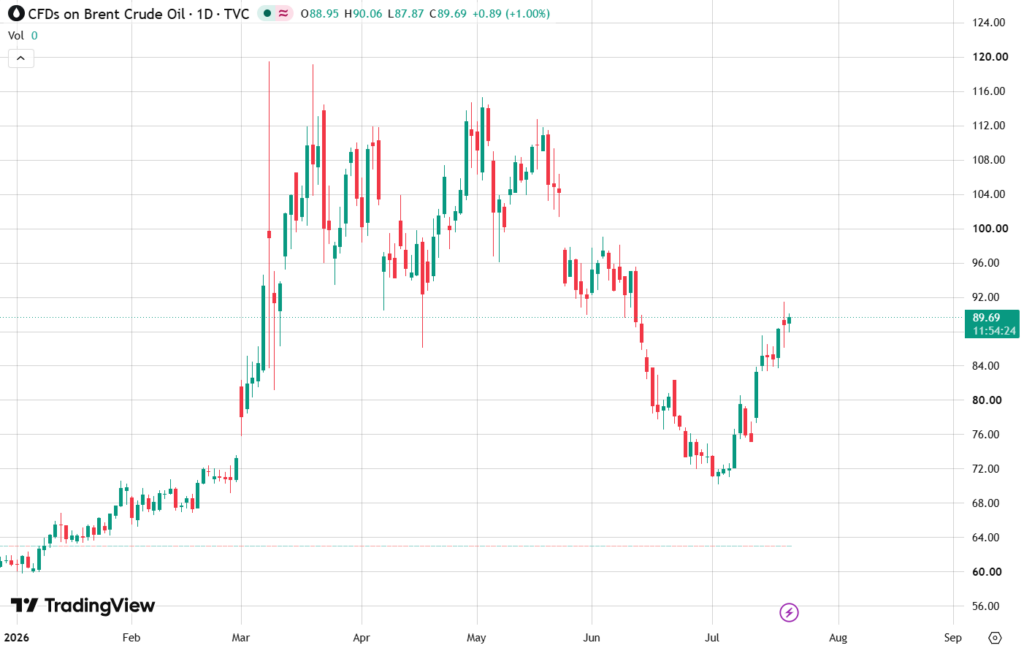
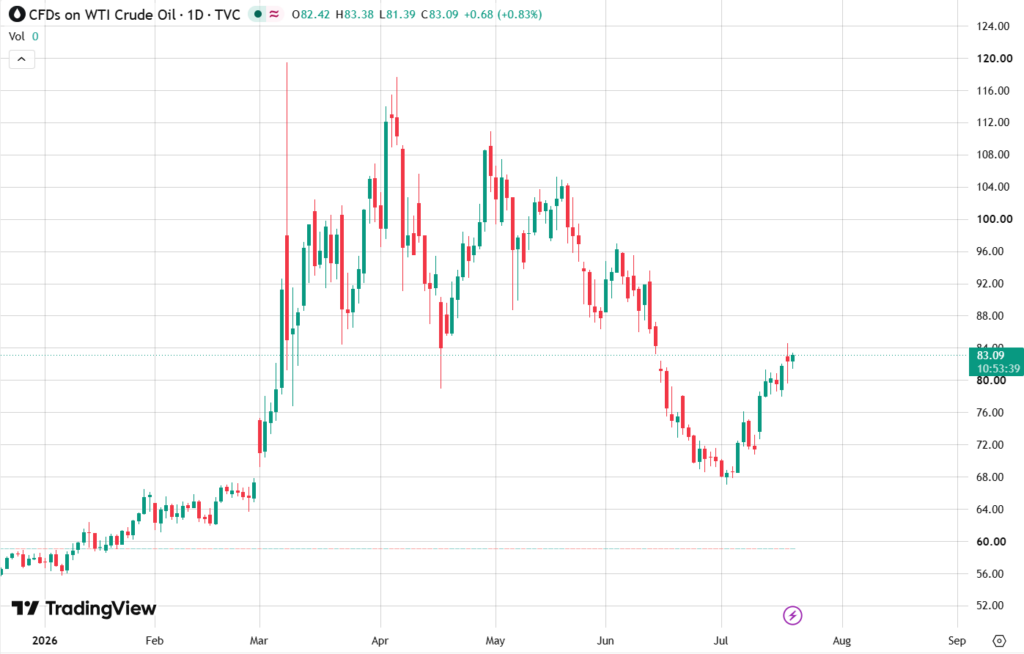
Global oil markets started the week with renewed momentum as escalating geopolitical tensions in the Middle East pushed crude prices sharply higher. Brent crude climbed above the $90 per barrel mark for the first time in more than a month, while West Texas Intermediate (WTI) moved beyond $84, reflecting growing concerns that supply disruptions could intensify if the conflict continues to expand.
In its latest market commentary, BCR Limited examines the latest developments driving energy prices, highlighting how geopolitical uncertainty, shipping risks, and tightening supply expectations continue to influence commodity markets and broader investment sentiment.
Geopolitical Risks Push Oil Prices Higher
Oil prices extended last week’s powerful rally after military tensions between the United States and Iran intensified further. Markets reacted to reports that the ceasefire understanding between both countries had effectively collapsed, increasing fears that crude exports from the Middle East could face significant disruption.
Brent crude futures rose to approximately $90.79 per barrel, adding around 4% during Monday’s trading session. The benchmark has now gained nearly 15.9% over the past week, marking its strongest weekly advance since April.
WTI crude also continued its recovery, climbing to roughly $84.68 per barrel after gaining more than 15% over the previous week. The move reflects investors’ growing concern that prolonged geopolitical instability could significantly tighten global oil supplies.
Higher energy prices could also reinforce inflation expectations, encouraging investors to monitor central bank policy alongside geopolitical developments more closely.
Strait of Hormuz Remains the Market’s Primary Focus
Much of the recent rally has been driven by renewed concerns surrounding the Strait of Hormuz, one of the world’s most strategically important energy shipping routes.
Any disruption to maritime traffic through this narrow passage has the potential to affect a significant share of global oil exports. Recent military activity, reports of vessel incidents, and increased naval operations have all contributed to rising uncertainty across energy markets.
Additional pressure emerged after maritime authorities reported new security incidents near Oman, while several vessels reportedly altered their routes because of safety concerns. These developments have reinforced expectations that shipping costs and supply risks could remain elevated in the coming weeks.
Any prolonged disruption could increase transportation expenses and create additional pressure across global supply chains.
Brent and WTI Continue Moving Higher
Although both major oil benchmarks have rallied sharply, they continue to reflect slightly different regional dynamics.
Brent crude remains the primary international benchmark and is generally more sensitive to geopolitical developments affecting Middle Eastern exports. WTI, by contrast, primarily reflects North American supply conditions while still responding to global disruptions when international inventories tighten.
The strong gains recorded by both benchmarks indicate that investors increasingly view current geopolitical risks as having the potential to affect worldwide crude availability rather than remaining confined to regional markets.
Supply Concerns Continue Supporting Energy Markets
Beyond military developments, traders are also paying close attention to broader supply fundamentals.
According to several market analysts, global crude inventories outside China remain relatively tight, leaving the market with limited capacity to absorb any prolonged disruption to production or shipping routes. This tighter inventory backdrop makes prices more sensitive to unexpected geopolitical events than in previous years.
At the same time, renewed threats against energy infrastructure and commercial shipping have increased concerns that additional supply interruptions could emerge if regional tensions escalate further.
What Investors Should Watch
For long-term investors, commodity markets remain an important indicator of broader macroeconomic conditions.
Sustained increases in oil prices can influence inflation expectations, central bank policy, transportation costs, and corporate profitability across multiple industries. Energy therefore continues to play an important role within diversified portfolios, particularly during periods of heightened geopolitical uncertainty.
Diversification across multiple asset classes may help reduce portfolio volatility during these uncertain periods.
Rather than reacting to short-term headlines alone, investors often benefit from monitoring how commodity price movements interact with inflation, interest rates, and overall market sentiment before making broader portfolio decisions.
Conclusion
Oil markets remain firmly supported as geopolitical tensions continue to raise concerns over global crude supplies. Brent’s move above $90 and WTI’s advance beyond $84 reflect growing uncertainty surrounding the Middle East and the security of critical shipping routes such as the Strait of Hormuz.
While future price direction will largely depend on geopolitical developments, inventory levels, and diplomatic efforts, current market conditions suggest that energy markets are likely to remain volatile. For investors, closely monitoring these developments remains essential, as commodity prices continue to influence inflation expectations, financial markets, and long-term portfolio positioning.