
Oil didn’t just dip last week, it dropped hard. A sudden pause in tensions between the U.S. and Iran triggered a sharp sell-off, with traders quickly unwinding geopolitical risk premiums that had been building for weeks. Crude prices tumbled as hopes of a ceasefire resurfaced, reminding investors just how sensitive energy markets are to headlines rather than fundamentals.
As Bankolla notes, For energy investors, the message is clear: volatility is back in control. When geopolitical fears ease, even briefly, oil can fall just as quickly as it rises. That creates both opportunity and risk, particularly for those holding short-term positions or leveraged exposure.
But this isn’t a resolution, it’s a pause. Underlying tensions remain unresolved, and any shift in rhetoric or escalation could send prices sharply higher again. Supply dynamics haven’t fundamentally changed, and global demand remains relatively stable, meaning price swings are being driven primarily by sentiment.
In this environment, timing matters more than ever. Expect continued price whiplash, not a steady trend, as markets react to every development in real time.
The Biggest One-Day Drop in Months
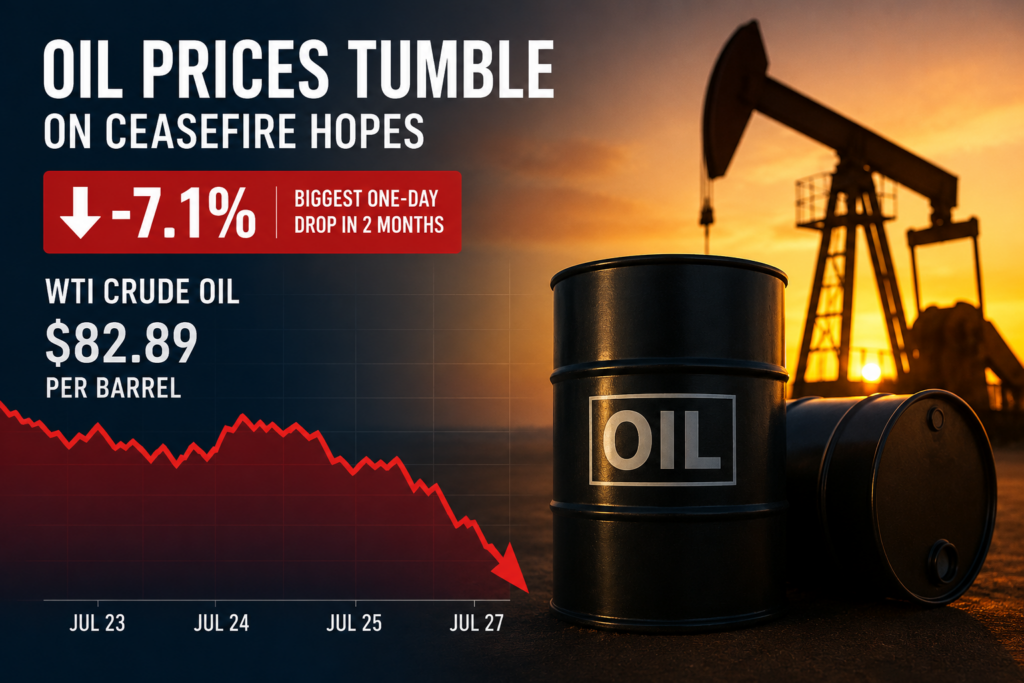
As of midday on July 27, WTI crude oil had plunged more than 7%, marking its largest single-day drop in roughly two months. Prices now sit near $82.89 per barrel, a sharp reversal driven almost entirely by hopes of easing geopolitical tensions, not any confirmed diplomatic breakthrough.
The speed of the move highlights just how fragile sentiment remains. This wasn’t a fundamentals-driven sell-off, but a rapid repricing of risk as traders pulled back from worst-case scenarios.
The impact spilled over immediately into equities. Energy-focused stocks sold off in tandem, reflecting how tightly linked the sector remains to short-term oil price movements.
For investors, the takeaway is clear: price action is being dictated by headlines, not supply-demand shifts. Until there is real clarity on the geopolitical front, sharp, reactive swings like this are likely to remain the norm rather than the exception.
Energy Stocks Feel the Squeeze
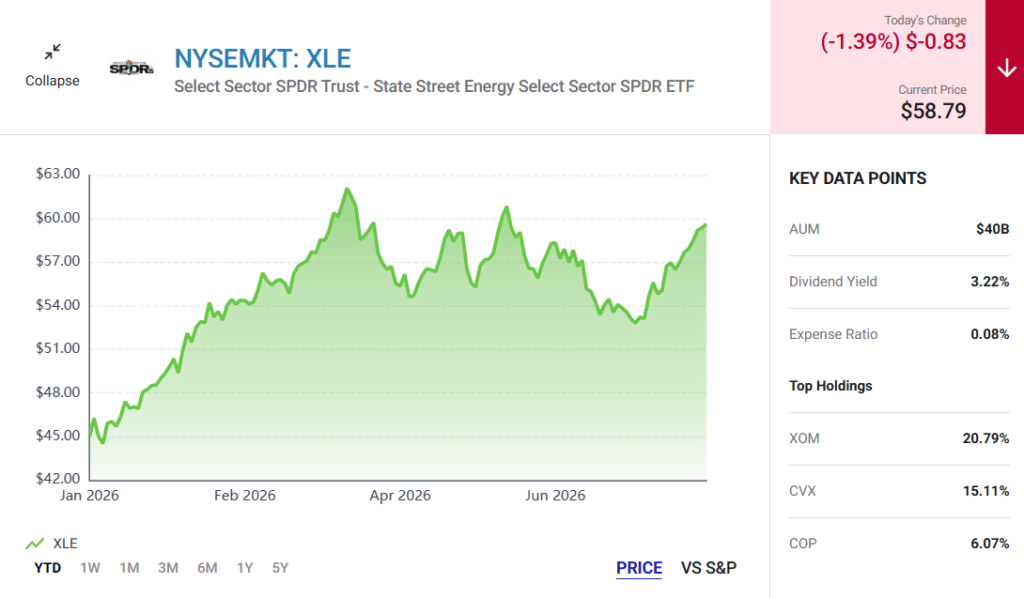
The State Street Energy Select Sector SPDR ETF (XLE) traded more than 1.5% lower on the news, reflecting how directly oil company profits are tied to crude prices.
Lower oil prices squeeze margins for producers, which explains the swift pullback across the sector even as the broader market held relatively steady.
Why This Ceasefire Talk May Not Stick
Despite the price drop, there is little evidence of a durable resolution. Iran’s Foreign Ministry spokesperson stated on July 27 that the country currently has no negotiations underway with the United States, despite a memorandum of understanding signed back in June.
The conflict has also broadened beyond its original scope, with an Iranian proxy group recently launching attacks on Saudi Arabian oil tankers, raising fresh concerns about the security of regional shipping routes.
The Strait of Hormuz Isn’t the Only Chokepoint Now
Historically, attention has centered on the Strait of Hormuz, the narrow waterway bordering Iran and Oman through which roughly one-fifth of global oil supply normally flows.
Recent attacks suggest the conflict may now be spilling into the Red Sea as well, adding a second potential pressure point for global oil markets. Analysts have noted that markets are not yet pricing in an extended blockade, but that could change quickly if attacks escalate further.
Bigger Economic Stakes Are in Play
Beyond oil markets themselves, the stakes extend into the broader economy. The yield on the 10-year U.S. Treasury note recently hit 4.7%, a level economists consider risky for an otherwise resilient economy.
Higher oil and gas prices stemming from the conflict could also pressure the Federal Reserve toward raising interest rates later this year if inflation concerns intensify, adding yet another layer of uncertainty for investors to track.
Why Some Energy Exposure Still Makes Sense
Even if the conflict were to end tomorrow, global oil supply chains would take time to normalize, and U.S. oil reserves are reportedly approaching critical levels, according to several analysts.
That combination of tight supply and geopolitical unpredictability supports the case for investors to maintain at least some exposure to domestic energy assets as a hedge against a prolonged disruption. Oil also remains a finite resource, and rising global power consumption could keep long-term demand elevated regardless of how this particular conflict resolves.
For investors watching the sector, the swings likely aren’t over. This 7% single-day move underscores just how sensitive energy markets remain to geopolitical headlines, and further volatility should be expected as the situation continues to develop in the weeks ahead.