
A decentralized crypto exchange muscling into prediction markets wasn’t a widely expected storyline this year, but Hyperliquid just made a serious move in that direction. Brokers from Bankolla dive into why this upgrade poses a genuine competitive threat to established players like Robinhood, Kalshi, and Polymarket.
The Upgrade That Changes Everything
On July 19, Hyperliquid introduced a major shift in how its outcome markets operate. The platform will soon allow any participant staking 500,000 HYPE tokens (around $31 million) to deploy their own event contracts with minimal oversight.
Previously, only network validators controlled which prediction markets could go live, effectively acting as gatekeepers. This update removes much of that friction, opening the door to broader participation while still maintaining a high economic threshold for entry.
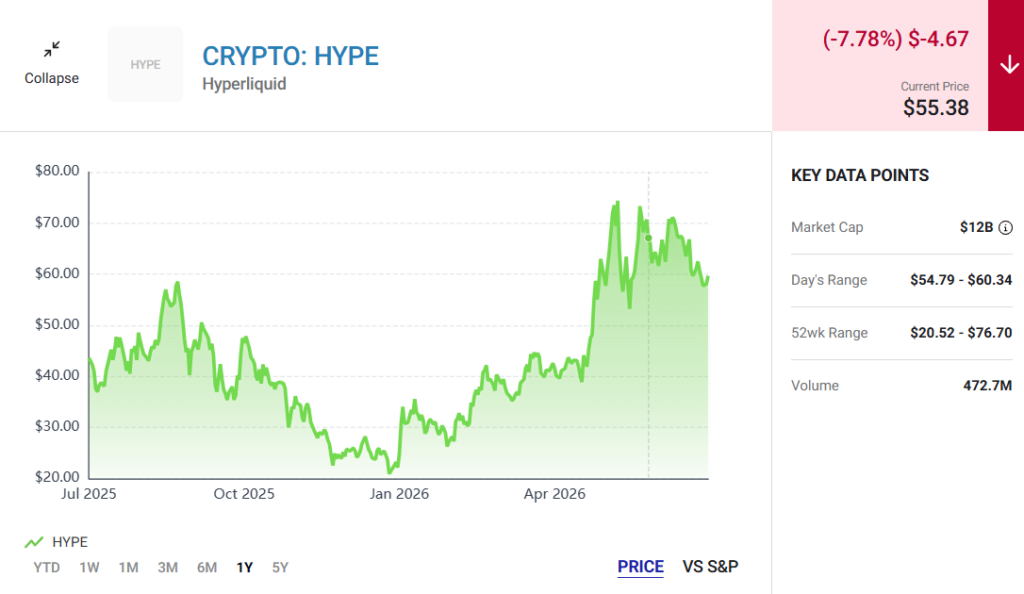
The change signals a move toward greater decentralisation, but with a built-in filter. The substantial staking requirement ensures that only well-capitalised participants can launch markets, which may help limit spam while still expanding access.
In practical terms, market creation becomes more scalable, potentially accelerating growth in activity and diversity across the platform’s prediction markets.
Why This Structure Is Genuinely Appealing
The economics behind this change make it more than a simple expansion of access. Deployers can retain up to 50% of the transaction fees generated by their markets, creating a direct financial incentive to launch and maintain active, high-interest prediction contracts.
This structure encourages coverage of niche or underserved topics, where traditional platforms may lack the flexibility or incentive to operate. As a result, the ecosystem could see broader market diversity and increased user engagement.
At the same time, the system is not without safeguards. If a deployer fails to resolve a market correctly or misses deadlines, validators can step in and impose penalties through a governance vote.
The result is a hybrid model, open participation paired with accountability, designed to scale market creation without fully sacrificing oversight or reliability.
A Direct Hit on Competitors’ Weak Spot
This permissionless design attacks incumbents exactly where they’re most vulnerable: market coverage. Polymarket’s own documentation confirms its markets are created internally by its team, with users only able to suggest ideas rather than launch them directly.
Kalshi must run every new event contract through a formal regulatory review process, while Robinhood doesn’t list its own prediction contracts at all, instead routing that flow through partner exchanges.
The Numbers Show Why the Timing Matters
Hyperliquid is entering a rapidly expanding market at a highly competitive moment.
Prediction markets generated $113.8 billion in notional volume in Q2 2026, with June alone reaching a record $50.7 billion. That surge reflects growing mainstream interest and increasing liquidity across the sector.
The key implication is competition, not just opportunity. Any share of volume Hyperliquid captures will likely come at the expense of existing platforms already positioning aggressively for growth.
This creates a more challenging environment than headline numbers might suggest. Strong sector expansion does not guarantee easy gains, particularly as new entrants and incumbents alike compete for users, liquidity, and attention.
For Hyperliquid, success will depend not just on access and incentives, but on how effectively it differentiates in an increasingly crowded and fast-moving market.
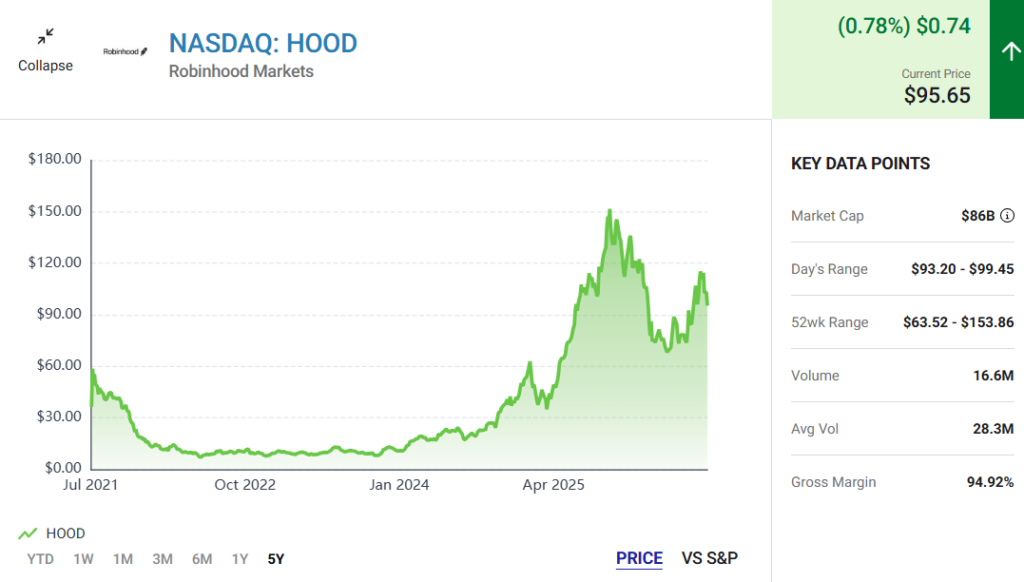
How This Could Squeeze Robinhood Specifically
Beyond prediction markets, Hyperliquid’s broader business model adds another layer of pressure. Close to 99% of Hyperliquid’s protocol fees are automatically funneled into buybacks of its own HYPE token, similar in effect to a corporate stock buyback.
More trading volume, whether from prediction markets or elsewhere, means more fees and more automated token purchases, which tightens supply and creates potential upward price pressure. The staking requirement for market deployers adds yet another mechanism pulling tokens out of circulation.
The Catches That Could Slow This Down
Hyperliquid’s permissionless branding isn’t quite as open as it sounds. Market templates remain under validator control, limiting how quickly the platform can replicate the breadth of Polymarket’s political markets or Kalshi’s sports betting catalog, and the steep 500,000 HYPE staking requirement will filter out all but the most serious deployers.
Hyperliquid also isn’t available to users in the United States, which caps its ability to directly compete for share in one of the largest prediction market audiences.
What Would Turn This Into a Real Threat
Hyperliquid has introduced a potentially disruptive upgrade, but its real impact depends heavily on execution.
If validators move forward with approving templates across sports, politics, and macroeconomic events, and credible deployers actively build out those markets, the platform could evolve into a serious competitive threat to Robinhood Markets, Kalshi, and Polymarket.
The opportunity is clear, but not guaranteed. Success depends on attracting both high-quality market creators and sustained user liquidity two factors that are difficult to scale simultaneously.
For now, the upgrade acts as a tailwind for Hyperliquid’s token, reflecting optimism around future growth. However, it falls short of a confirmed market shift. Until adoption broadens and execution proves consistent, expectations of outright dominance remain premature.