
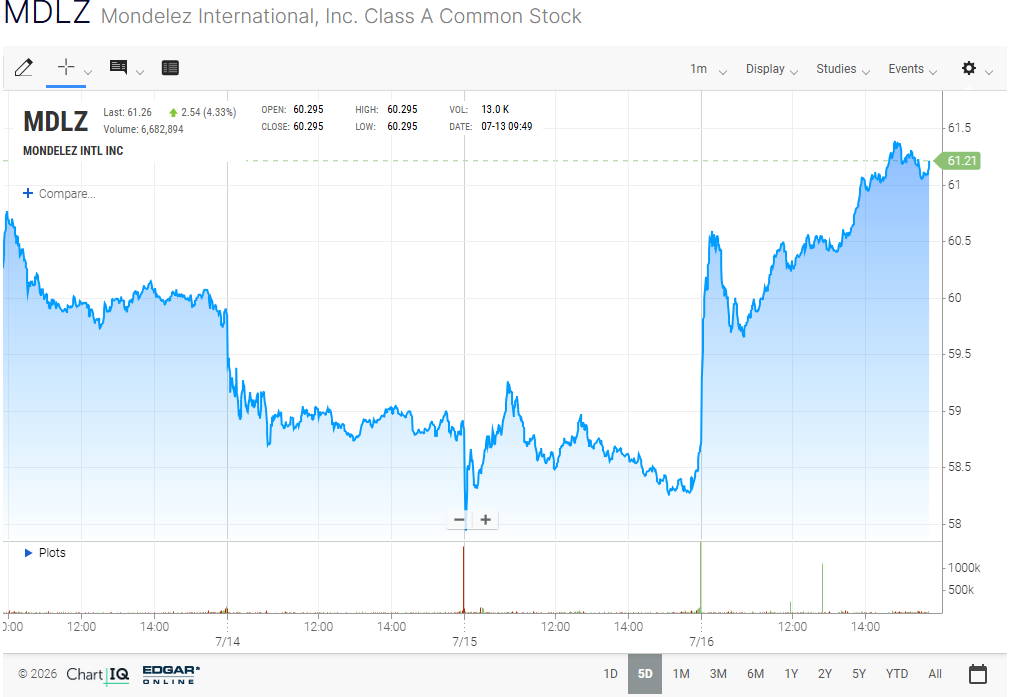
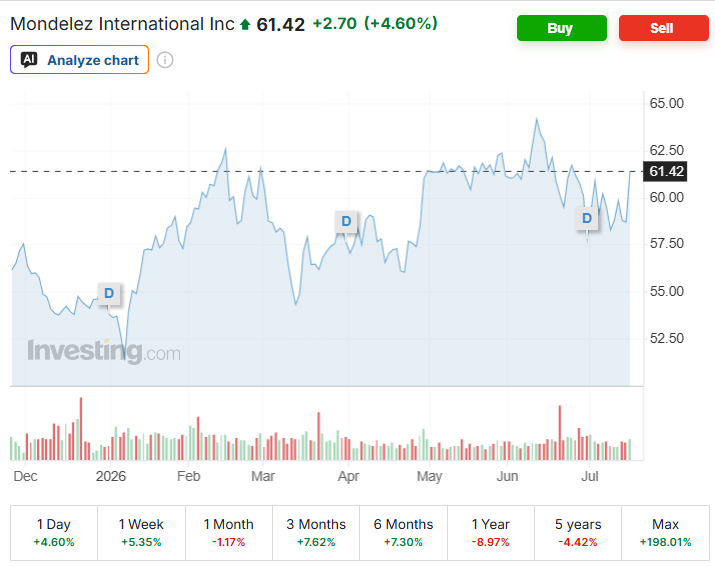
Mondelez International, the company behind Oreo and Cadbury, is trading roughly 17.4% below its 52-week high, edging uncomfortably close to bear market territory. Pullbacks like this happen for all kinds of reasons, and not every dip is worth buying.
Brokers from Vaulltier walk through why this particular pullback looks less like a warning sign and more like an opportunity for patient, income-focused investors. Understanding what’s actually driving the decline, rather than reacting to the headline number alone, is the key to telling a genuine buying opportunity apart from a stock that’s falling for good reason.
Two Clear, Identifiable Culprits
The good news here is that the reasons behind Mondelez’s slide aren’t mysterious. Two forces are doing most of the damage: elevated cocoa prices and Federal Reserve policy.
Mondelez isn’t purely a chocolate company, but Cadbury products and Oreo cookies make it a major cocoa buyer, and cocoa prices have been climbing sharply. When that happens, the company typically passes higher input costs on to consumers who are already sensitive to inflation, which can weigh on sales momentum and investor sentiment alike.
The Fed factors in through a different channel. Rate hikes are the standard tool central banks use to cool inflation, and higher rates tend to push Treasury yields higher too. That combination often pulls income-focused investors away from dividend stocks like Mondelez and toward lower-risk government debt instead, since safer yields become more competitive.
This dynamic tends to hit defensive, dividend-paying sectors like consumer staples especially hard, since these stocks are often held specifically for their income characteristics rather than growth potential, making them more sensitive to shifts in the relative appeal of bonds.
The Inflation Data Might Be Turning
There’s a reason for optimism buried in the most recent numbers. June’s Consumer Price Index reading fell 0.4%, marking the largest monthly drop since April 2020. That’s not a complete fix for inflation concerns, but it does shift the odds.
Fed funds futures currently show a high probability that the central bank holds rates steady at its upcoming meeting rather than hiking further, which would remove one of the two pressures weighing on the stock.
Mondelez Is Actually Outperforming, Not Just Surviving
Here’s a detail that’s easy to miss amid the 52-week-high comparison: despite trading well below its peak, Mondelez is still up year to date, and it’s actually outperforming both the S&P 500 and the broader consumer staples sector over that same stretch. That’s a meaningful signal.
A stock absorbing real cost pressure from cocoa prices and higher rates while still beating the market suggests the underlying business is holding up better than the price chart alone would suggest, and it points to resilient demand for the company’s core brands even as input costs climb.
The Dividend Case Is Where This Gets Interesting
For income-focused investors, the more compelling story here isn’t the stock’s recent weakness, it’s the dividend. Mondelez currently yields 3.3%, more than triple what the S&P 500 typically pays out, and the company has raised its payout for 14 consecutive years.
Some analysts project dividend growth in the high single digits annually through 2035, a target that looks achievable given that Mondelez has no debt coming due for another five years.
Run a simple scenario: if payout growth lands around 7% annually while core inflation holds near its recent 2.6% level, Mondelez would be delivering dividend growth that comfortably outpaces inflation over the long run.
Nothing about that outcome is guaranteed, and dividend growth projections a decade out always carry uncertainty, but the math illustrates why long-term income investors tend to find this kind of setup attractive. A clean balance sheet with no near-term debt maturities gives management the flexibility to keep prioritizing shareholder payouts even if cocoa costs or interest rates stay elevated for longer than expected.
The Bottom Line
Corrections in the 10% to 20% range are a normal part of investing, and the real work is figuring out whether a given pullback reflects a broken business or just short-term headwinds. Some corrections do signal more trouble ahead, which is exactly why identifying the specific cause matters so much before deciding whether to buy, hold, or walk away.
In Mondelez’s case, the causes are identifiable and arguably temporary: cocoa prices and Fed policy, both of which can shift in the company’s favor. Meanwhile, the fundamentals, including relative performance and a well-supported, growing dividend, suggest the business itself remains sound.
For investors focused on long-term income rather than short-term price swings, a 17% discount on a company with this kind of dividend track record and balance sheet flexibility is worth a closer look, not a reason to walk away.