
Oil prices are climbing again as tensions flare in the Middle East, and that is putting a fresh spotlight on Bank of America (NYSE: BAC) and its peers. Brokers from Sollventis dive into this topic, looking at why rising energy costs tend to be a mixed bag for the banking sector rather than a simple win or loss.
The logic starts with inflation. Energy prices are one of the more direct channels through which conflict abroad shows up in household budgets back home, and the latest escalation has reversed what had been a gentle decline in oil prices.
That matters because inflation has already been running hotter than policymakers would like, and rising fuel costs only add to the pressure. The Federal Reserve’s primary tool for fighting inflation is raising interest rates, and prediction markets are now assigning a rising probability, even if still a minority one, to a rate hike at the Fed’s next meeting.
Why A Rate Hike Tends To Help Bank Earnings
For a bank, an interest rate increase is not automatically bad news. In fact, it is often the opposite.
Large banks make much of their money on the spread between what they pay depositors and what they charge borrowers, and that spread tends to widen when rates rise.
Bank of America posted $15.7 billion in net interest income in the first quarter of 2026, while JPMorgan Chase generated $25.5 billion over the same period, figures that show just how much scale is riding on that interest rate spread.
The mechanics behind this are fairly simple. When the Fed raises rates, banks tend to lift the rates they charge on loans almost immediately, while dragging their feet on raising what they pay savers. That lag is where the extra profit comes from, and it tends to be even more pronounced at the largest banks.
Since institutions like Bank of America and JPMorgan Chase have strong brand recognition and vast branch networks, they do not need to compete as aggressively on deposit rates to keep customers in place, which lets them hold those rates lower for longer once a hike lands.
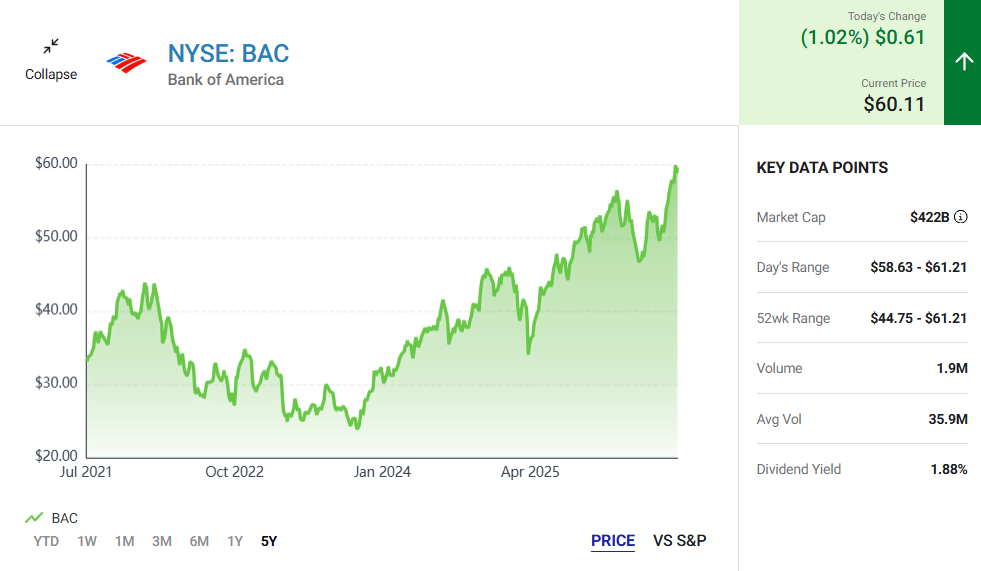
Shares of both banks have reflected some of this dynamic already. Bank of America was trading recently near $60.38, up 1.47% on the day, with a 52-week range spanning $44.75 to $61.21 and a market capitalization near $422 billion.
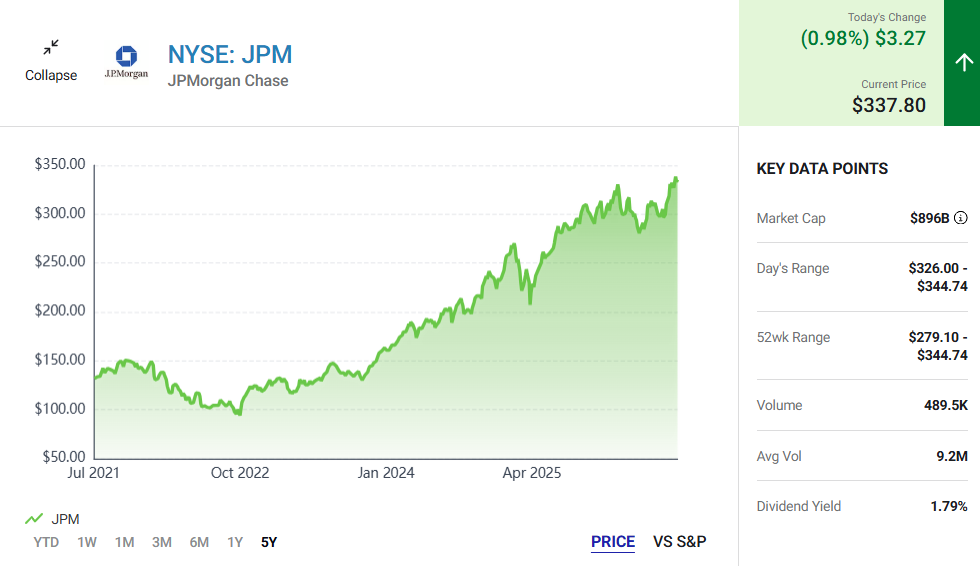
JPMorgan Chase traded around $338.65, up 1.23%, with a 52-week range of $279.10 to $344.74 and a market cap close to $896 billion. Both stocks have been grinding toward the top end of their yearly ranges, and rising rate expectations are part of that story.
The One Reason To Be Cautious
A modest rate increase (one or two quarter-point hikes) would likely boost bank earnings without hurting the broader economy. The real risk is that continued Fed tightening with each additional hike raises the odds that higher borrowing costs choke growth rather than just cool inflation.
A recession would reverse the dynamic entirely: loan defaults would rise, directly hurting bank profits, while the Fed’s typical response cutting rates would squeeze net interest margins that had been fueling gains.
Larger banks, with more diversified revenue and stronger balance sheets, are better equipped to withstand this than smaller regional lenders, but no bank investor wants to see a recession unfold.
What This Means For Investors
For now, the setup still favors the bulls. Rising oil prices are pushing rate expectations higher, and higher rates, within reason, tend to widen the net interest margin that large banks depend on for a big chunk of their earnings.
That is a genuine tailwind for names like Bank of America and JPMorgan Chase, and it helps explain why both stocks have been trading near their 52 week highs.
The risk sits further out on the horizon. If the conflict in the Middle East continues to escalate and oil prices keep climbing, the Fed could find itself forced into a more aggressive tightening cycle than markets currently expect.
That is the scenario where the calculus flips from mildly bullish to genuinely concerning, since a recession driven by overly restrictive policy would hurt bank earnings far more than a rate hike or two would help them.
Investors watching this space should keep an eye on two things in particular: how oil prices trend over the coming weeks, and how the Fed’s own language shifts at its next meeting.
A single hike tied to a temporary energy shock is a very different story than a sustained tightening cycle aimed at a broader inflation problem, and the difference between those two outcomes is likely to matter more for bank stocks than almost anything else on the calendar right now.