
Buying a stock while it is out of favor rarely feels comfortable, but for long-term investors, what matters is where a business is headed years from now, not where it sits today.
Pfizer (NYSE: PFE) is one of the names getting a fresh look this week, and brokers from Sollventis dive into this topic, along with two other well-known companies trading for less than $100 a share that could offer real upside for patient shareholders.
Three stocks that look attractively priced right now, with plenty of room to grow over the long run, are Netflix, Pfizer, and Verizon Communications. Each trades below the $100 mark, and each comes with its own case for why now could be a reasonable entry point.
Netflix Is Cheaper Than It Looks
Netflix has spent most of this year underperforming its usual growth-stock reputation. Shares are trading around $74, and the market has been unsettled by acquisition rumors swirling around the company along with the departure of co-founder Reed Hastings. Those headlines have weighed on sentiment even though the underlying business has kept performing.
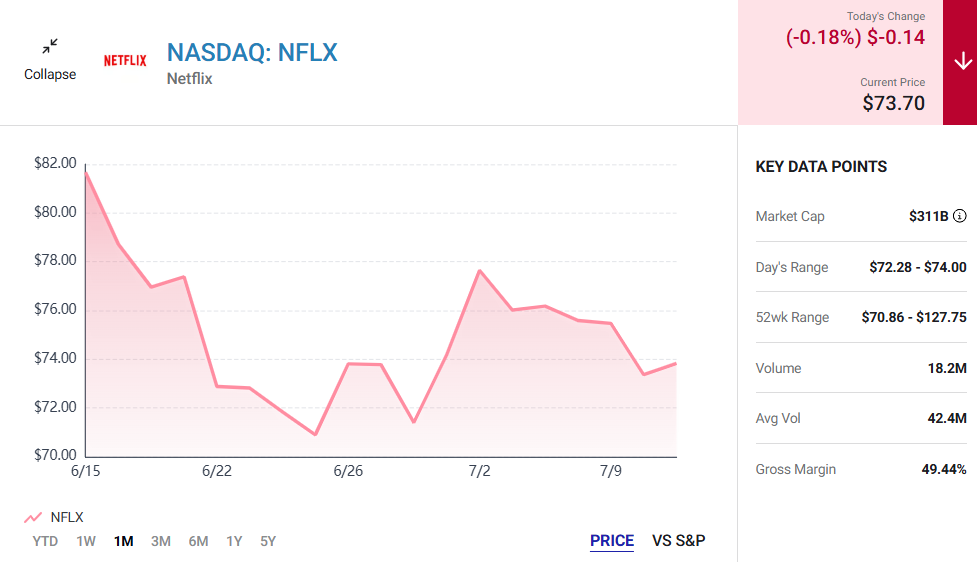
At roughly 24 times trailing earnings, the valuation looks reasonable given how much the company has grown. Revenue reached $45 billion last year, a 34% increase from where it stood just two years earlier.
Profitability has kept pace too, with $11 billion in earnings last year, meaning about 24 cents of every revenue dollar made it to the bottom line. That combination of fast growth and strong margins is not easy to find at a 24 times earnings multiple, and it is a big part of why Netflix still looks like a name worth owning for the long haul.
Pfizer’s Discount Might Not Last Forever
Pfizer has been stuck in a rut for years, and this year has been no exception, with shares down around 3% even from an already depressed starting point. The stock trades at $24, a price last seen back in 2012, and its forward price to earnings multiple sits at just 8, a level that reflects deep investor skepticism rather than any near-term crisis at the company.
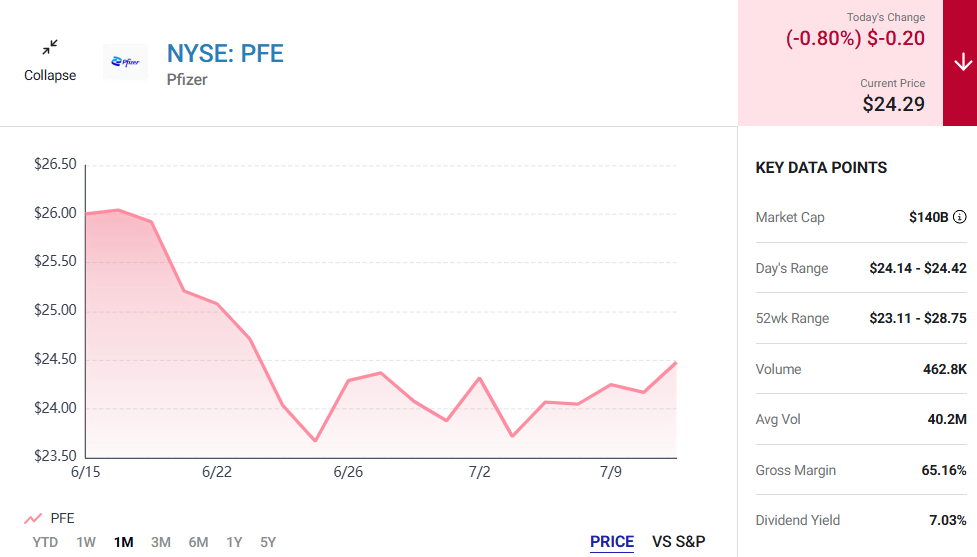
Part of the appeal here is the dividend, which currently yields 7.1%, one of the highest payouts among large healthcare names.
The market appears to be waiting for concrete proof that Pfizer’s post-pandemic pipeline can deliver, and the company has roughly 20 key pivotal studies starting this year that could eventually provide that proof. A single piece of good news on any one of those programs could be enough to shift sentiment. Even without a catalyst, the yield alone gives patient investors a reason to stay put while they wait.
Verizon’s Boring Stability Has Real Value
Verizon Communications rounds out the list, and it fits a similar profile to Pfizer: high yield, low growth, and a stock that has given back most of its early-year gains. Shares are now up only about 4% for 2026 after a stronger start, trading around $42 with a forward price to earnings multiple also near 8.
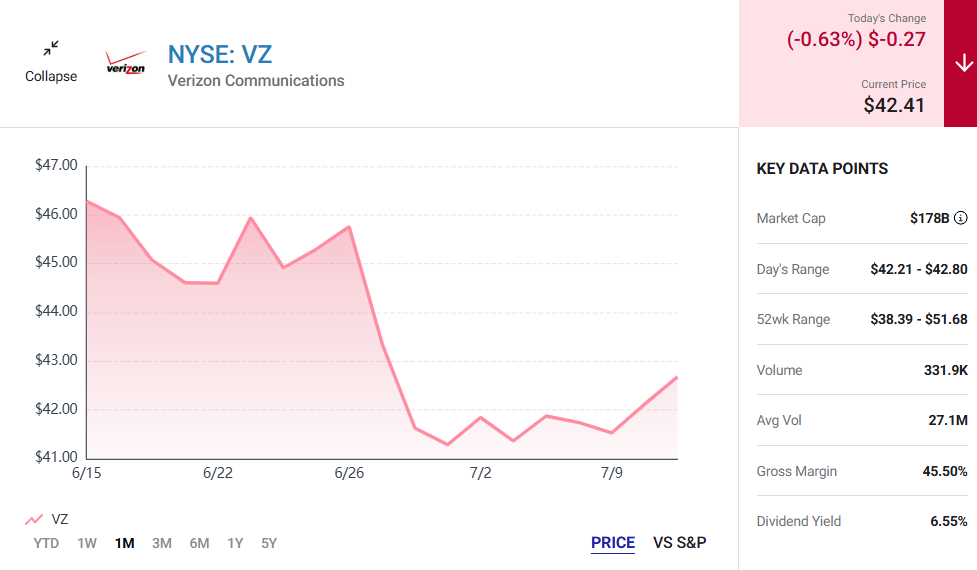
The dividend yield here sits at about 6.7%, and Verizon has long been the kind of steady, unglamorous holding that anchors a diversified portfolio rather than driving headline returns.
Revenue has topped $130 billion in each of the past three years, a sign of remarkable consistency even if growth stays in the single digits. The company’s recent completion of its Frontier acquisition should help nudge that growth rate a bit higher going forward, reinforcing Verizon’s position as one of the more dependable names in telecom.
What Ties These Three Together
Netflix, Pfizer, and Verizon are very different businesses, yet each makes a case for long-term investors right now. Netflix is a growth story trading at a discount due to short-term noise around acquisition rumors and a co-founder’s departure. Pfizer and Verizon are income plays trading at deep discounts because the market has largely lost patience with their growth prospects.
What unites all three is that they trade below $100 a share, hold durable competitive positions in their industries, and offer a mix of value, income, or growth that looks more attractive than current sentiment suggests.
For long-term portfolios, that combination matters more than short-term price action.
A stock priced at a 7% yield or an 8 times earnings multiple is pricing in significant pessimism, and history shows that buying quality businesses during pessimism tends to reward patience.
None of these three need a dramatic turnaround to work out. They simply need to keep generating consistent cash flow, paying (and sometimes growing) dividends, and holding the market positions that made them attractive in the first place.
Position sizing and diversification matter more than picking one winner. Investors wanting a slower, steadier payoff may lean toward Pfizer or Verizon for income, while those comfortable with more uncertainty for growth may prefer Netflix. Either way, all three offer a reasonable entry point for patient, long-term investors.