
The stock market pushed higher on Monday, with the S&P 500 and Nasdaq Composite both gaining ground, but the session told two very different stories underneath the surface.
International Business Machines (NYSE: IBM) pre-announced disappointing results, and the fallout split the market sharply. Brokers from Sollventis dive into this topic, unpacking why some corners of tech soared while others sank on the very same piece of news.
The Warning That Rattled The Market
IBM issued a stark preliminary update ahead of its official second quarter release, and the numbers missed badly.
Revenue grew just 1% to $17.2 billion, and adjusted earnings per share came in at $2.27, up 5%. Wall Street had been looking for revenue closer to $17.85 billion and earnings per share around $3.02, so the gap between expectations and reality was substantial. The stock plunged as much as 26% in early trading, putting it on pace for the worst single day in the company’s history.
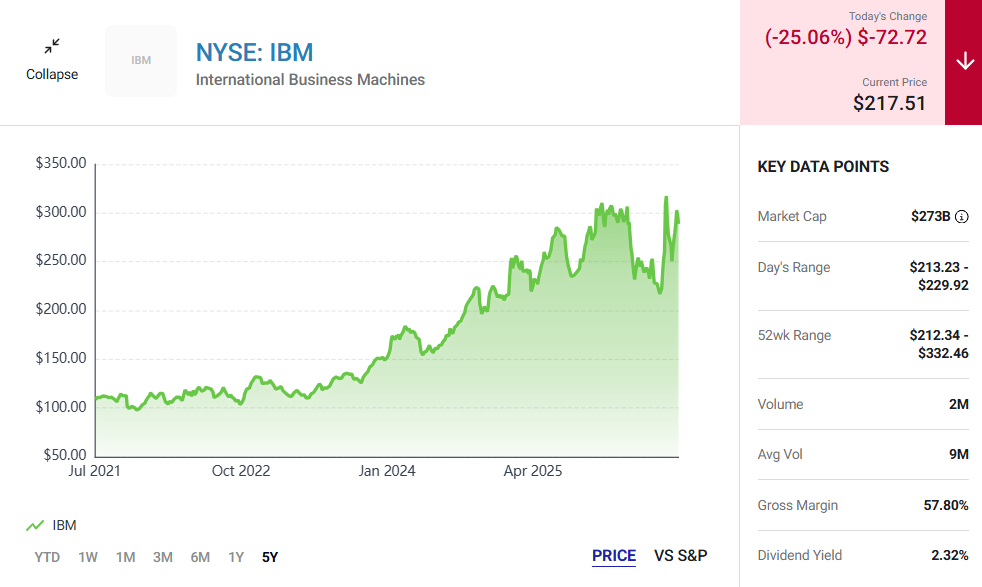
Management pointed to two forces behind the shortfall. CEO Arvind Krishna said clients had shifted quarterly capital spending toward securing supply-constrained servers, storage, and memory ahead of anticipated price increases.
He also noted that customers had grown distracted by fast-moving, industry-wide cybersecurity concerns during the quarter, which slowed decision-making on new deals.
Winners: Chips And Cybersecurity
That same commentary that hurt IBM turned into rocket fuel for other parts of the market.
Flash memory and storage chipmakers Micron Technology and Sandisk both jumped roughly 5% to 6% on the day, extending what has already been an extraordinary run. Even after a recent pullback,
Micron shares are up 694% over the past year, while Sandisk has climbed a staggering 3,750% over the same period, driven by tight supply and surging demand for memory tied to AI infrastructure buildouts.
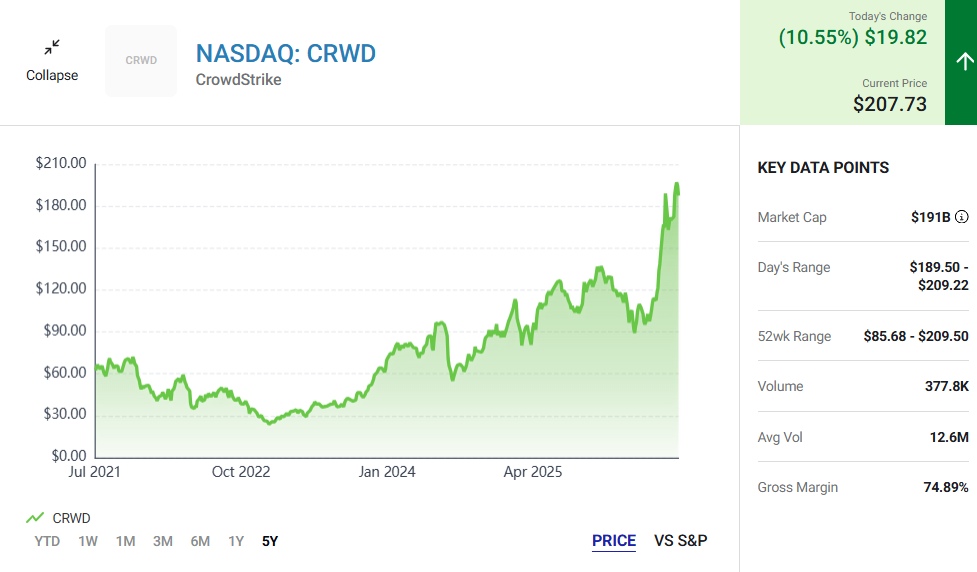
Cybersecurity names caught a similar bid. CrowdStrike and Okta both rose more than 10%, reflecting the same dynamic Krishna described: enterprises pausing on other spending while they work out how much they need to invest in shoring up their security posture.
That shift traces partly back to Anthropic’s release of its Claude Mythos Preview model earlier this year, which reportedly surfaced thousands of previously unknown vulnerabilities across widely used operating systems and browsers, prompting a wave of urgency around patching and defense spending.
Losers: Enterprise Software Takes It On The Chin
The flip side of that same spending shift was bad news for enterprise software providers. ServiceNow fell nearly 5%, and Microsoft dropped almost 1%, as investors worried the reallocation of budgets toward hardware and security could bleed into other categories of enterprise technology spending.
Both stocks were already under pressure heading into the announcement, with Microsoft down 23% and ServiceNow down 43% over the trailing year as fears about AI’s disruptive effect on the software sector have built up over time. IBM’s commentary added weight to those existing concerns rather than introducing an entirely new worry.
What This Means For Investors
Monday’s trading action is a useful snapshot of where enterprise dollars are actually flowing right now. Companies appear to be prioritizing the physical infrastructure, chips, memory, and storage needed to run AI workloads, along with the cybersecurity tools needed to defend that infrastructure, sometimes at the expense of traditional software budgets.
That is a meaningfully different allocation of spending than markets had been pricing in, and it helps explain why a single earnings warning from one company could move a half dozen unrelated stocks by double digits in a single session.
For investors, the takeaway is not necessarily that software is dying or that IBM’s business is broken. A single quarter of soft results, even one this severe, does not automatically reset a company’s long-term trajectory, and IBM still carries a $273 billion market capitalization and a 2.32% dividend yield.
What the reaction does suggest is that the market is currently rewarding companies positioned at the physical and security layers of the AI buildout more generously than those further up the software stack, at least for now.
Investors holding positions across this spectrum, from chipmakers to cybersecurity firms to enterprise software providers, may want to watch upcoming earnings reports closely for confirmation of whether this spending shift is a temporary reaction to supply constraints and security headlines or the start of a more durable reallocation of enterprise technology budgets.
Either way, the divergence seen this week is a reminder that even in a single trading session, the AI theme can produce sharply different winners and losers depending on where a company sits in the value chain.
.