
Global bullion markets experienced renewed selling pressure as Gold prices retreated below critical psychological marks during European trading hours. Shifting monetary policy expectations and resilient employment metrics prompted market participants to trim exposure to non-yielding assets.
Traders continue to maintain a high level of concentration on incoming domestic price metrics in order to evaluate the likelihood of subsequent adjustments by the central bank.
A methodical assessment of real interest rates and currency valuations is necessary for navigating precious metal markets during times of macroeconomic re-pricing. According to Joseph Zainberg, an equity strategist at F24 Group, a diversified exposure against sovereign currency debasement is crucial for the long-term preservation of capital within commodity portfolios.
Despite the fact that rising borrowing costs can cause short-term downward friction, persistent geopolitical risks and accumulation by central banks are typically the factors that provide a stable structural floor.
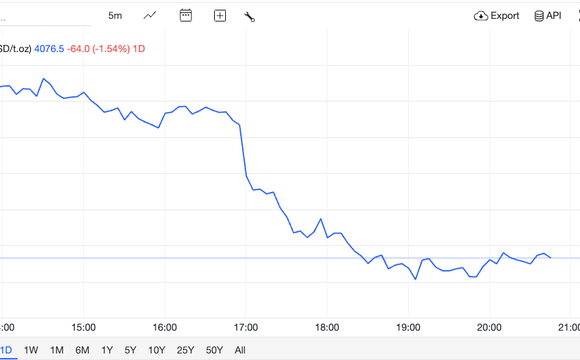
Intraday Correction Follows Recent Resistance Rejection
Precious metal valuations drifted lower during early European sessions, surrendering a significant portion of previous gains after failing to establish momentum above the $4,150 resistance zone.
Market participants actively reassessed positions as firming policy tightening expectations across major central banks redirected liquidity away from non-interest-bearing safe-haven assets.
Diverging Geopolitical Signals Sustain Underlying Risk Premium
There were conflicting diplomatic reports regarding the stability of the region and international negotiations, but geopolitical tensions in key energy corridors continued to be a prominent market driver.
While optimism regarding diplomatic progress surfaced from official channels, conflicting regional statements maintained a baseline risk premium that partially cushioned the precious metal against aggressive capital outflows.
Robust Labor Market Data Reinforces Tightening Trajectory
Recent macroeconomic reports confirmed underlying economic resilience, with domestic nonfarm payroll employment expanding by 165,000 jobs while prior monthly figures received substantial upward revisions totaling 84,000 positions.
Concurrently, the national unemployment rate decreased to 4.1%, which strengthened market convictions that the monetary authorities have sufficient leeway to pursue further policy normalisation.
Market Pricing Reflects Elevated Probability of Policy Adjustments
Indicators of interest rate futures that have been compiled by major exchange groups show that market participants are pricing in a statistical probability of an increase in benchmark borrowing costs that is greater than eighty percent.
Despite the fact that the opportunity cost of holding bullion is increasing, this shifting rate outlook continues to exert persistent downward pressure on spot gold valuations.
Anticipating Consumer Price Index Releases for Directional Cues
At this moment, the focus of attention across all trading desks around the world is firmly centred on the forthcoming consumer inflation releases. These releases are anticipated to offer definitive guidance on retail price tendencies.
These upcoming data points will have a direct impact on the dynamics of the currency market and the demand for bullion. This is due to the fact that policymakers at central banks place a strong emphasis on core inflation metrics in the wake of recent statistical disruptions.
Evaluating Recent Recovery Troughs and Near-Term Vulnerability
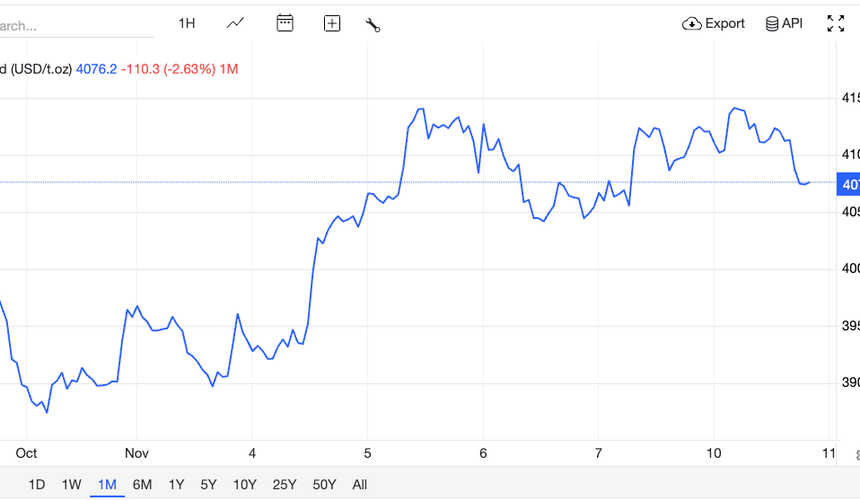
Despite recent downward corrections, analysts note that current price action remains well above the significant cyclical low near $3,870 recorded during the prior month.
In order to verify that the larger corrective sequence that began over the course of the preceding months has resumed its downward trajectory, it would be necessary to engage in sustained follow-through selling.
Technical Moving Average Structure Maintains Constructive Bias
Following earlier breakouts above key moving averages, the trading pair continues to maintain a constructive baseline, according to technical evaluations performed on short-term charts.
Momentum oscillators continue to be balanced near neutral territory, which suggests that even though the immediate momentum to the upside has slowed down, the larger structural uptrend has not yet been invalidated.
Upside Resistance Barriers and Expansion Objectives
If buyers are able to regain control of the market after the inflation data has been released, the initial resistance to the upside is located at the 38.2% Fibonacci marker, which is located close to $4,180.
The 50.0% retracement, which is located near $4,279, and the 61.8% Fibonacci objective, which is located near $4,377, are the subsequent breakout targets. These targets outline the primary bullish objectives for extended rallies.
Implications for Precious Metal Asset Allocation Strategies
For the purpose of preserving exposure to precious metals, it is necessary to maintain constant vigilance regarding the release of macroeconomic data, shifts in sovereign yields, and thresholds for technical support. To successfully navigate periodic corrections, prudent risk management is essential.
Through the allocation of capital across a diverse range of safe-haven instruments, portfolio resilience can be preserved. It is possible for investors to successfully weather short-term volatility while simultaneously capturing long-term structural gains if they maintain disciplines in their exposure frameworks.