
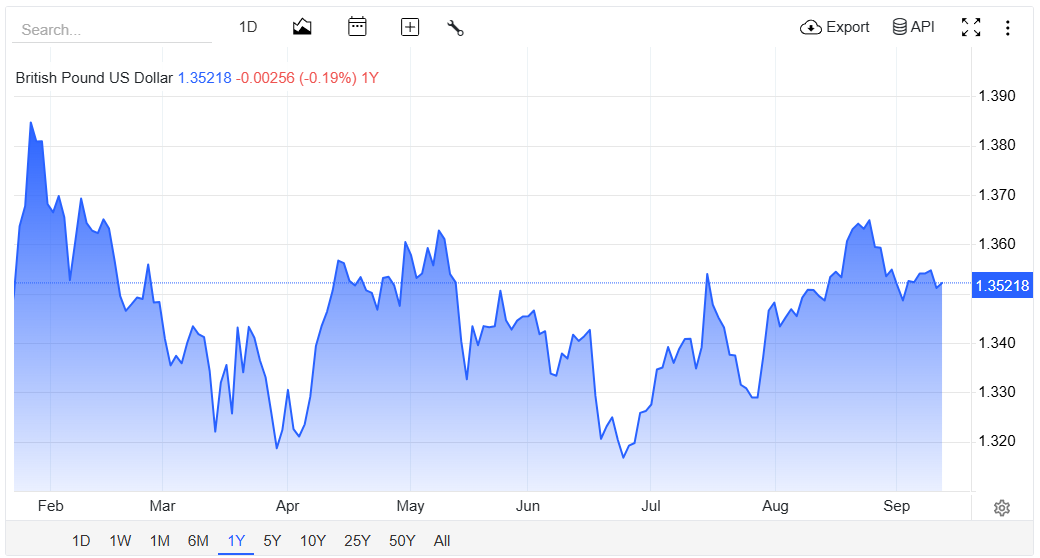
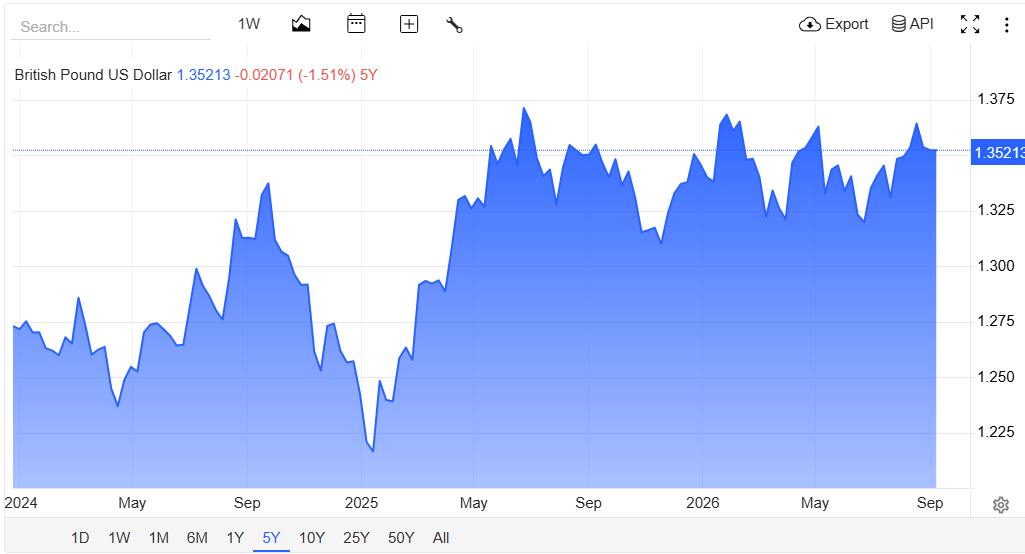
The foreign exchange markets have been anything but calm of late, with a good deal of volatility in the making as the GBP/USD pair put in its best performance in weeks to hit 1.3552.
The British pound has shown a steady and robust appreciation, defying headwinds from a Middle East fraught with geopolitical tension and energy markets that have seen crude oil break the $100 a barrel mark. Behind the latest advance one can see market participants making an aggressive re-evaluation of the monetary divergence on offer from the central bank.
Navigating these waters calls for a thorough examination of international capital flows and the differentials in macroeconomic policy. According to the market analyst who works at Financial Real Time, the long-term value of the enterprise is contingent on being able to forecast where interest rates and inflation are headed.
While an external shock from the energy sector may well expose some vulnerabilities, it is usually the change in expectations around domestic interest rates that will set the course for the currency.
Reassessing Central Bank Divergence And Rate Hike Probabilities
The most important factor that has contributed to the strengthening of the pound sterling is the fundamental reevaluation of the outlook for monetary policy by the Bank of England.
Despite the fact that overnight index swaps indicate that investors do not anticipate any immediate policy adjustments at the upcoming gathering, the markets have priced in at least two rate hikes, and there is an estimated forty percent probability that there will be a third increase.
On the other hand, interest rate futures indicate that the Federal Reserve is only expected to raise interest rates twice over the same period of time, which has the effect of widening the policy yield spread in favor of the pound.
Evaluating UK Inflation Pressures And Imported Energy Costs
Domestic economic data reinforced expectations for a prolonged period of monetary tightening across the United Kingdom. Consumer price inflation accelerated to 2.9%, up from 2.6% in the prior reading, driven largely by persistent cost pressures.
Concurrently, elevated oil and natural gas valuations impose substantial burdens on an import-dependent economy, complicating the operational environment for monetary policymakers attempting to balance price stability against growth risks.
Weighing Central Bank Caution Against Fiscal Uncertainties
In spite of aggressive market pricing, the leadership of the Bank of England continues to temper expectations regarding aggressive policy tightening. It was emphasized by Governor Andrew Bailey that any additional increases in interest rates will continue to be conditional rather than guaranteed.
Additionally, rising energy costs and looming fiscal uncertainties in advance of the autumn budget presentation introduce increased macroeconomic unpredictability, which may make it difficult for the pound to maintain its appreciation over time.
Analyzing Higher Timeframe Chart Resistance And Momentum Indicators
Technical evaluations on the four-hour chart indicate that the currency pair approached the local resistance target at 1.3566, subsequently carving out a narrow consolidation range just below the threshold. Downward expansion within this range tested 1.3533, while a decisive break beneath this floor could expose downside liquidity toward 1.3527.
Conversely, an upside break risks corrective rallies toward 1.3572, with broader bearish targets resting near 1.3452. Moving average convergence divergence readings support ongoing caution, as signal lines hold above zero while maintaining upward momentum bias.
Examining Short-Term Price Action And Oscillator Readings
Lower-timeframe hourly charts illustrate a tight consolidation band centered around 1.3523, bounded by an upper boundary at 1.3566 and a lower support floor at 1.3520. Technical indicators point toward near-term downside risks, with the Stochastic oscillator surging above the 80 threshold before turning sharply downward toward the 20 oversold region.
This change in momentum indicates that there is a possibility of a mean reversion toward the technical pivot position of 1.3527 before buyers re-engage.
Synthesizing Macroeconomic Drivers And Technical Outlook
The broader macroeconomic environment draws attention to the fact that the British currency is experiencing a delicate equilibrium. Energy shocks and fiscal policy risks continue to be persistent threats, despite the fact that hawkish rate differentials against the dollar provide fundamental tailwinds.
The technical resistance zones that are located close to 1.3566 to 1.3572 are significant obstacles that need to be overcome in order to maintain the overall upward trajectory.
Currency Investors: Strategic Portfolio Takeaways
When navigating currency volatility, it is necessary to strike a balance between the levels of technical charts and the shifts in macroeconomic policy. Maintaining a disciplined risk management system guarantees the preservation of capital during times when central banks diverge from one another.
To help tailor these foreign exchange insights to your strategy, could you share your target currency pairs, your preferred risk tolerance parameters, and your geographic tax jurisdiction?