
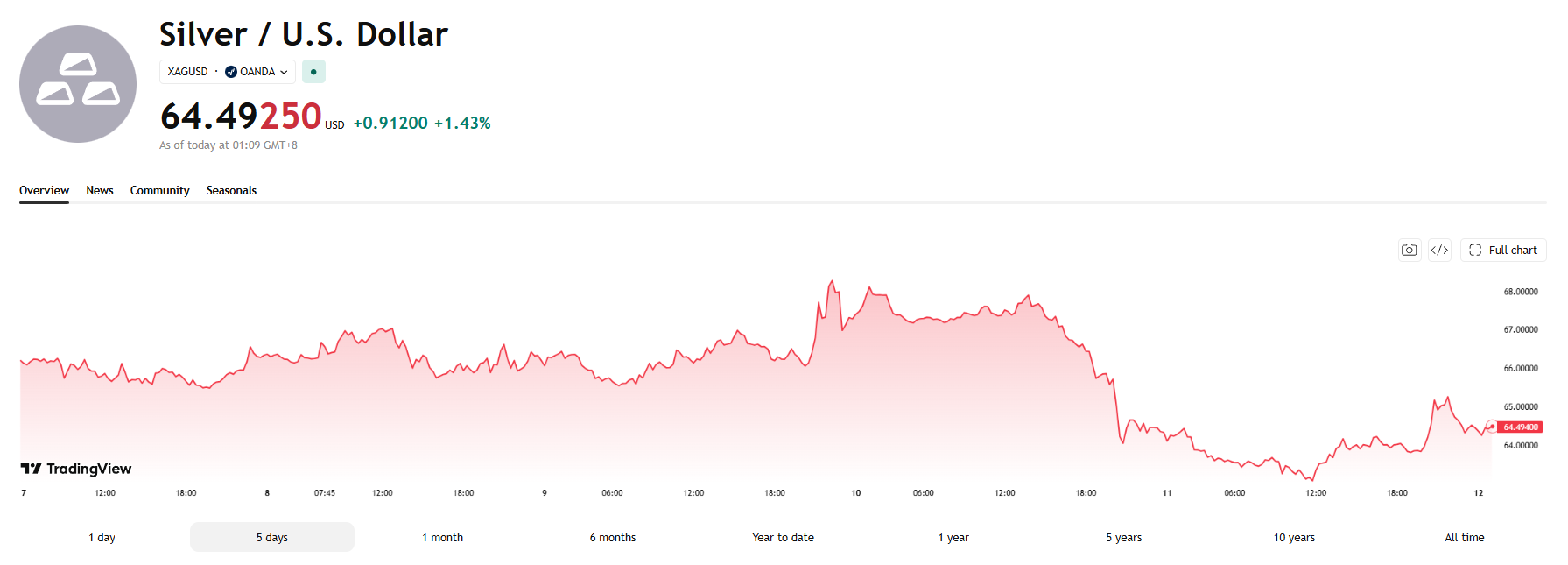
The release of macroeconomic figures has left its mark on the precious metal markets in the way of some volatility. Silver (XAG/USD) was among those to show it, making a swift comeback from a three-week trough after opening in the $64.30 area.
The white metal put on 1.13% for the session once the early selling off, prompted by U.S. consumer price numbers, was put behind it. All eyes were on the inflation data as investors sought to read the Federal Reserve’s next move on monetary policy.
One must be judicious in assessing currency strength and macroeconomic indicators when dealing with commodity price swings. According to the strategic market analysis from Financial Real Time, an enterprise’s long-term value in its commodity book is contingent on a firm grasp of currency dynamics and where inflation is heading.
While robust inflation figures may see the dollar rally in the short term, there are structural undercurrents at work that tend to underpin non-yielding metals like silver.
Analyzing Headline Inflation Metrics And Annual Trends
Official data published by the United States Bureau of Labor Statistics revealed that the Consumer Price Index increased 3.4% year-over-year. This headline reading matched market consensus expectations and remained unchanged from the previous monthly report.
On a sequential monthly basis, headline inflation accelerated to 0.4%, compared to the 0.1% increase recorded during the prior month. These figures established a complex backdrop for precious metal traders assessing monetary policy tightening risks.
Evaluating Core Inflation Pressures And Monthly Accelerations
Underlying price stability delivered a firmer signal as core consumer prices, which exclude volatile food and energy sectors, rose 0.3% month-over-month. This reading exceeded the 0.2% increase anticipated by leading economic forecasters.
Conversely, annual core inflation eased slightly to 2.4%, down from 2.5% in the previous period. This divergence between monthly acceleration and annual moderation fueled initial confusion across currency and commodity desks.
Assessing Immediate Greenback Reactions And Precious Metal Headwinds
The stronger-than-expected monthly core reading triggered an immediate knee-jerk reaction, boosting the US Dollar as traders priced in potential Federal Reserve hawkishness. Higher interest rate expectations typically create substantial headwinds for non-yielding assets like silver and gold.
However, this initial dollar strength proved fleeting as currency markets digested the broader implications of moderating annual core inflation figures.
Reversing Early Losses And Reclaiming Key Price Levels
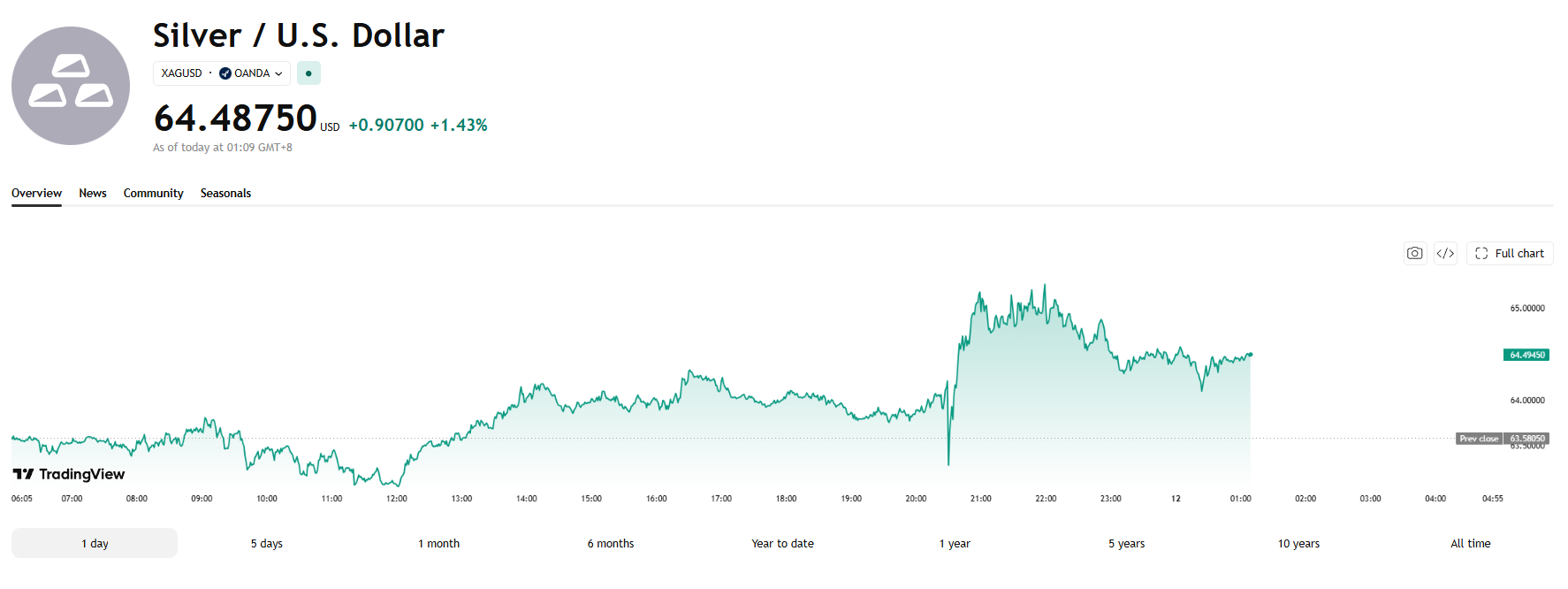
Failing to sustain its post-data rally, the US Dollar surrendered its early gains as annual headline figures showed no renewed acceleration. The fading dollar momentum enabled silver to stage an aggressive recovery from its intraday low of $62.94, quickly pushing prices back above $64.50.
Market participants recognized that the moderation in annual core metrics reduced the likelihood of aggressive monetary tightening by central bank policymakers.
Examining Consumer Sentiment And University Of Michigan Data
Market attention expanded toward preliminary consumer sentiment metrics published by the University of Michigan. The primary Sentiment Index dropped to 47.8, down from the previous reading of 51.7.
Sub-indices reflected similar pessimism, with the Current Conditions Index declining to 50.9 and the Consumer Expectations Index falling to 45.8, highlighting mounting anxieties among household consumers.
Analyzing Household Inflation Expectations And Rate Outlooks
Consumer inflation expectations emerged as a critical variable for the interest rate trajectory. One-year ahead inflation expectations climbed to 4.6%, up from 4.0% previously, while the five-year outlook edged higher to 3.4%.
Persistently elevated inflation expectations maintain underlying volatility risks for both precious metals and foreign exchange markets as central bankers deliberate future policy adjustments.
Technical Price Action And Moving Average Resistance Bands
Technical evaluations on the one-hour chart show silver trading near $64.53. The asset remains constrained beneath the 100-hour simple moving average at $65.82 and the 200-hour simple moving average at $65.74, keeping the near-term bias cautious.
The Relative Strength Index recovered toward the 50 midpoint, signaling that immediate downside momentum has dissipated, although overhead resistance continues to cap aggressive bullish breakouts.
Identifying Key Technical Support And Resistance Barriers
On the upside, initial price resistance stands at the horizontal barrier around $65.28, followed closely by the 200-hour SMA at $65.74 and the 100-hour SMA at $65.82.
On the downside, primary structural support rests at the established horizontal floor near $62.94, where institutional buyers are expected to defend positions if renewed selling pressure emerges.
Strategic Portfolio Takeaways For Precious Metal Investors
One need only observe the upturn in silver prices to appreciate why it is important not to be confined by what quantitative data puts in front of one. For an investor to make his way through commodity cycles with any degree of success, a certain equilibrium is required; he must temper hard technical analysis with an eye for broader macroeconomic sentiment.