
EUR/USD moved higher during the latest European session as weaker US inflation data reduced expectations of an immediate interest-rate increase. The currency pair recovered toward the 1.1425 region, reversing part of the decline recorded earlier in the week.
Brokers from AchievementsAI.com examine whether EUR/USD can extend its recovery above 1.1450 or whether the pair will remain inside its recent consolidation range. The euro recently gained approximately 0.38% against the dollar, trading close to $1.1424, as the US currency weakened against several major peers.
Technical Outlook Improves Above 1.1400
The recovery above 1.1400 has improved the short-term technical structure. This psychological level may now act as the first area of support if the pair experiences another pullback.
EUR/USD is also attempting to remain above its nine-day Exponential Moving Average. Continued closes above this indicator would suggest that buyers are gaining greater control of the immediate trend.
The 20-day EMA provides a wider measure of momentum. A move by the nine-day EMA above the 20-day EMA would create a stronger bullish signal and support the possibility of a test of higher resistance.
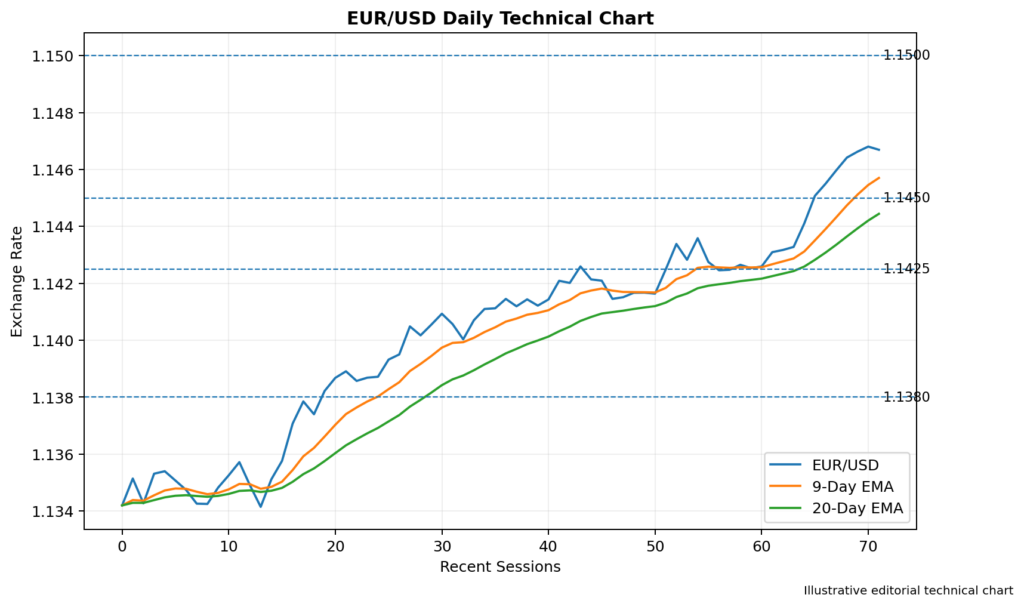
Image 1: EUR/USD Daily Chart With the 9-Day and 20-Day EMAs, Support at 1.1400 and Resistance Near 1.1450
RSI Shows Renewed Buying Momentum
The 14-day Relative Strength Index has strengthened as EUR/USD recovered. A move above the neutral 50 level would indicate that buying pressure is beginning to outweigh selling momentum.
An RSI reading between 55 and 65 would support further gains without placing the pair in clearly overbought territory.
A rise above 70 would show that the move is becoming stretched. This could increase the chance of profit-taking, particularly if EUR/USD reaches resistance near 1.1450 or 1.1500.
Resistance Levels Above 1.1425
The first resistance area is positioned around 1.1425 to 1.1450. The euro has recently traded near the lower part of this zone, making it the immediate test for buyers.
A sustained daily close above 1.1450 could encourage a move toward 1.1500, which represents an important psychological barrier.
If EUR/USD clears 1.1500, the next upside target may appear around 1.1550. A stronger move could eventually expose 1.1600, although reaching that level would probably require continued dollar weakness or improved eurozone economic data.
The main resistance levels are 1.1450, 1.1500, 1.1550, and 1.1600.
Support Levels and Pullback Risk
Immediate support is located around 1.1400. Holding above this level would keep the short-term recovery intact.
A break below 1.1400 could expose 1.1380, an area close to recent trading activity and earlier support.
Further weakness may bring 1.1350 into focus. A sustained decline below this level would weaken the bullish structure and increase the possibility of a return toward 1.1300.
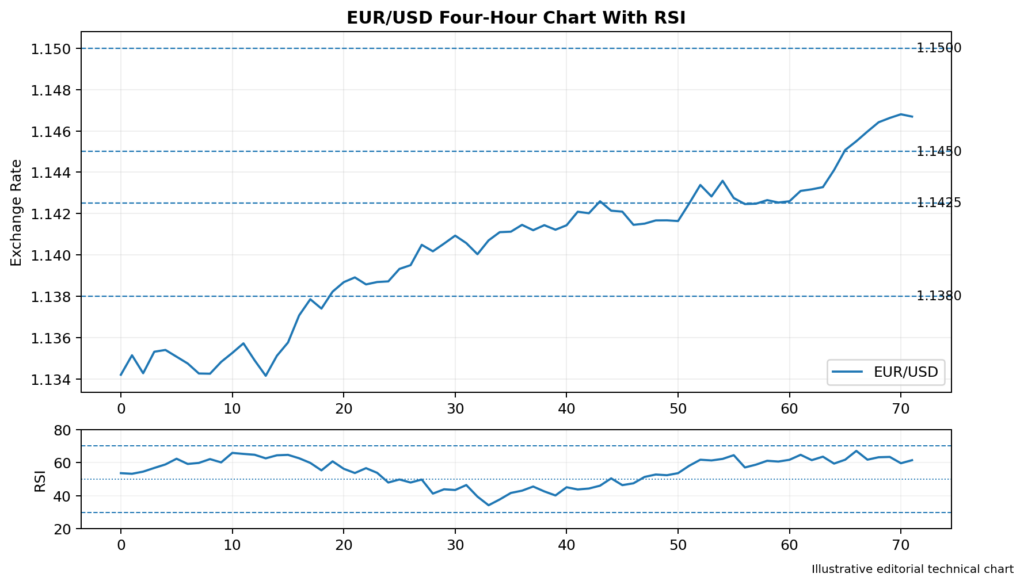
Image 2: EUR/USD Four-Hour Chart With RSI, Support at 1.1400 and 1.1380, and Resistance at 1.1450 and 1.1500
Softer US Inflation Weakens the Dollar
The latest EUR/USD rebound was driven mainly by weaker US inflation figures.
Producer prices declined 0.3% in June, compared with expectations for no monthly change. Consumer inflation had also come in below forecasts, reducing the perceived likelihood of an immediate rate increase.
Lower interest-rate expectations can pressure the dollar because they reduce the potential yield advantage of US assets.
The Dollar Index extended its recent decline following the data, while US Treasury yields also moved lower. This provided additional support for the euro and other major currencies.
However, the outlook remains uncertain. Higher oil prices could create renewed inflation pressure, which may encourage policymakers to maintain restrictive rates for longer.
Eurozone Factors Remain Important
The euro’s recovery has been driven more by dollar weakness than by a major improvement in eurozone fundamentals.
Investors continue to monitor regional economic growth, industrial activity, and inflation. Signs of weaker growth could limit the euro’s ability to extend gains, even if the dollar remains under pressure.
The exchange rate may therefore remain sensitive to differences between expected US and eurozone monetary policy.
Trading Implications
EUR/USD maintains a cautiously bullish bias while trading above 1.1380 to 1.1400.
A confirmed break above 1.1450 could expose 1.1500 and 1.1550. RSI confirmation would make the move more convincing.
A rejection near 1.1450 could return the pair toward 1.1400. A sustained break below 1.1380 would weaken the recovery and shift attention toward 1.1350.
Conclusion
EUR/USD has recovered toward 1.1425 as softer inflation data placed renewed pressure on the US dollar.
Resistance is positioned at 1.1450, 1.1500, 1.1550, and 1.1600. Support can be found near 1.1400, 1.1380, 1.1350, and 1.1300.
The technical outlook has improved, but buyers still need a confirmed close above 1.1450. Until that occurs, the pair remains inside a developing recovery rather than a fully established bullish breakout.