
While the AI semiconductor narrative dominated June 25 headlines, two very different companies delivered the session’s most surprising individual stock moves.
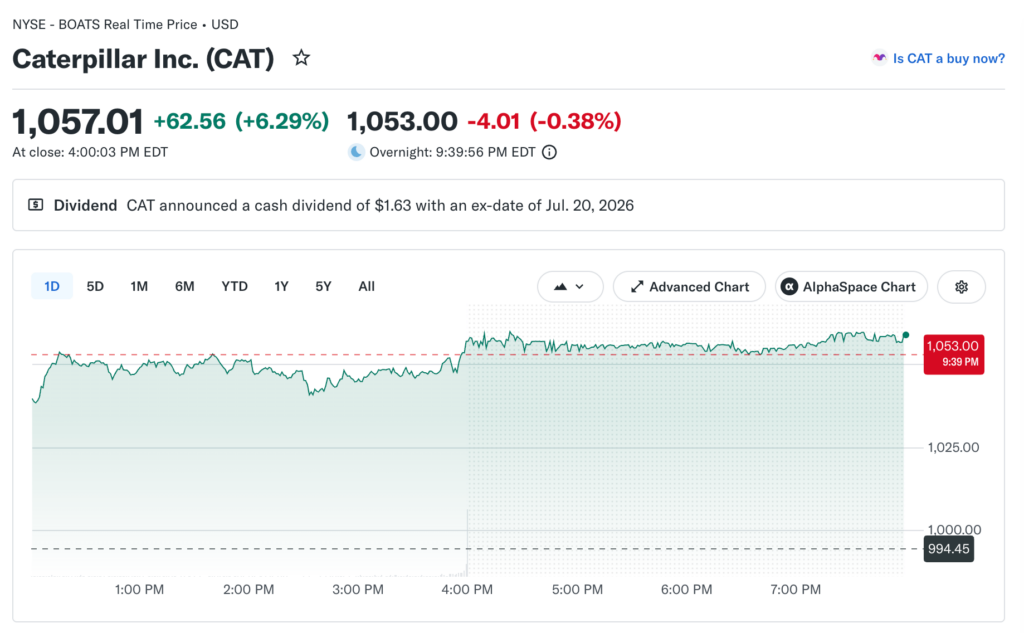
Caterpillar gained 6 percent to reach a new all-time high after announcing a major power generation deal, and Wendy’s surged nearly 13 percent as retail investor attention and takeover speculation drove one of the day’s biggest percentage gains among consumer names.
A junior financial expert at Kepler-Group breaks down what these two outlier moves reveal about where value is being discovered beyond the semiconductor and AI infrastructure themes that have commanded most of the market’s attention through June 2026, and why understanding both stories matters for investors building more complete and diversified portfolio exposure.
Caterpillar’s Power Deal and What It Represents
Caterpillar’s 6 percent gain on June 25 was powered by a large power generation contract that connects the industrial giant to the same AI data center buildout driving Micron and Qualcomm higher on the same session. Data centers require enormous amounts of electricity, and the pace at which new facilities are being constructed has significantly outrun grid connection timelines in many of the most important US regions for AI infrastructure deployment.
Caterpillar’s industrial engines and generator sets provide backup and primary power for facilities that cannot wait years for traditional grid connection timelines to clear. The company’s move to a record high reflects a market beginning to recognize that AI infrastructure investment creates demand across a far wider supply chain than just chips and software.
Heavy industrial companies with established power generation capabilities are capturing a meaningful portion of the same capital expenditure wave that is driving semiconductor valuations higher.
Why Caterpillar’s Record Matters Beyond the Day
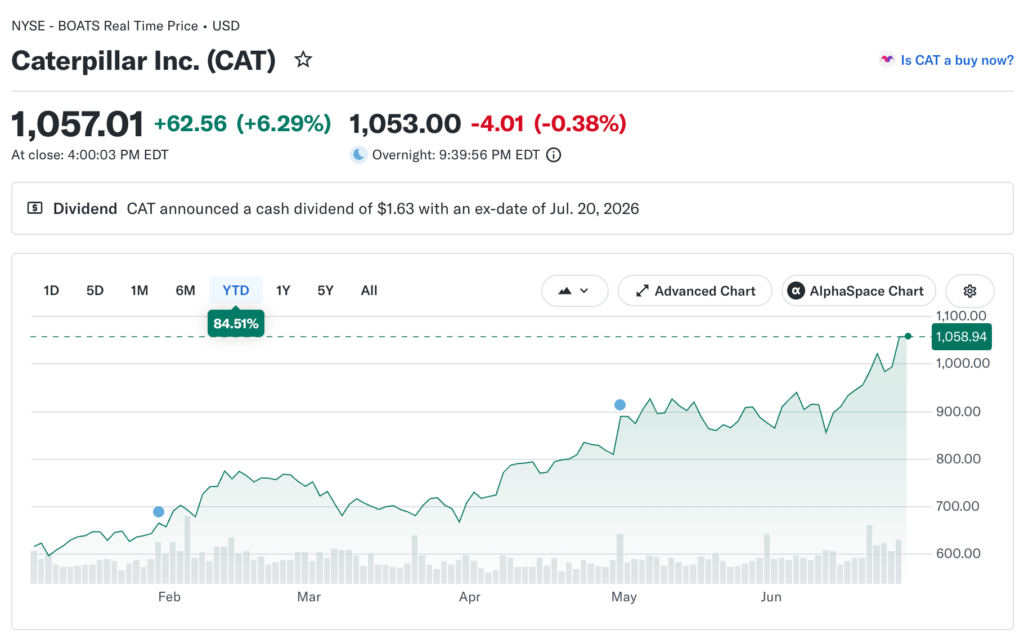
Caterpillar hitting an all-time high during a period of rising rates and moderate economic growth suggests the market is rerating the company’s earnings profile in a durable way.
The stock has long been treated as a cyclical industrial name whose performance tracks global construction and mining activity through economic cycles. A record high under current macro conditions signals that something has shifted in how investors value the business and its earnings potential going forward.
That kind of revenue mix shift warrants a structural rerating. Investors should evaluate whether the power generation segment is large enough to materially alter Caterpillar’s earnings trajectory over the next three to five years rather than treating the contract as a single-quarter catalyst.
Wendy’s Surge and the Retail Momentum Dynamic
Wendy’s shares advanced nearly 13 percent on June 25 as the fast-food chain attracted significant attention from retail investors, driven by elevated short interest and takeover speculation. That combination creates a reflexive upward price movement where social media-coordinated buying pushes high-short-interest stocks to extreme levels before rapid reversals consume the gains.
High short interest means a price increase forces short sellers to cover positions by purchasing shares, which itself drives the price higher and triggers additional covering.
When acquisition speculation layers on top of that mechanical dynamic, the price move can significantly overshoot what any analysis of the company’s quarterly earnings and same-restaurant sales trends would independently generate in a normal trading session.
Separating Signal from Noise in Meme-Adjacent Moves
Wendy’s situation on June 25 has characteristics of the retail momentum trades that periodically disrupt normal market functioning, where social media-coordinated buying pushes high-short-interest stocks to extreme levels before rapid reversals consume the gains.
Stocks with high short interest and low institutional ownership can move dramatically on social media attention without any change in underlying business fundamentals.
Takeover speculation is particularly difficult to evaluate as an investment catalyst because it either materializes in a formal acquisition offer or it does not, with very little middle ground between those two outcomes.
When it does not, stocks driven by that speculation often retrace a significant portion of the session gain over the following days as the absence of confirmation removes the premium. Wendy’s franchise model, same-restaurant sales trends, and competitive position against McDonald’s and other quick service operators is the more reliable basis for any long-term investment thesis.
Reading Both Stories Together
Caterpillar and Wendy’s landing among June 25’s biggest stock movers from completely different drivers illustrates a characteristic of this market that matters for portfolio construction.
The AI infrastructure theme is generating spillover demand into industrial companies like Caterpillar that provide physical inputs the digital economy requires. Simultaneously, retail investor capital is finding high short interest and speculation opportunity in consumer names entirely disconnected from the AI narrative.
Both dynamics are real, both are operating at the same time in the same market, and both create actionable positioning opportunities for investors who understand the mechanics driving each one.
Investors with exposure to industrial infrastructure companies benefit from the AI capital expenditure wave without requiring direct semiconductor positions, which reduces portfolio concentration risk while maintaining meaningful exposure to the underlying spending theme.