
Brookfield Corporation has spent the past several years quietly building one of the largest investment-led insurance platforms globally, positioning it as a potentially powerful new growth engine.
This strategy reflects a broader shift within Brookfield’s business model—leveraging its core strength in asset management to generate long-duration, fee-bearing capital through insurance operations. By integrating insurance float with its investment expertise, the company is creating a recurring and scalable earnings stream.
Brokers from Rubinax dive into this topic, breaking down how Brookfield built this business and why it could be a meaningful driver of shareholder returns through the end of the decade.
From A Standing Start To $180 Billion
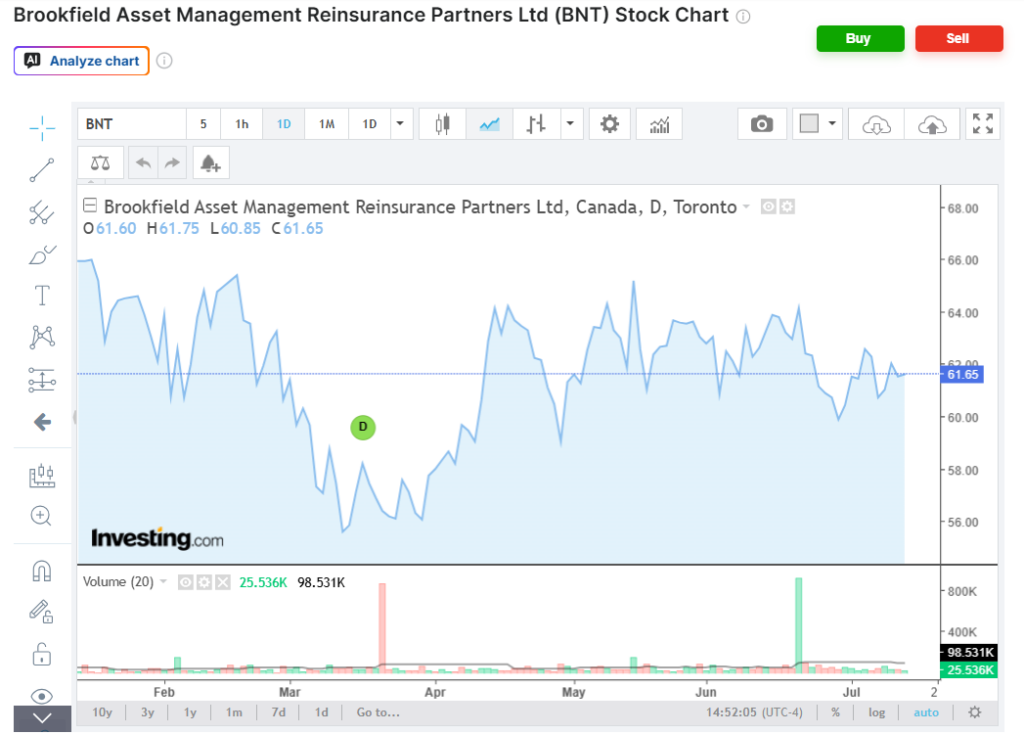
Brookfield’s insurance ambitions trace back to 2021, when the company spun off Brookfield Asset Management Reinsurance Partners, later rebranded as Brookfield Wealth Solutions (NYSE: BNT). What started as a small, dedicated arm has since grown into a genuine heavyweight, with insurance assets climbing from $45 billion to more than $180 billion over roughly five years.
Acquisitions have done most of the heavy lifting. Brookfield Wealth Solutions bought American National for $5.1 billion in 2022, Argo for $1.1 billion in 2023, AEL for $4.3 billion in 2024, and Just Group for $3.2 billion in 2026.
That string of deals helped push total capital from $5.7 billion in 2022 to $19.8 billion by the end of last year, while distributable earnings exploded from just $30 million in 2021 to $1.7 billion last year, a staggering rate of growth for a business built almost entirely from scratch.
A Bigger Structure For A Bigger Ambition
Brookfield is not stopping there. The company is moving to recombine with Brookfield Wealth Solutions, with shareholders set to vote on the deal this week and a close targeted by year-end.
The logic behind the move is straightforward: a simpler corporate structure gives the insurance operations greater access to Brookfield’s corporate balance sheet and more flexibility to keep expanding over the long term.
The scale of the ambition here is significant. Brookfield is targeting $350 billion in insurance assets by 2030, up from the current $180 billion-plus.
While further acquisitions remain part of the plan, management expects organic growth to do most of the work going forward, powered by the recently closed Just Group deal, continued annuity growth, and ongoing optimization of the existing insurance portfolio.
Where This Fits Into Brookfield’s Bigger Growth Story
The financial targets attached to this strategy are hard to ignore. Brookfield expects its wealth solutions platform’s distributable earnings to reach $4.8 billion by 2030, with future acquisitions potentially pushing that figure above $5.5 billion. Put together with the rest of the business, Brookfield is guiding toward a 25% compound annual earnings growth rate for the combined company through 2030.
Insurance is not just a side project in that plan, it is the centerpiece.
Management expects the wealth solutions business to contribute 34% of total earnings growth over that period, ahead of capital allocation at 23%, carried interest at 22%, asset management at 19%, and the operating businesses at just 2%. That breakdown makes clear just how central this once-quiet insurance platform has become to Brookfield’s overall growth story.
What This Means For Investors
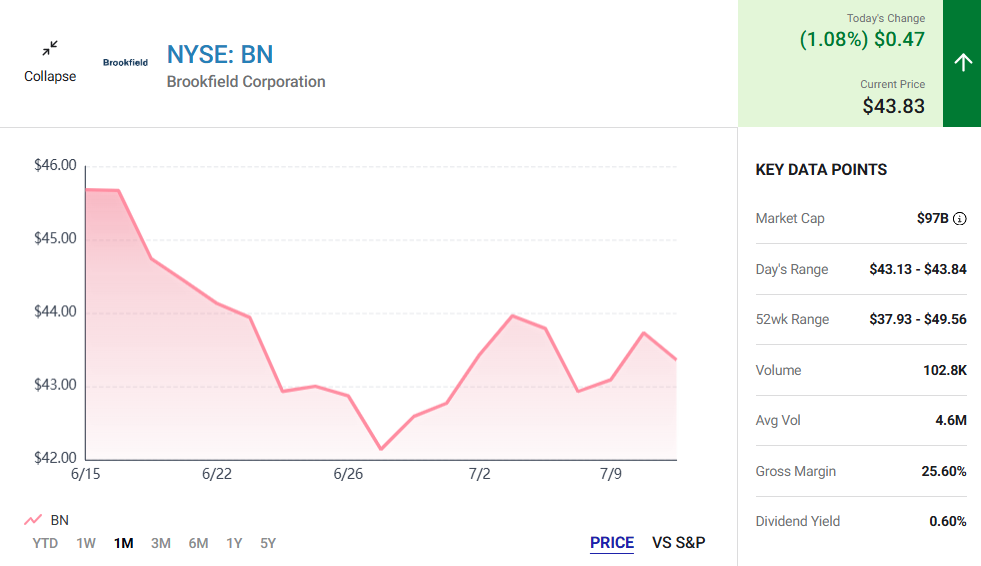
Brookfield’s insurance strategy has gone from a modest side venture to what management now frames as the single biggest contributor to future earnings growth. The company is projecting its stock could be worth around $140 by 2030, a substantial jump from a share price currently sitting in the low $40s, with a market capitalization near $97 billion and a modest 0.60% dividend yield today.
For investors, the appeal here lies in the combination of scale and visibility. Brookfield already has $180 billion in insurance assets generating fee-based, perpetual capital that the firm can redeploy into its broader investment platform, and management has laid out a specific roadmap for growing that figure to $350 billion within a few years.
That kind of clearly telegraphed growth plan, backed by a track record of successfully closing and integrating major acquisitions, is relatively uncommon among large financial companies.
As with any long-range corporate target, execution risk remains real, and the upcoming shareholder vote on recombining with Brookfield Wealth Solutions is worth watching closely as an early signal of how smoothly this next phase might unfold.
Still, for investors looking for exposure to a diversified, well-capitalized financial company with a credible, multi-year growth plan already in motion, Brookfield’s insurance business looks like one of the more compelling growth engines hiding in plain sight across the financial sector right now.