
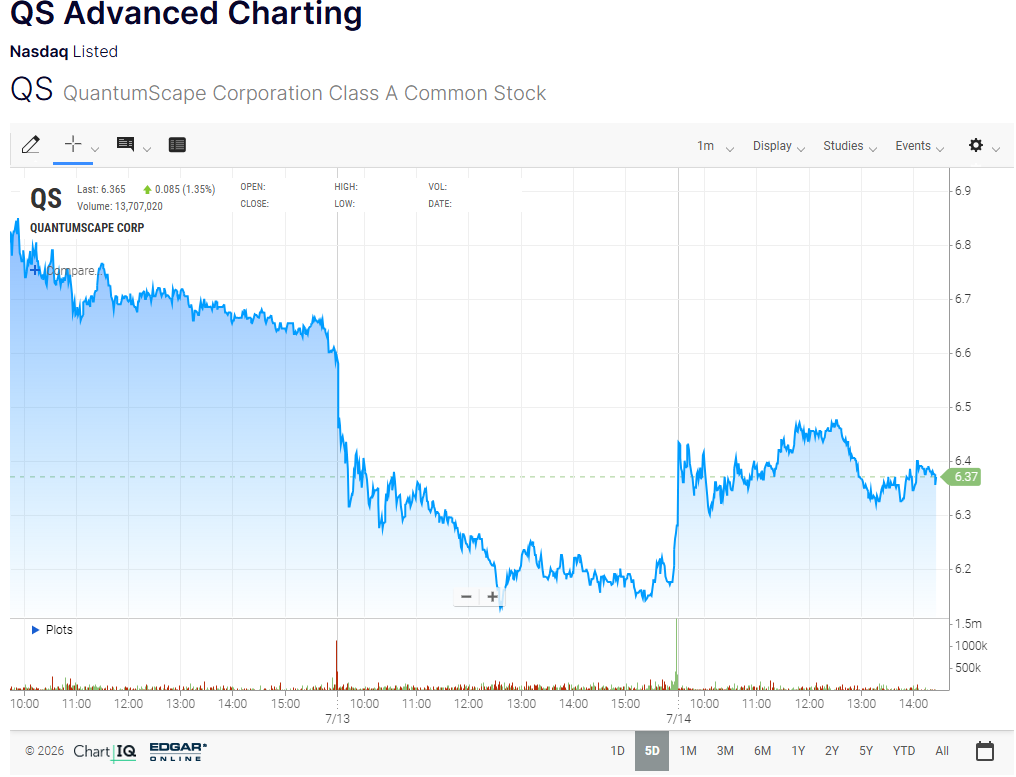
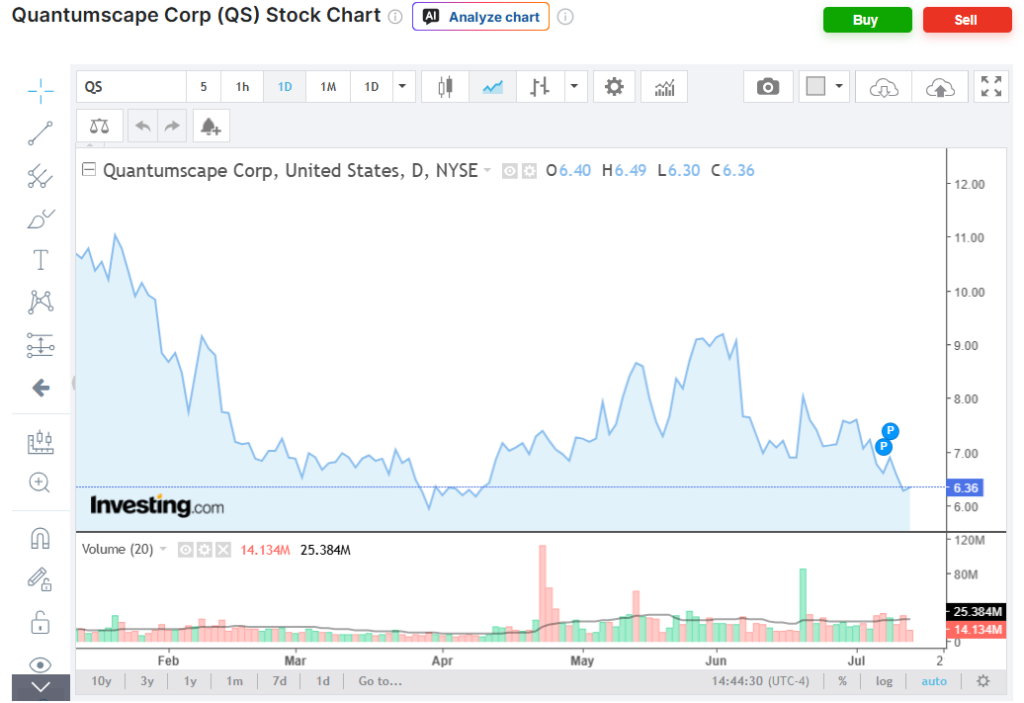
QuantumScape (NASDAQ: QS) has had a rough run in 2026, with shares down roughly 27% to 37% depending on the measurement window, even as the company keeps racking up real technical and commercial milestones. Brokers from Rubinax dive into this topic, looking at why the stock has struggled even as the underlying solid-state battery business keeps moving forward.
A Big New Automaker Signs On
The headline development this year has been a multi-year joint research agreement with Honda’s R&D arm, aimed at advancing QuantumScape’s solid-state lithium-metal battery platform and the manufacturing processes behind it.
Honda entered the deal after conducting its own in-depth evaluation and benchmarking of the technology, and the company has publicly described the platform as offering compelling advantages across potential applications. Shares jumped as much as 16% to 22% in the sessions immediately following the announcement, with trading volume spiking well above 270% of the three-month average as investors piled in.
What makes the Honda deal notable is that it extends well beyond a simple testing arrangement. It is a manufacturing partnership, focused on jointly developing production processes rather than just evaluating cell performance, which suggests a deeper level of commitment from a major global automaker.
Honda’s interest also hints at applications for solid-state batteries that could stretch beyond cars and motorcycles into areas like generators and power tools, broadening the addressable market for QuantumScape’s technology considerably.
The Rest Of The Partnership Puzzle
Honda is far from the only name QuantumScape has lined up. The company already has an expanded development and licensing agreement with Volkswagen’s battery unit, PowerCo, along with partnerships with glass maker Corning and electronics manufacturer Murata Manufacturing aimed at achieving high-volume production of its ceramic separators.
A Ducati motorcycle running on QuantumScape’s solid-state battery served as a real-world demonstration of the technology outside the traditional passenger vehicle space.
On the operational side, the company has launched its Eagle Line pilot production facility and continued scaling its Cobra separator manufacturing process, both important steps in moving from a pure research operation toward something closer to commercial production.
QuantumScape also booked its first customer billings in the most recent quarter, a modest but symbolically important milestone for a company that has spent years being described as pre-revenue.
Why The Stock Has Struggled Anyway
Despite all of that progress, QuantumScape remains a cash-burning, pre-revenue story at its core, and that reality has weighed heavily on the stock. The company posted a net loss of roughly $100.8 million in its most recent reported quarter, driven by $84.6 million in research and development spending and $24.6 million in general and administrative costs, with free cash flow running negative at around $69.5 million.
Management has reaffirmed full-year adjusted EBITDA loss guidance of $250 million to $275 million for 2026, a reminder that heavy spending is not going away anytime soon.
There has also been some insider selling to contend with. Chief Technology Officer Timothy Holme sold 150,320 shares in early June, trimming his personal stake by roughly 8%, and a former board member has shifted into a strategic advisory role rather than remaining on the board itself.
Neither move is unusual for a company at this stage, but in a stock already trading with a beta above 2.5, any hint of reduced insider commitment tends to get noticed and can add to volatility.
What This Means For Investors
QuantumScape’s core challenge has not changed: years of legitimate technical progress are difficult to translate into investor enthusiasm without commercial results and, eventually, actual profits. The Honda, Volkswagen, Corning, and Murata partnerships collectively suggest that major industry players believe in the underlying technology, and milestones like the Eagle Line ramp and first customer billings show the company inching closer to commercialization.
At the same time, a market capitalization north of $4 billion, ongoing heavy cash burn, and a stock price that has fallen sharply from its October highs above $19 reflect a market that has grown more disciplined about pricing in distant potential.
QuantumScape’s upcoming second quarter 2026 results, scheduled for release after market close on July 22, followed by a call with CEO Siva Sivaram and CFO Kevin Hettrich, could be an important catalyst either way. Investors will likely be watching closely for updates on the Honda collaboration’s timeline, any changes to cash burn guidance, and further detail on customer billings.
For those already comfortable with the speculative nature of pre-revenue growth stories, QuantumScape’s expanding partnership roster and steady operational milestones may justify staying patient. For everyone else, the stock remains a reminder that even genuine technological progress does not always translate into share price gains on its own timeline.