
The markets for digital assets are experiencing increased volatility as a result of the political unpredictability that surrounds legislative elections and the persistent security concerns that are present across major offshore trading venues.
In order to gain a crucial quantitative perspective on how participants in the cryptocurrency market manage risk during major political shifts, it is necessary to conduct an analysis of historical halving cycles, institutional exchange-traded fund capital flows, and technical moving average support levels.
Monitoring the open interest of derivatives, exchange net flow metrics, and key technical indicators is necessary for managing the exposure of digital assets across market environments that are driven by macroeconomic policies.
A senior digital currency analyst at ICU Markets highlights that institutional spot ETF accumulation serves as a vital structural buffer when political headwinds trigger short-term risk aversion across spot markets. While historical electoral cycles often signal late-stage quarterly drawdowns, sustained institutional inflows can mitigate retail panic selling during broader market corrections.
Historical Electoral Patterns and Cyclic Drawdown Dynamics
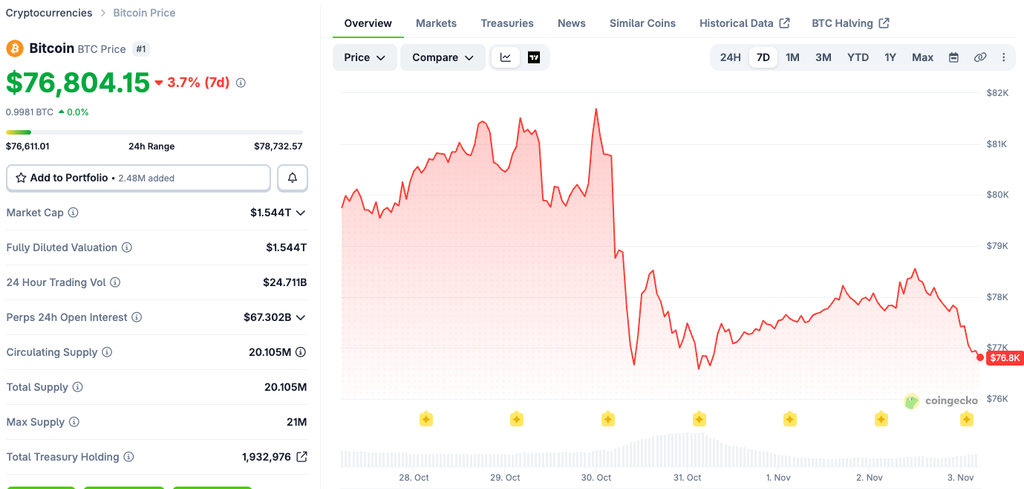
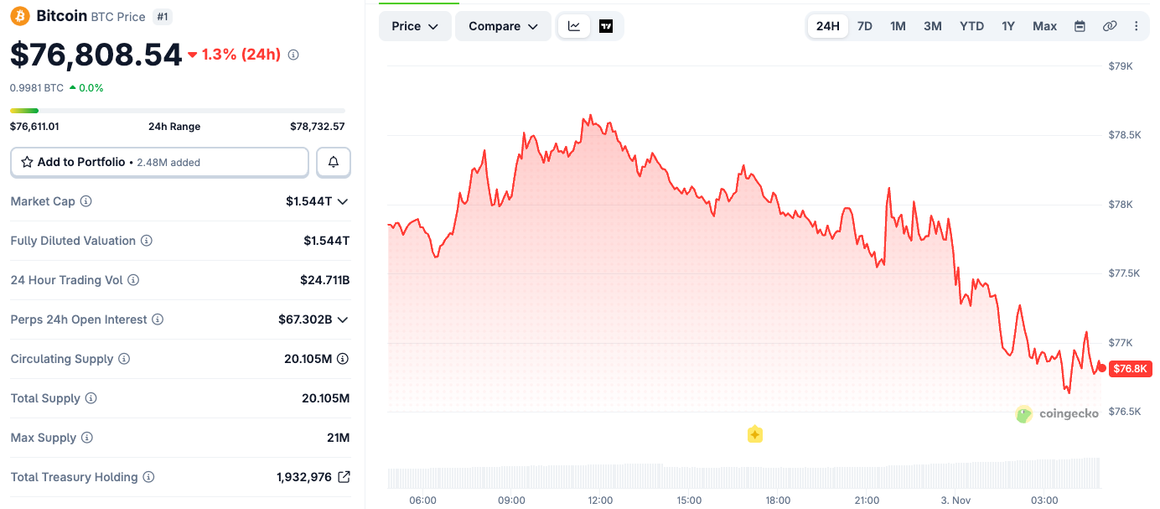
The flagship cryptocurrency holds near $78,000, remaining above its critical 200-day exponential moving average anchored at $76,459. Historical data indicates that congressional elections frequently coincide with significant market corrections.
Across the past 22 midterm contests, the ruling party secured additional House seats only twice, with recent legislative elections lining up directly with cyclical market bottoms.
During the 2022 midterms, spot valuations dropped 16% to reach a cyclical low of $15,476 within 13 days. Similarly, the 2018 and 2014 elections coincided with price troughs of $3,156 and $171 after 39 days and 71 days, respectively.
Quarterly Performance Metrics and Seasonal Halving Cycles
The tendency for prices to adjust around midterms aligns closely with the four-year digital asset supply cycle. Because presidential elections coincide with protocol halving events, midterm contests land directly in the middle of the four-year cycle, when markets historically search for long-term valuation floors.
Data tracking quarterly returns reveals that while November averages historical gains near 34%, election years often buck this trend. The 2018 and 2022 midterms produced monthly declines of 36% and 16%, followed by December drops of 6% and 3%, culminating in overall fourth-quarter pullbacks of 43% and 14%.
Security Incident Aftershocks and Futures Market Liquidations
Adding to macroeconomic uncertainty, crypto markets continue absorbing the aftermath of a major $6.3 billion security breach at leading exchange Binance. While the exchange reported restoring 95% of impacted assets and resuming normal withdrawal activity, the incident triggered over $1.57 billion in derivative contract liquidations across global trading platforms.
Concurrently, institutional derivative metrics reflect diminished speculative appetite, with options markets pricing a low probability of significant upside price expansion before the end of the calendar year.
Institutional ETF Capital Flows and Structural Liquidity Offsets
Unlike previous electoral cycles dominated by retail trading, current market dynamics are heavily influenced by institutional spot ETFs. Total spot ETF assets stand near $98 billion, down from peak levels of $152 billion. Recent weekly data showed net institutional outflows of $202 million, ending a brief multi-day streak of positive net creations.
On the other hand, sustained institutional inflows during trading during the final quarter could potentially reduce the potential downside pressure from political shifts, thereby disrupting the patterns of price corrections that have occurred in the past.
Political Probabilities and Technical Support Thresholds
Political forecasting platforms reflect high market expectations for shifting legislative power, assigning a 94% probability to a Democratic majority in the House and a 74% probability in the Senate. Legislative leadership shifts directly influence committee leadership and regulatory policy oversight across the digital asset industry.
From a technical chart perspective, maintaining price action above the 200-day exponential moving average at $76,459 remains essential for invalidating bearish cycle projections. A decisive close below this support baseline opens potential downside risks toward annual lows near $57,800.
Quantitative Risk Mitigation and Institutional Positioning Strategies
The volatility of digital assets is managed by institutional fund managers by balancing the accumulation of spot ETFs with derivative market leverage.
It is possible for portfolio managers to keep long-term exposure to decentralised monetary networks while preserving capital by using systematic stop-loss placements around key technical moving averages.
Exchange balance reserves, perpetual swap funding rates, and macroeconomic yield curves are some of the factors that fund managers examine in order to locate high-conviction capital entry points across digital asset markets.
Building multi-year wealth in digital asset allocations depends on selecting market environments where institutional capital flows offset cyclical historical drawdowns. Accumulating primary digital assets during election-driven market weakness enables institutional investors to build long-term positions ahead of supply-halving expansion phases.
It is possible for digital asset portfolios to successfully navigate volatile political cycles if they place a priority on cold-storage security, disciplined leverage management, and institutional ETF flow tracking.