
Bitcoin (BTC/USD) traded near $80,845, holding above the psychologically significant $80,000 level as traders positioned ahead of the Federal Reserve (Fed) interest rate decision. This article explores the topic in detail, drawing on insights from Wisentkamm’s expert team.
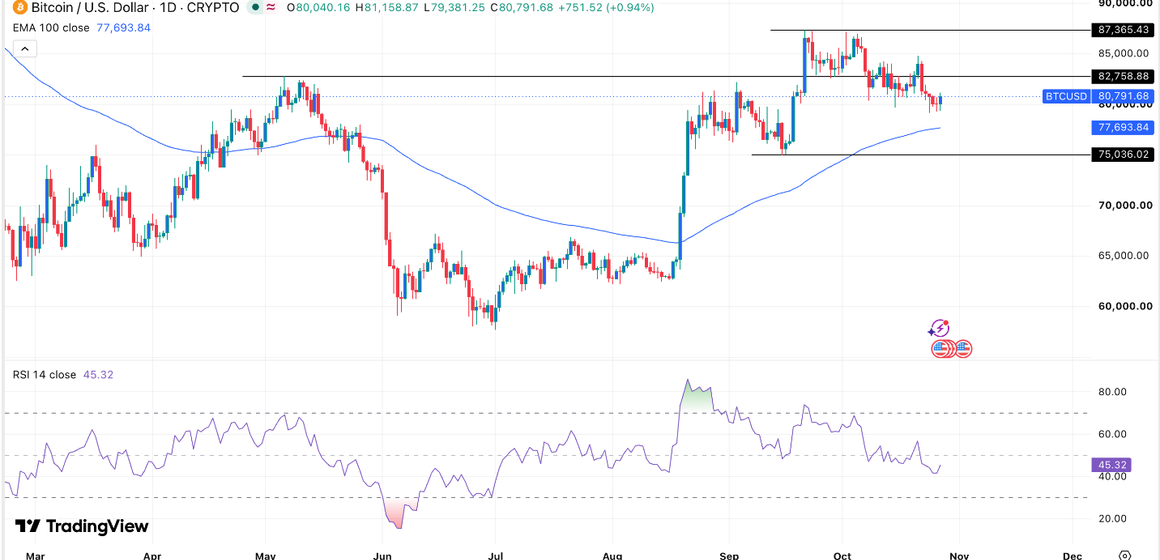
The cryptocurrency remained below its recent high of $87,365, down about 7.5%. This pullback reflects weakening short-term momentum, although buyers continue to defend the $80,000 support zone.
The current market structure suggests consolidation following a corrective move. Bitcoin’s position above its key moving average indicates that the broader bullish structure remains intact, although failure to reclaim overhead resistance limits recovery potential.
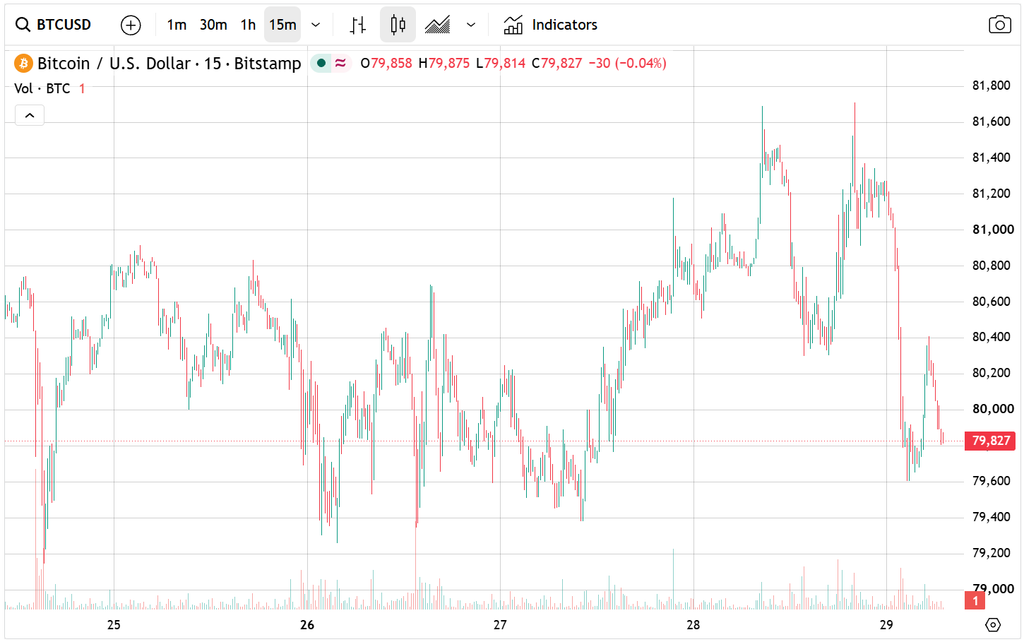
Market participants are monitoring real interest rates, US dollar strength, Treasury yields, and institutional capital flows. The immediate technical bias remains neutral to cautiously bullish, provided BTC/USD holds above $79,200.
Risk Sentiment, Treasury Yields, and US Dollar Dynamics
Equity markets have supported the broader risk-on environment. The Dow Jones Industrial Average advanced 23 points to 52,387, while the Nasdaq 100 gained 308 points. Gains over two consecutive sessions indicate improving risk appetite, potentially supporting demand for cryptocurrencies and other high-beta assets.
In fixed-income markets, the 10-year Treasury yield remained below 5%, while the 30-year and five-year yields eased to 5.31% and 4.8%, respectively. Lower yields can reduce the opportunity cost of holding non-yielding assets such as Bitcoin, potentially improving its investment appeal.
The US Dollar Index (DXY) climbed to 102.35, its highest level since October 15, following stronger US consumer confidence data. Dollar appreciation remains a potential headwind because it can tighten global financial conditions and weigh on dollar-denominated risk assets.
Meanwhile, Brent crude fell to $114 per barrel, while West Texas Intermediate (WTI) declined to $100. Lower oil prices could moderate inflation expectations, depending on the persistence of energy-price movements and broader economic conditions.
Federal Reserve Decision and Interest Rate Expectations
The Federal Reserve’s policy announcement represents the primary near-term volatility catalyst. Economists expect rates to remain unchanged within the 3.75%–4.00% range, allowing policymakers to assess the effects of previous decisions on inflation and economic growth.
An unchanged rate would shift attention toward forward guidance, inflation risks, and the timing of potential monetary easing. A dovish policy signal could weaken the dollar and Treasury yields, improving conditions for Bitcoin appreciation.
The critical variables are real yields, interest rate expectations, and DXY direction. Falling yields and a weaker dollar would strengthen the bullish BTC/USD scenario, while rising yields and dollar appreciation would increase downside risk.
Bitcoin ETF Flows and Institutional Demand
Spot Bitcoin exchange-traded funds (ETFs) recorded more than $200 million in net asset inflows this week, reversing the outflow trend observed during the preceding Thursday and Friday sessions.
ETF flows provide an important indicator of institutional demand and influence spot-market liquidity. Persistent inflows can absorb available supply and support price stabilization around major technical levels.
Sustained capital allocation could reinforce support above $80,000, while renewed outflows would weaken demand. Further confirmation is necessary to establish whether the latest inflows represent a durable institutional accumulation trend.
BTC/USD Technical Analysis: Resistance and Support Levels
On the daily chart, BTC/USD fell from $87,365 to about $80,828, leaving the pair about 7.5% below its recent peak. Bitcoin remains beneath $82,758, a significant horizontal resistance level associated with the May high. Reclaiming this level is essential for a stronger recovery.
The price remains above the 50-day Exponential Moving Average (EMA), preserving an important medium-term trend reference. Holding above this average would support stabilization, while a breakdown would signal deteriorating trend strength.
The Relative Strength Index (RSI) stands near 45, below the neutral midpoint of 50 but above the conventional oversold threshold of 30. This indicates negative-to-neutral momentum. An RSI recovery above 50, accompanied by increasing volume and a breakout above $82,758, would strengthen the bullish case.
The immediate support zone is 80.000-79,200. A confirmed daily close below $79,200 would invalidate the near-term bullish setup. On the upside, a sustained breakout above $82,758 could open the way toward $85,000, followed by a potential retest of $87,365.
Conclusion
BTC/USD remains vulnerable but positioned for potential stabilization above $80,000 ahead of the Federal Reserve decision. ETF inflows exceeding $200 million, support from the 50-day EMA, and the developing doji pattern provide grounds for cautious optimism. The RSI at 45 indicates that bullish momentum requires confirmation.
A breakout above $82,758 would strengthen the recovery outlook, while a close below $79,200 would signal renewed bearish pressure. Ultimately, Fed guidance, DXY movements, Treasury yields, and institutional demand will determine Bitcoin’s next directional move.