
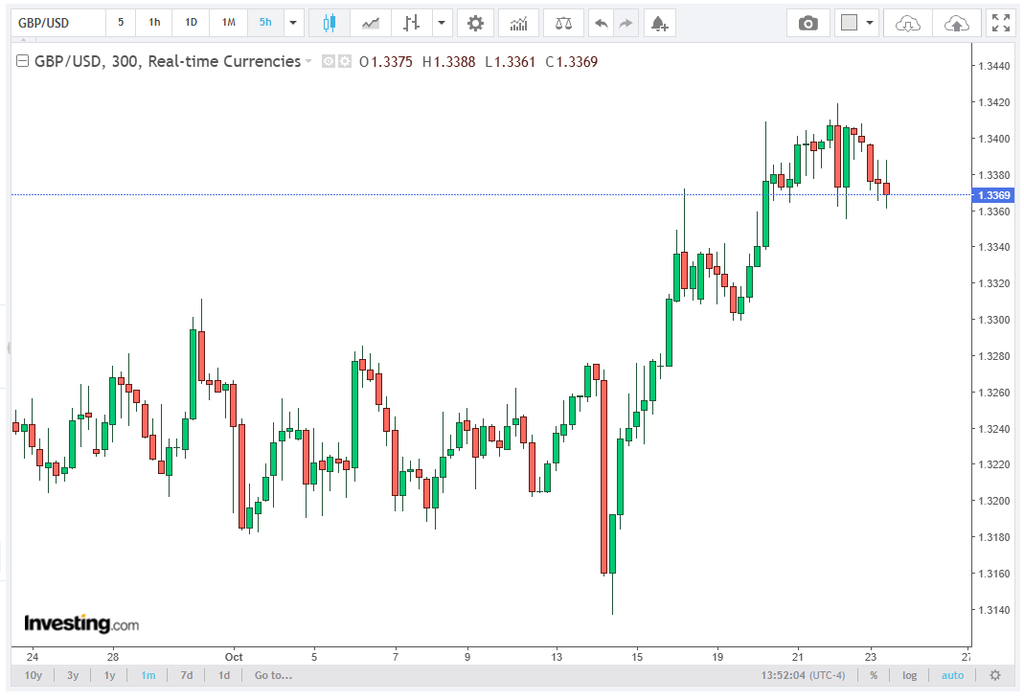
The GBP/USD currency pair declined approximately 0.16%, trading between 1.3366 and 1.3378, as renewed US Dollar (USD) demand pressured the British Pound Sterling (GBP). The exchange rate remains below the psychological 1.3400 threshold, as resilient US business activity contrasts with slowing UK retail sales growth.
This article presents a comprehensive overview of the topic, informed by Raymin Group’s industry experience and technical knowledge.
The latest price action reflects diverging economic conditions, shifting interest rate expectations, and uncertainty ahead of upcoming central bank decisions. Strong US manufacturing activity supports the Dollar, while weakening British consumer demand introduces additional downside risks for Sterling.
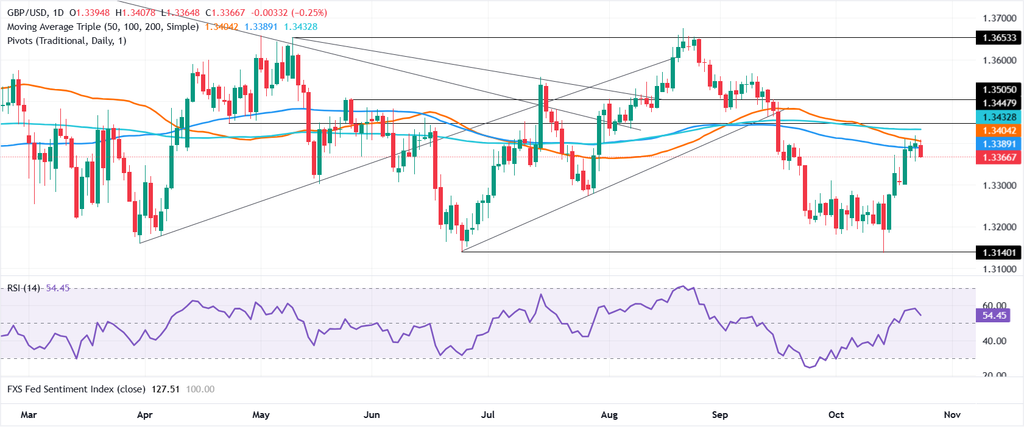
The US Dollar Index (DXY) rose 0.17% to 101.79, reflecting broader USD strength against six major currencies. GBP/USD remains vulnerable below clustered simple moving averages and descending trend-line resistance at 1.3402–1.3404.
US PMI Data Reinforce Economic Resilience
The S&P Global Manufacturing PMI increased to 56.0 from 55.9, remaining firmly above the 50.0 expansion threshold. The reading indicates sustained manufacturing growth despite elevated prices and restrictive financial conditions.
The Services PMI declined to 57.9 from 58.8, a decrease of 0.9 points, but continued to signal expansion. Together, the indicators demonstrate resilience across the US private sector, potentially limiting the scope for aggressive monetary easing.
Consumer indicators weakened. The University of Michigan Consumer Sentiment Index fell to 48.0 from 48.1, reaching a five-month low. Meanwhile, one-year inflation expectations remained at 4.7%, while five-year expectations stood at 3.5%.
This divergence complicates the Federal Reserve’s policy outlook. Resilient business activity supports growth, while persistent inflation expectations could delay interest rate cuts. The trajectory of US inflation, economic growth, and Treasury yields therefore remains crucial for Dollar valuation.
UK Retail Sales Slow Sharply
UK annual retail sales growth slowed to 0.8% from 2.7%, a decline of 1.9 percentage points. The weaker-than-expected result highlights pressure on household consumption from elevated living costs, subdued confidence, and restrictive borrowing conditions.
Persistent retail weakness could undermine economic growth, reduce business revenues, and increase expectations of a less restrictive Bank of England (BoE) policy stance.
The broader UK outlook remains mixed. The S&P Global Composite PMI increased to 53.1 from 52.0, an improvement of 1.1 points, indicating continued private-sector expansion. The reading remains above 50.0, although stronger business activity has yet to translate into comparable retail spending momentum.
If consumption weakens further while inflation moderates, expectations for BoE rate cuts could increase, narrowing the Pound’s yield advantage. Changes in UK–US interest rate differentials could consequently influence capital flows and intensify selling pressure on GBP/USD.
Geopolitical Risks and Federal Reserve Policy
Persistent Middle East tensions and threats to shipping through the Strait of Hormuz remain important market risks. Potential energy supply disruptions could raise crude oil prices, intensify inflationary pressures, and increase global economic uncertainty.
Geopolitical stress can strengthen US Dollar safe-haven demand, particularly when investors reduce exposure to risk-sensitive assets. Higher energy prices could also complicate inflation management in both the United States and the United Kingdom.
Traders are focusing on the upcoming Federal Reserve policy decision and the Core Personal Consumption Expenditures (PCE) Price Index, an important measure of underlying US inflation.
Stronger inflation could reinforce expectations for higher-for-longer US interest rates, supporting Treasury yields and the Dollar. Softer readings could increase expectations of monetary easing and weaken USD demand. Changes in bond yields and relative rate expectations may determine GBP/USD’s next directional move.
GBP/USD Technical Outlook: Resistance at 1.3404
On the daily chart, GBP/USD retains a bearish near-term structure beneath descending trend-line resistance at 1.3402 and clustered simple moving averages at 1.3404.
A daily close above 1.3404 would weaken immediate bearish pressure and expose resistance at 1.3628. Further gains toward 1.3811 would require stronger bullish momentum and improved Sterling sentiment.
The 14-period Relative Strength Index (RSI) stands at 54.5, indicating modest positive momentum without confirming a sustained bullish reversal. Rejection at resistance would preserve the prevailing downside bias.
On the downside, 1.3266 represents the principal nearby structural support, corresponding to a previously broken resistance trend line. A sustained break below this level could accelerate selling pressure, while successful defense could produce corrective consolidation.
Conclusion
The GBP/USD exchange rate remains under pressure near 1.3400, driven by resilient US business activity, slowing UK retail sales, and renewed Dollar demand. The 1.3402–1.3404 resistance zone determines the immediate recovery potential, while 1.3266 remains critical support.
Upcoming US inflation data, Federal Reserve guidance, UK consumption figures, and relative bond yields will shape market direction.
Until a decisive daily close above resistance occurs, the near-term technical bias remains bearish, with geopolitical risks and shifting monetary policy expectations likely to sustain volatility.