
The broader crypto market is currently showing signs of consolidation, with total market capitalization stalling around $2.57 trillion. Price action is largely constrained near the 50-day moving average, suggesting that momentum is temporarily balanced between buyers and sellers.
This type of structure typically reflects a decision zone, where the market awaits a catalyst to define its next directional move. The brokers at Achievements AI explore this topic in greater depth in their most recent article.
From a technical perspective, the interaction between the 50-day moving average and the longer-term 200-day moving average is becoming increasingly important. The compression between these two indicators is often a precursor to a significant volatility expansion.
At present, traders are watching closely for a potential trend breakout or breakdown, which could set the tone for the coming weeks across both Bitcoin and the broader altcoin market.
Bitcoin Approaches a Critical Technical Inflection Point
Bitcoin (BTC) is trading near a key technical threshold after briefly reaching $77.8K before retracing by roughly $1,000 during early European trading hours. The asset is currently finding dynamic support around its upward-sloping 50-day moving average, a level that has recently acted as a stabilizing structure during short-term pullbacks.
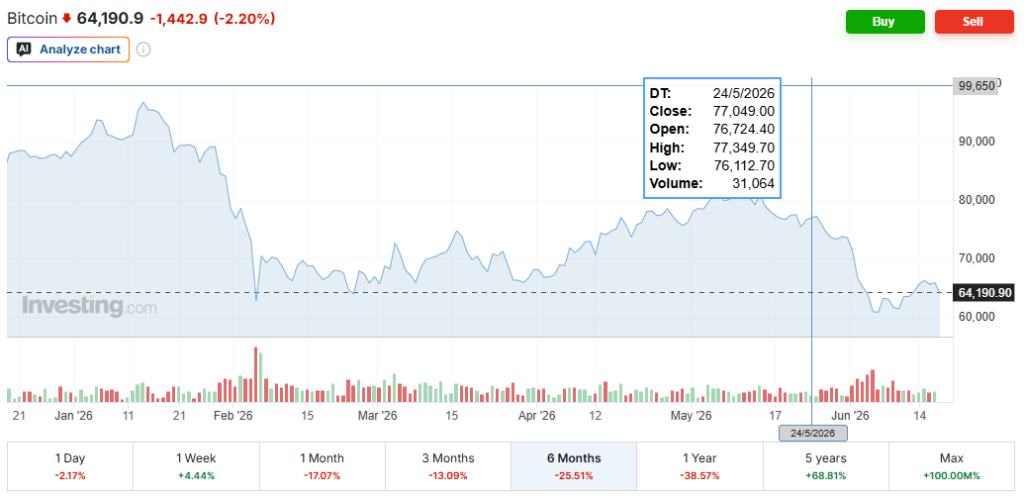
Earlier in May, Bitcoin encountered strong resistance at the 200-day moving average, highlighting the ongoing tug-of-war between bullish medium-term momentum and longer-term trend confirmation. If current conditions persist, the 50-day and 200-day moving averages are projected to converge within the next couple of weeks, forming a potential golden cross. This is widely interpreted as a bullish macro signal, often associated with sustained upward trends.
However, before any confirmation of a golden cross, Bitcoin is likely to experience a decisive breakout or rejection around its key moving averages. This inflection point is critical, as it will likely determine whether the broader crypto market enters a renewed expansion phase or reverts to a deeper consolidation structure.
Altcoin Rotation: A Market Juggling Act
While Bitcoin consolidates, the altcoin market is exhibiting a clear pattern of sector rotation, with capital flowing rapidly between mid-cap assets. This dynamic creates a juggling effect, where different tokens temporarily lead performance before quickly rotating out of favor.
Among the strongest performers over the last 24 hours are NEAR Protocol (+14%), The Graph (+5.6%), and Toncoin (+4.5%). These gains reflect renewed speculative interest in infrastructure-oriented tokens and scalable blockchain ecosystems.
On the downside, several established altcoins have underperformed, including Zcash (-5.9%), Dash (-4.1%), and Uniswap (-3.1%). This divergence highlights a fragmented market structure, where liquidity is not uniformly distributed, and short-term momentum is highly selective.
Such rotational behavior is typical in sideways macro environments, where traders cycle capital in search of short-term alpha rather than committing to sustained directional exposure. As a result, the altcoin market resembles a continuous reallocation loop, driven more by sentiment shifts than by fundamental repricing.
Ethereum’s Long-Term Positioning Remains Intact
Despite underperforming relative to Bitcoin in recent months, Ethereum (ETH) continues to attract long-term accumulation interest. According to MN Trading founder Michael van de Poppe, current price levels present a potentially attractive zone for long-term positioning, especially for investors focused on the broader on-chain infrastructure thesis.
Ethereum’s role as a foundational layer for decentralized applications (dApps), DeFi protocols, and tokenized assets continues to underpin its strategic importance. However, macroeconomic uncertainty has temporarily suppressed momentum, causing ETH to lag behind more narrative-driven assets in the short term.
Strategy’s Capital Reallocation Strategy
In a surprising move, Strategy (formerly MicroStrategy) opted to skip its weekly Bitcoin acquisition, instead deploying approximately $1.5 billion toward repurchasing its own convertible bonds. This shift highlights a more nuanced capital allocation approach, balancing Bitcoin accumulation with balance sheet optimization.
Founder Michael Saylor disclosed that this tactic has been part of Strategy’s financial engineering framework for five years, though it has rarely been emphasized publicly. The move reflects growing sophistication in managing exposure to both equity-linked debt instruments and Bitcoin treasury holdings, particularly during periods of market uncertainty.
Outlook: A Market Awaiting Resolution
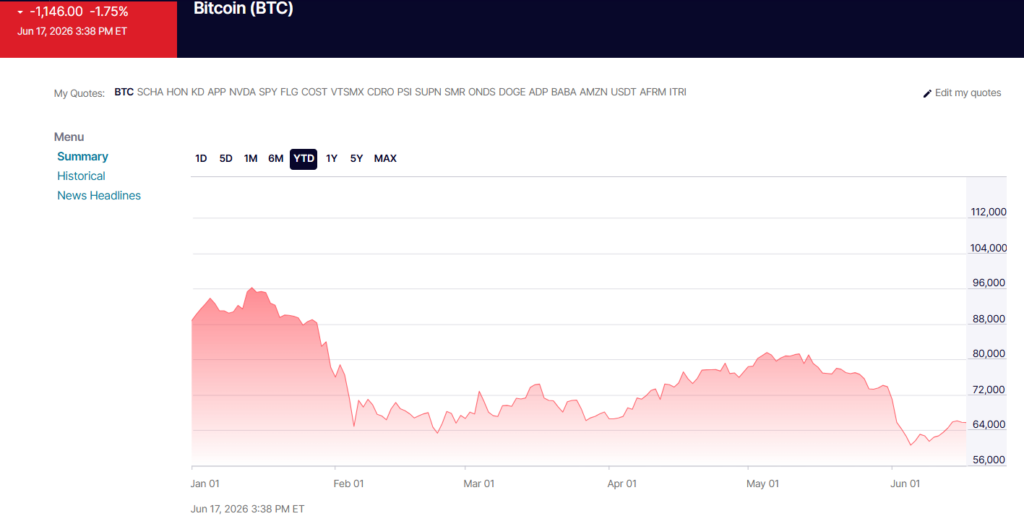
The crypto market is currently positioned at a critical juncture, defined by compressed volatility, technical resistance convergence, and fragmented capital flows. With Bitcoin hovering near key moving averages and altcoins rotating rapidly through short-lived leadership cycles, the market is effectively in a pre-breakout equilibrium state.
The next decisive move, either a confirmed golden cross breakout or a rejection from resistance, will likely determine whether the market transitions into a new bullish phase or remains locked in sideways rotation. Until then, both institutional caution and retail leverage will continue to shape an increasingly delicate balance across the digital asset landscape.