
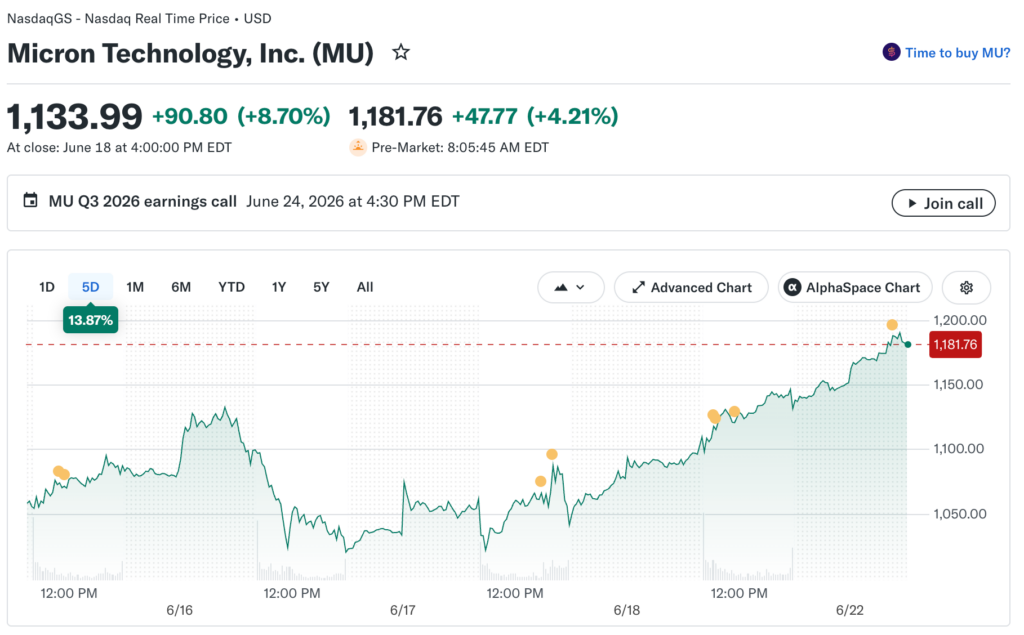
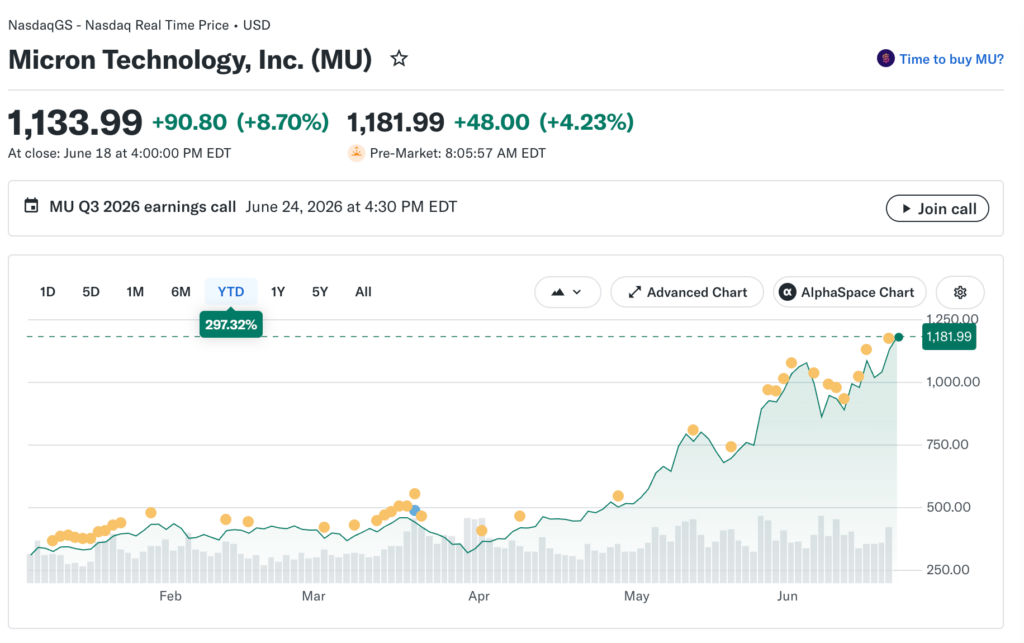
Micron Technology reports fiscal Q3 2026 earnings on Wednesday June 25, 2026, and the stakes go well beyond one company’s quarterly results. The stock has climbed roughly 800% year to date, crossed a $1 trillion market capitalization, and sits at the center of the AI high-bandwidth memory supercycle that has reshaped semiconductor valuations across the board.
The brand’s junior broker highlights what the print will actually reveal about the durability of AI memory demand, and why Bankolla sees this report as the single most important earnings release of the week for equity investors watching the technology sector.
Why This Earnings Report Carries Unusual Weight
Most quarterly earnings reports answer a narrow question about whether a company met or missed a consensus estimate. Micron’s June 25 report answers a much broader question about whether the AI memory supercycle is a durable, multi-year structural shift or a demand surge that has run significantly ahead of underlying fundamentals.
The stock’s 800% year-to-date gain means every number in the report will be analyzed against a price already pricing in enormous future growth. UBS analyst Melissa Weathers raised her price target to $1,500 ahead of the report, while Deutsche Bank and TD Cowen made similar moves, citing AI demand outrunning supply through at least 2028.
That analyst conviction is already embedded in Micron’s valuation, which means the bar for a positive market reaction is considerably higher than usual.
What the Supply Constraint Data Is Telling Markets
Key Micron customers can currently secure only between 50% and two-thirds of their high-bandwidth memory bit demand requirements. That supply gap, with no expectation of it closing in the near term, is the central argument for sustained Micron pricing power heading into 2027 and 2028.
UBS noted that memory prices have materially increased in recent months as fabs shift capacity toward HBM production for data center demand.
The supply constraint matters because it changes the pricing dynamic in Micron’s favor. When customers cannot source their full requirements, they compete for allocation rather than competing on price. That is an extraordinarily favorable environment for a manufacturer, and it is the condition Micron is operating in heading into Wednesday’s report.
HBM3E Allocation and the Number That Matters Most
Micron’s high-bandwidth memory third-generation extended product, known as HBM3E, is the component the market most wants data on. Hyperscalers building AI training and inference clusters need HBM3E at a scale that existing supply cannot match. The allocation rate that Micron discloses and the commentary on customer backlog commitments are the numbers that will determine the stock’s reaction more than the headline EPS figure.
Full-year revenue guidance will be the second critical variable. If Micron raises its outlook and signals that HBM demand remains fully allocated through the end of fiscal 2026 and into 2027, the stock will likely push toward or above analyst targets. Any softening of that language, even modest, will be treated by markets as a significant signal given how much optimism is already priced into the shares.
How Micron’s Results Flow Into Broader Semiconductor Stocks
Micron’s earnings have a well-established ripple effect across the semiconductor sector. When Micron reports strong HBM demand and raised guidance, it validates the entire AI infrastructure spending thesis that underpins valuations for Nvidia, Marvell Technology, and the broader chip ecosystem.
The inverse is equally powerful. A Micron guide that falls short of the most optimistic analyst projections would create selling pressure not just in MU but across semiconductor names that have rallied on the same AI demand thesis. Entegris, which climbed 13.62% on June 22, and SanDisk, which gained 11.54% on the same day, are both exposed to a Micron disappointment scenario that markets have not fully priced in as a real possibility.
Gas Prices Falling Into the PCE Report
One element supporting Micron’s broader operating environment is the inflation picture improving around it. Gas prices fell below $4 per gallon heading into the week of June 22, reaching a national average of $3.99, down from above $4.50 at the peak of the Iran conflict. That decline feeds directly into May PCE data due Thursday June 26, the Federal Reserve’s preferred inflation gauge.
If PCE comes in softer than expected because of lower energy prices, rate-hike expectations ease, which benefits long-duration assets like high-multiple semiconductor stocks. A favorable PCE reading on Thursday would provide additional tailwind for Micron’s stock even if the Wednesday earnings report is interpreted cautiously by markets.
The $1,500 Price Target and What It Requires
UBS’s $1,500 price target represents approximately a 31% premium over where Micron was trading heading into the week. That target requires Micron to continue generating HBM3E revenue above analyst models, maintain allocation pricing power through 2027, and avoid any significant customer inventory build that would signal the demand cycle is beginning to peak.
All three conditions are currently in place. Whether they remain in place after Wednesday’s earnings call is the question the entire semiconductor sector is positioned around on June 22, 2026.